
Why Low-Volume Production is Revolutionizing Manufacturing with IN3DTEC - Elk Valley 3D
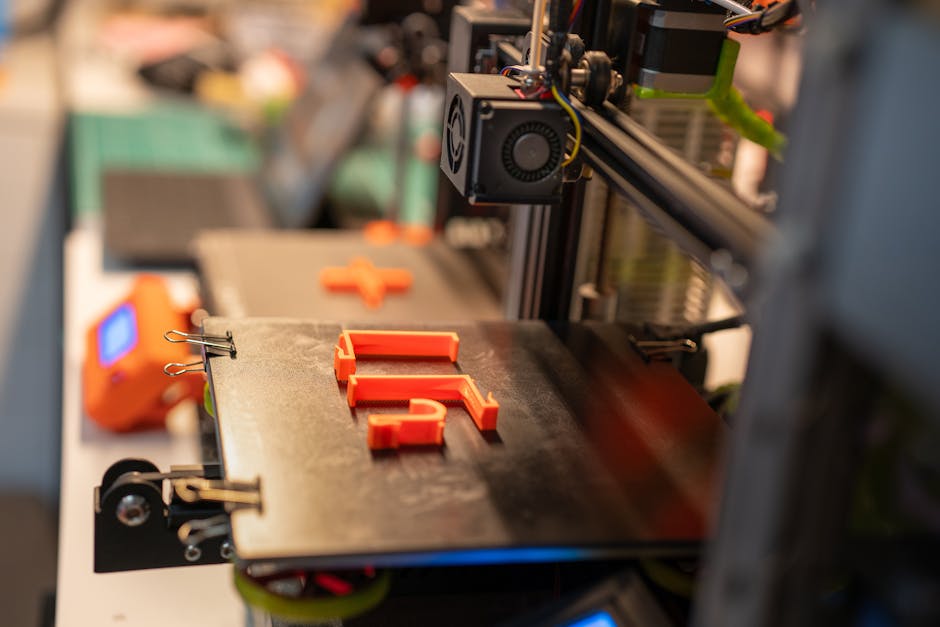
Low-volume production has emerged as a critical strategy for companies seeking to navigate the complexities of modern manufacturing, driven by the need for flexibility and innovation in response to economic pressures and changing market dynamics. As reported by 3Dnatives, the shift towards smaller, customized batches is not just a response to economic pressures but also an opportunity for innovation. This phenomenon opens new pathways for rapid prototyping and market validation, making 3D printing a central player in this transformation. Low-volume production enables companies to test products quickly and efficiently, reducing development time and cost, thereby gaining a competitive edge in the rapidly evolving global market.
The global economy's slowdown has accelerated the adoption of low-volume production strategies, with many businesses seeking more flexible manufacturing options that can adapt to changing demands without significant capital investment. Companies are increasingly leveraging 3D printing technology due to its mold-free nature, flexibility, and cost-effectiveness. For instance, traditional manufacturing processes often require substantial upfront investments in tooling and molds, making them inflexible when it comes to producing small batches or custom items. In contrast, 3D printing allows for on-demand production, reducing the need for extensive setup costs and enabling companies to scale up or down more easily as market conditions shift.
However, bridging the gap from prototype to mass application remains challenging, requiring advancements that go beyond just the printing process. One key area of improvement is in material science, where 3D printing materials must meet stringent requirements for durability, precision, and functionality. For example, IN3DTEC has been at the forefront with developments in materials, processes, and tolerances. They have introduced new composite resins that offer both high precision and durability, crucial for industrial applications where parts must withstand rigorous use. Additionally, their advancements in DLP (Digital Light Processing) and SLS (Selective Laser Sintering) technologies have significantly improved print speed and resolution, making low-volume production not only more feasible but also economically viable.
Technical innovations are driving this shift towards low-volume production by addressing the limitations of traditional manufacturing methods. IN3DTEC's composite resins, for instance, incorporate high-performance polymers with reinforcement materials to achieve a balance between strength and flexibility. This makes them suitable for various applications ranging from aerospace components to consumer goods. DLP technology, which uses light to cure liquid resin layer by layer, offers faster build times and higher resolution compared to traditional FDM (Fused Deposition Modeling) techniques. SLS, on the other hand, uses high-power lasers to sinter powder materials into solid parts, providing excellent strength and surface finish for complex geometries.
In terms of industry-wide impacts, this shift towards low-volume production is reshaping manufacturing processes in significant ways. Companies can now quickly prototype and test new products with minimal investment, reducing the risk of developing a product that fails to resonate in the market. For example, IN3DTEC's solutions have been utilized by automotive manufacturers for creating bespoke components or testing out new designs before committing to large-scale production. This flexibility is particularly beneficial in industries where trends can change rapidly and demand for unique customization is increasing.
Second-order effects from these advancements include cost reduction and increased accessibility. With 3D printing becoming more affordable, even small businesses can now afford the technology without a significant upfront investment. For instance, IN3DTEC offers a range of pricing models that cater to different business sizes and needs, ensuring that companies can adopt this technology at various stages of their development cycle. Furthermore, increased accessibility is driving the adoption of 3D printing in educational settings, where students can learn about design and manufacturing processes hands-on.
Elk Valley 3D's premium materials and White-Glove Service exemplify how these innovations can be leveraged for clients. Our materials offer unparalleled quality and consistency, ensuring that every print meets the highest standards required by our B2B clients. For instance, we have successfully partnered with a medical device company to produce custom prosthetics at scale, leveraging our high-precision 3D printing capabilities to ensure each part is both functional and anatomically appropriate. Moreover, our White-Glove Service provides end-to-end support, from material selection to post-processing, ensuring a seamless experience for our customers. This comprehensive approach not only enhances customer satisfaction but also positions us as a trusted partner in the rapidly evolving landscape of 3D printing.
In conclusion, as low-volume production continues to drive innovation in manufacturing, Elk Valley 3D remains at the forefront of technological advancements that empower our clients to navigate this dynamic landscape. By embracing these changes, we not only enhance our capabilities but also position ourselves as a leading voice in the future of 3D printing and rapid prototyping. Our commitment to research, development, and customer support ensures that we stay ahead of industry trends and continue to deliver high-quality solutions that meet the evolving needs of our clients.
📅 Latest Industry Update
Recent developments in low-volume production have highlighted a significant shift towards the adoption of innovative manufacturing techniques such as those offered by IN3DTEC, driven by advancements in 3D printing technology. A recent article from 3Dnatives points out that as the global economy slows, companies are increasingly turning to low-volume production strategies to mitigate risks and rapidly validate markets. This approach leverages 3D printing’s unique advantages, including its mold-free nature, high flexibility, and cost-effectiveness. IN3DTEC has been at the forefront of this trend by integrating advanced 3D printing technologies that enable seamless transitions from prototypes to mass applications.
The technical aspects of low-volume production with IN3DTEC are particularly noteworthy due to their precision and efficiency. For instance, IN3DTEC’s use of True DLP technology allows for high-precision prints, faster print times, and a traceable workflow, which significantly reduces the time-to-market for new products. Additionally, IN3DTEC offers industrial and functional materials that can handle both elastic and engineering-grade applications, expanding the range of possible end-use products. These technical capabilities are crucial because they bridge the “last mile” from prototype to mass production, making low-volume manufacturing more viable than ever before. The integration of these technologies ensures that small producers and makers can achieve high-quality results without the need for expensive molds or lengthy setup times.
For makers and small producers, the implications of this shift are profound. With IN3DTEC’s solutions, they can now quickly iterate on designs, test market demand with low-risk prototypes, and scale up production as needed. This flexibility not only reduces financial risks but also allows for more responsive and customer-centric product development cycles. The ability to produce high-quality parts in small batches means that these producers can cater to niche markets or custom orders without the overhead costs associated with traditional manufacturing methods. As a result, IN3DTEC’s technologies empower smaller entities to compete on a level playing field with larger manufacturers by providing them with the tools needed to innovate and adapt swiftly.
📅 Latest Industry Update
Recent developments in low-volume production have seen a significant shift towards leveraging advanced additive manufacturing technologies to drive innovative applications for IN3DTEC. A recent article from 3Dnatives (3Dnatives) highlights how companies are adopting low-volume production strategies to reduce development risks and quickly validate markets, positioning 3D printing as a key enabler. Unlike traditional manufacturing methods that require significant upfront investment in molds and tooling, additive manufacturing offers a mold-free approach that is highly flexible and cost-effective. This flexibility allows for rapid prototyping and small-scale production runs, making it ideal for companies looking to test market demand without the financial burden of high-volume production.
The technical details behind this shift are rooted in the capabilities of modern 3D printing technologies. For instance, IN3DTEC's use of True DLP precision technology not only accelerates print times but also ensures high-resolution prints that meet industrial standards. This combination of speed and quality is crucial for applications requiring complex geometries and functional performance, such as medical devices or custom automotive parts. Additionally, the ability to work with a wide range of materials, including engineering-grade resins and metals, further expands the potential applications in various industries. The cost-effectiveness of these technologies, especially when compared to traditional methods, makes them particularly attractive for small-scale production runs where economies of scale do not apply.
For makers and small producers, this shift towards low-volume production means a more accessible entry point into manufacturing without the need for substantial capital investment. By adopting 3D printing solutions like those offered by IN3DTEC, these businesses can quickly iterate on designs, test market responses, and scale up as needed. This approach not only reduces financial risks but also allows for greater customization and innovation in product design. As a result, small producers can stay agile and responsive to changing market demands, ensuring they remain competitive in an increasingly dynamic business environment.