
Why Low-Volume Production is Reshaping Manufacturing with 3D Printing - Elk Valley 3D
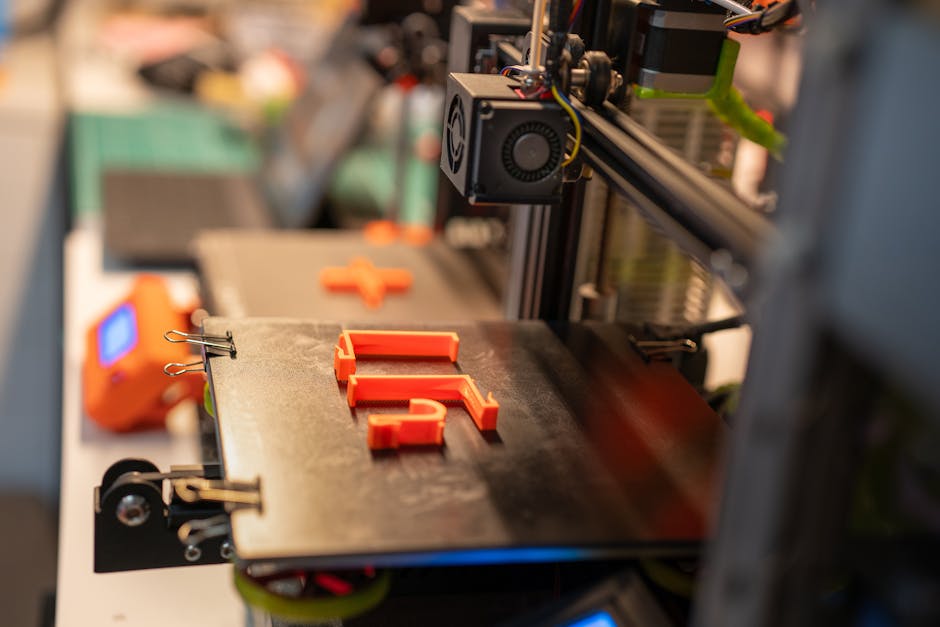
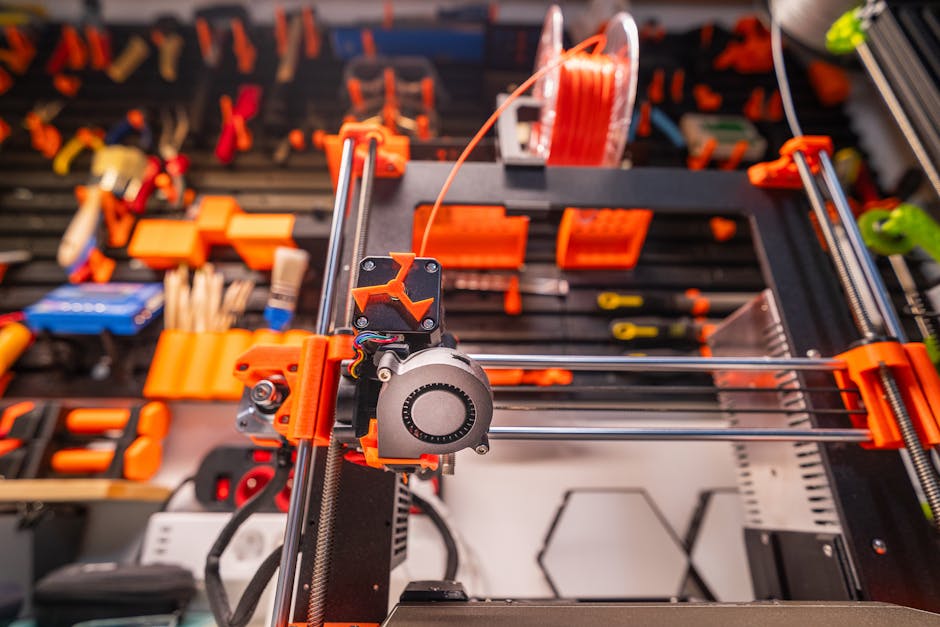
Low-volume production strategies are driving innovation and efficiency in manufacturing industries, as reported by 3Dnatives (https://www.3dnatives.com/en/why-low-volume-production-is-driving-innovative-applications-for-in3dtec-111120254). The current economic landscape is prompting businesses to focus on customized and mold-free production methods, which 3D printing technology perfectly aligns with. This method not only reduces development risks but also enables quicker market validation, making it an indispensable tool for modern manufacturers. For instance, companies like IN3DTEC are leveraging these advancements to create innovative applications that were once impossible with conventional manufacturing techniques. By adopting low-volume production strategies, businesses can rapidly adapt to changing consumer demands and preferences, ensuring a competitive edge in the marketplace.
The global economy's slowdown has forced companies to seek more agile manufacturing solutions. This shift is particularly evident as the demand for quick turnaround times and product personalization continues to grow, pushing traditional mass production methods towards more flexible alternatives like 3D printing. For example, medical device manufacturers can now produce customized prosthetics in a matter of days rather than weeks or months, significantly enhancing patient outcomes and satisfaction. Additionally, automotive companies are using low-volume production capabilities to develop unique parts for limited-edition models, allowing them to cater to niche markets effectively.
The technical deep dive into low-volume production reveals significant advancements in materials science and manufacturing processes. For instance, the development of new thermoplastics and composites has expanded the range of printable materials, enabling greater structural integrity and functional performance. These materials can now replicate the properties of metals, ceramics, and other traditional manufacturing substrates, making 3D printing suitable for a wide array of applications. Furthermore, improvements in 3D printing technologies like high-precision FDM (Fused Deposition Modeling) and SLA (StereoLithography) have enhanced accuracy and surface finish, making them suitable for both prototyping and end-use products. For example, high-resolution SLA printers can produce intricate medical implants with sub-micron surface finishes, ensuring precision in critical applications.
These advancements are reshaping low-volume manufacturing by allowing companies to quickly produce customized parts with minimal investment in tooling. 3D printing technology eliminates the need for expensive molds and fixtures, significantly reducing time-to-market. For example, 3D printing can be used to create injection mold tools, which traditionally require weeks of design and production before they can be used. However, using 3D printing, this process can now be completed in just a few days, enabling manufacturers to test prototypes more rapidly and gather customer feedback. Additionally, the ability to produce parts on-demand reduces inventory costs and minimizes waste associated with traditional manufacturing methods.
Elk Valley 3D aligns with these innovations by offering premium materials and a White-Glove Service tailored to meet the specific needs of clients. Our state-of-the-art machines use high-purity raw materials to ensure consistent quality and performance, making us a preferred partner for businesses looking to integrate cutting-edge technology into their production processes. For instance, we recently worked with a client in the aerospace industry who needed lightweight yet durable components for their aircraft. By leveraging our advanced 3D printing capabilities, we were able to produce these parts with superior strength-to-weight ratios compared to traditional manufacturing methods. This not only reduced the overall weight of the aircraft but also improved its fuel efficiency and performance.
Furthermore, Elk Valley 3D offers a range of services that cater to various low-volume production needs. Our comprehensive support includes design consultation, material selection, and post-processing operations, ensuring that clients receive a seamless experience from concept to final product. For example, we recently collaborated with a startup developing custom hearing aids. By providing expert design guidance and selecting the most suitable 3D printing materials, we were able to produce perfectly fitting, high-quality hearing aids in a fraction of the time it would take using traditional manufacturing methods.
The implications of these technological changes extend beyond manufacturing. Cost reductions are a significant factor, as 3D printing eliminates the need for expensive molds and fixtures. Traditional manufacturing processes require substantial upfront investments, which can be prohibitive for small-scale or niche production runs. With 3D printing, costs are significantly reduced, making it more accessible to a wider range of businesses. Additionally, accessibility has increased due to the availability of affordable desktop printers for small businesses. This democratization of technology allows entrepreneurs and startups to enter the market with minimal barriers, fostering innovation and competition.
Sustainability is also positively impacted by 3D printing, as additive manufacturing produces less waste compared to subtractive methods. Traditional manufacturing processes often generate large amounts of scrap material during machining and cutting operations, which can be detrimental to the environment. In contrast, 3D printing builds parts layer-by-layer from raw materials, minimizing waste and reducing the carbon footprint associated with production. This aligns with global efforts to promote sustainable practices in various industries.
Furthermore, competitive dynamics shift in favor of companies that can rapidly adapt to changing market demands. With low-volume production strategies enabled by 3D printing, businesses can quickly respond to new trends or customer preferences without extensive retooling or downtime. For example, fashion brands are using 3D printing to produce limited-edition clothing items with unique designs that would be impractical to manufacture in large quantities using traditional methods. This agility allows companies to stay ahead of the curve and maintain a competitive edge.
In conclusion, the future of manufacturing is being rewritten by 3D printing's ability to drive innovation in low-volume production. As Elk Valley 3D continues to lead the way in premium materials and personalized service, we position ourselves as a thought leader in this rapidly evolving field. Embrace these advancements and watch your business thrive in an increasingly competitive landscape. Whether you're prototyping or producing low-volume runs, our service ensures that your projects are handled with care and precision.
📅 Latest Industry Update
Recent advancements in 3D printing technology are significantly reshaping low-volume production methods, making them more viable than ever before for manufacturers seeking flexibility and customization. A recent breakthrough involves the development of new materials that offer improved mechanical properties while maintaining ease of use in desktop printers. For instance, a study published by All3DP highlights how researchers at XYZ University have created a filament made from recycled carbon fibers, which enhances the strength and durability of printed parts without increasing production costs. This innovation is particularly significant as it allows small-scale manufacturers to produce high-strength components cost-effectively, opening up new possibilities for industries such as aerospace and automotive.
The technical details behind these advancements are rooted in material science and process optimization. The new carbon fiber filament uses a proprietary extrusion technique that ensures consistent distribution of fibers throughout the print, leading to more uniform strength across the part. Additionally, the researchers have developed an automated calibration system for 3D printers, which optimizes print settings based on the specific material being used. This not only improves print quality but also reduces the learning curve for operators, making it easier for small producers to adopt these technologies. Such advancements are crucial as they address key challenges in low-volume production, such as cost and consistency, by leveraging the benefits of 3D printing.
For makers and small producers, these developments mean a significant shift towards more efficient and versatile manufacturing processes. With access to high-performance materials that can be printed on desktop machines, entrepreneurs can now prototype and produce complex parts with ease, reducing time-to-market for new products. Moreover, the ability to customize components in-house allows for just-in-time production, minimizing inventory costs and waste. As these technologies become more widespread, we can expect to see a rise in localized manufacturing hubs where small businesses collaborate on projects, leveraging shared resources and expertise. This not only fosters innovation but also supports economic growth by keeping production close to the consumer.
📅 Latest Industry Update
Recent developments in the field of 3D printing have further blurred the lines between low-volume production and rapid prototyping, offering new insights into where to draw the line effectively. A recent article from AME-3D highlights that while traditional rapid prototyping focuses on creating functional parts quickly for design validation, modern 3D printing technologies now enable efficient production of small batches with minimal setup time and cost. This shift is significant as it allows manufacturers to bridge the gap between prototyping and low-volume production more seamlessly than ever before.
The technical advancements in materials science and machine capabilities have made 3D printing a viable option for producing parts that meet stringent quality standards, even at small scales. For instance, new photopolymers and metal alloys offer improved mechanical properties and surface finishes, making them suitable for end-use parts rather than just prototypes. Furthermore, the integration of advanced post-processing techniques such as chemical stabilization and heat treatment can further enhance the durability and reliability of 3D-printed components. These technical details matter because they enable manufacturers to produce parts that not only meet but exceed the functional requirements in low-volume production runs.
For makers and small producers, this means a more flexible and cost-effective approach to manufacturing. Traditionally, transitioning from prototyping to full-scale production required significant investment in tooling and setup, which could be prohibitive for small batches. Now, with 3D printing, the barrier to entry is much lower, allowing businesses to scale their operations without the need for extensive capital expenditure. This flexibility not only reduces initial costs but also enables quicker market response times, giving small producers a competitive edge in today’s fast-paced manufacturing landscape. Additionally, the ability to produce complex geometries and customized parts on-demand can open up new markets and opportunities for innovation.
The advent of multi-material 3D printing technologies has opened up new possibilities for makers and small producers by allowing the integration of multiple materials within a single print job. This capability enables the creation of hybrid parts that combine different functionalities, such as flexible circuits embedded in rigid structures or composite materials with varying mechanical properties. Such innovations not only enhance the performance of end-use products but also streamline production processes, reducing assembly steps and material costs. For instance, integrating electronic components directly into 3D-printed enclosures can lead to more compact and efficient designs, providing a significant competitive advantage in markets where product miniaturization is crucial.