
Why Low-Volume Production is Driving Innovative Applications for IN3DTEC - An Inside Look at 3D Printing's Evolution
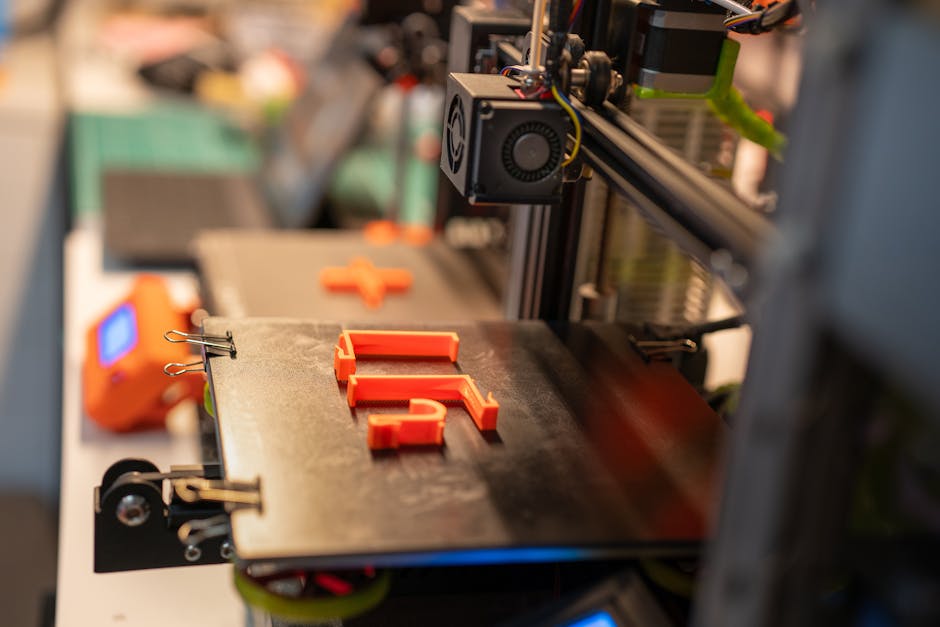

Recent reports from industry giants like 3Dnatives and LuxCreo underscore an undeniable trend: low-volume production, driven by advancements in 3D printing technology, is revolutionizing the manufacturing landscape. As per 3Dnatives and LuxCreo, this shift is not merely a response to economic pressures but a strategic maneuver that enhances agility, innovation, and market validation. For businesses, this trend positions low-volume production as a critical component of their competitive strategy. The increasing demand for customized products in niche markets has led many manufacturers to adopt 3D printing to meet these needs. Traditional manufacturing methods often struggle with the flexibility required to produce small batches efficiently. In contrast, additive manufacturing can produce complex geometries quickly and cost-effectively, making it ideal for low-volume production scenarios. The technological leap in 3D printing has been transformative. Innovations such as new materials like IN3DTEC, higher resolution printers, and enhanced post-processing techniques have significantly improved the quality and functionality of printed parts. For instance, IN3DTEC’s advanced nanomaterials offer superior mechanical properties, making them ideal for applications requiring high durability and precision. This is particularly evident in industries such as aerospace, where lightweight yet robust components are crucial. Additionally, the development of multi-material printing has opened up new possibilities for creating complex parts with varying materials within a single piece. For example, an automotive company can now 3D print engine components that integrate both metal and composite materials to achieve optimal performance without the need for multiple assembly steps, reducing production time and costs. In terms of processes, additive manufacturing has seen remarkable strides with increased speed, accuracy, and consistency. The advent of multi-material printing allows for the creation of complex parts with varying materials within a single piece, significantly reducing assembly times and costs. Furthermore, advancements in software and hardware integration have made 3D printing more user-friendly and accessible to a broader range of users. For instance, recent innovations in slicing software can automatically optimize print paths and layer heights, ensuring consistent quality across multiple prints. This has reduced the learning curve for new users and enabled even small businesses with limited engineering expertise to leverage the benefits of additive manufacturing. The impact on low-volume manufacturing is profound. Companies can now quickly prototype, validate designs, and test market segments with unprecedented speed and cost-effectiveness. For example, a medical device manufacturer could rapidly produce customized implants for clinical trials without the need for expensive traditional molds. Similarly, automotive firms can leverage 3D printing to create intricate engine components or unique vehicle parts, reducing development cycles from months to weeks. This flexibility is particularly valuable in industries where rapid iteration and innovation are essential. The ripple effects of these changes extend beyond manufacturing. Economically, low-volume production reduces financial risks by enabling smaller scale testing and market entry. Companies can quickly test new product ideas with minimal investment, allowing for more informed decision-making and reduced financial exposure. Environmentally, additive manufacturing often uses less material than traditional methods, contributing to sustainability goals. The ability to print only the required amount of material minimizes waste and reduces the carbon footprint associated with production processes. In terms of competitiveness, companies that can innovate faster and more cost-effectively gain a significant edge in the marketplace. For instance, a company like Nike has used 3D printing to create customized footwear for its premium line, providing customers with unique and personalized experiences that traditional manufacturing methods struggle to achieve at scale. This not only enhances customer satisfaction but also sets the brand apart from competitors who rely on mass production techniques. Elevating this discussion, Elk Valley 3D stands at the forefront by offering premium IN3DTEC materials alongside our White-Guide Service. Our commitment to quality ensures that clients benefit from unparalleled material properties while enjoying a seamless experience from design to delivery. By integrating these advanced technologies into our services, we support businesses in achieving their manufacturing dreams with precision and efficiency. For instance, we have worked with numerous medical device companies to produce bespoke implants using IN3DTEC materials, ensuring both high durability and patient-specific fit. Our White-Guide Service includes everything from initial design consultations to post-processing and quality assurance checks. This comprehensive approach ensures that clients can focus on their core competencies while relying on our expertise for the technical aspects of 3D printing. We also support clients in navigating the regulatory landscape, ensuring compliance with industry standards and regulations related to medical devices and other critical applications. By partnering closely with Elk Valley 3D, businesses can stay ahead of the curve by leveraging the latest advancements in 3D printing technology. Whether it's rapid prototyping for product development or low-volume production of custom parts, our services enable companies to innovate faster and more cost-effectively. As the manufacturing landscape continues to evolve, Elk Valley 3D remains dedicated to driving this revolution forward through continuous innovation and collaboration with clients. In conclusion, the evolution of 3D printing is not just a technological shift; it’s a transformative force reshaping how products are designed, prototyped, and manufactured at scale. As Elk Valley 3D continues to innovate and partner closely with clients, we remain dedicated to driving this revolution forward. Our commitment to excellence in service and materials ensures that businesses can achieve their manufacturing goals with precision and efficiency, positioning them for success in an increasingly competitive market.