
Why Low-Volume Production is Driving Innovative Applications for IN3DTEC - An Elk Valley 3D Perspective
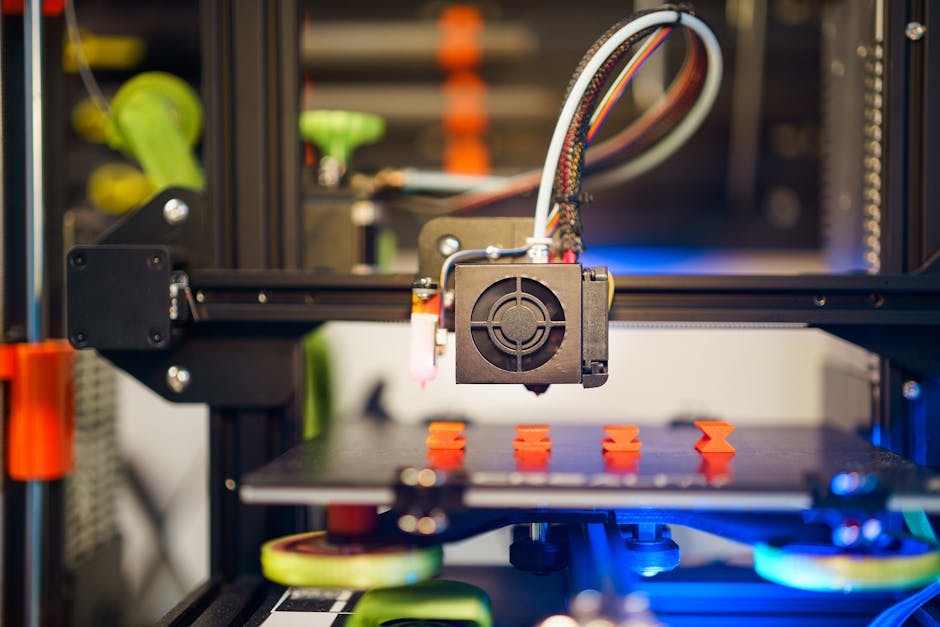

According to 3Dnatives, the current global economic landscape is witnessing a shift towards low-volume production as companies look to mitigate risks and accelerate market validation. This paradigm change is not just about reducing costs; it's also about leveraging 3D printing technology for its unique flexibility, speed, and cost-effectiveness in customized manufacturing processes. The advent of additive manufacturing has democratized access to high-quality prototyping and small-scale production, allowing businesses of all sizes to innovate more quickly and efficiently.
The rise of IN3DTEC, a company that has successfully integrated low-volume production with innovative applications, highlights the potential of this approach. IN3DTEC specializes in the development of custom medical devices, where precision and speed are paramount. By utilizing 3D printing technology, IN3DTEC can rapidly produce intricate implants tailored to individual patient needs, significantly reducing the time from design to deployment. This not only enhances patient outcomes but also allows for quicker market entry, giving companies a competitive edge in highly regulated industries.
IN3DTEC’s success story is just one example of how low-volume production can drive innovation and efficiency. Another noteworthy player is Elk Valley 3D, which offers advanced materials and comprehensive support services to meet the demands of various industries. Elk Valley 3D has seen a surge in demand from medical device manufacturers, automotive companies, and consumer electronics firms seeking more agile and cost-effective production methods.
The technical advancements driving this revolution are multifaceted. Recent developments in material science have significantly enhanced the capabilities of 3D printing. For instance, new composite materials offer improved mechanical properties, making them suitable for applications requiring high strength and durability. Additionally, these materials often possess better chemical resistance, which is crucial for medical devices that must withstand sterilization processes.
Process optimization has also played a critical role in advancing 3D printing technology. Companies like Elk Valley 3D have invested heavily in optimizing their additive manufacturing processes to achieve higher resolution and tighter tolerances. This not only improves the quality of the final products but also streamlines production workflows, reducing waste and increasing efficiency.
Advancements in sintering processes are another key area of focus. Sintering enables the consolidation of powders into solid structures, offering the ability to produce parts with complex geometries that would be difficult or impossible using traditional manufacturing methods. For instance, IN3DTEC has successfully employed sintering techniques to create custom medical implants with intricate internal structures, ensuring a perfect fit for individual patients.
The impact of these technical advancements on low-volume manufacturing is profound. Companies can now quickly iterate prototypes and bring products to market faster than ever before. This agility is crucial in today's fast-paced business environment, where consumer preferences evolve rapidly. For example, medical device manufacturers can produce custom implants with high precision, ensuring a better fit for individual patients while reducing the time from design to deployment.
Moreover, 3D printing also plays a vital role in reshaping supply chains by enabling on-demand production closer to end-users. This reduces inventory costs and shipping times, making supply chains more resilient against disruptions. In the automotive industry, tier one suppliers use 3D printing for tooling and fixtures, reducing lead times and improving overall efficiency. For instance, Elk Valley 3D has worked with several automotive manufacturers to produce complex parts using 3D printing, significantly accelerating production cycles.
The shift towards low-volume production also has broader implications beyond cost savings. It democratizes access to manufacturing technology by lowering barriers to entry. Smaller businesses can now compete with larger corporations more effectively due to the flexibility provided by 3D printing. Additionally, from a sustainability perspective, additive manufacturing can reduce material waste and decrease transportation emissions compared to traditional manufacturing methods.
For instance, IN3DTEC has implemented sustainable practices in its production processes, using recycled materials for certain components and minimizing waste through efficient design and post-processing techniques. This approach not only aligns with growing consumer demand for eco-friendly products but also helps companies reduce their environmental footprint.
The integration of 3D printing into manufacturing processes is also driving innovation across various industries. Companies like IN3DTEC and Elk Valley 3D are at the forefront of this transformation, leveraging cutting-edge technology to meet evolving market demands. By staying informed about these developments, businesses can position themselves for success in a rapidly changing landscape.
In terms of alignment with Elk Valley 3D’s offerings, their high-purity resins ensure exceptional part quality, while their dedicated team provides expert support throughout the entire production process. Whether you need custom prototype parts or low-volume production runs, Elk Valley 3D is equipped to deliver the best possible results. Their commitment to excellence and innovation ensures that clients receive top-notch service in every project.
Elk Valley 3D’s success story is a testament to the power of integrating cutting-edge technology with thoughtful business strategies. By focusing on customer needs and continuously improving their offerings, they have become a leading provider in the low-volume production market. Their commitment to quality, sustainability, and innovation sets them apart from competitors and positions them for continued growth in the years ahead.
As we look ahead, it is clear that the integration of 3D printing into manufacturing processes will continue to drive innovation across various industries. Companies like IN3DTEC and Elk Valley 3D are at the forefront of this transformation, leveraging cutting-edge technology to meet evolving market demands. By staying informed about these developments, businesses can position themselves for success in a rapidly changing landscape.
The future of manufacturing is poised to be much more dynamic and responsive than ever before. The ability to produce small volumes quickly and efficiently will enable companies to adapt to new challenges and opportunities with greater agility. As 3D printing technology continues to advance, its role in shaping the manufacturing ecosystem will only grow more significant.
For businesses looking to leverage these advancements, partnering with leaders like IN3DTEC and Elk Valley 3D can provide a competitive edge. By adopting best practices and staying abreast of technological developments, companies can enhance their production capabilities, reduce costs, and improve sustainability. The future is bright for those who embrace the opportunities presented by low-volume production and additive manufacturing.
📅 Latest Industry Update
Recent developments highlight that low-volume production is driving innovative applications for IN3DTEC, a significant shift from traditional mass manufacturing methods. This trend is particularly evident as companies like Elk Valley 3D and Raise3D are leveraging 3D printing to bridge the gap between prototype development and small-scale production. For instance, the Raise3D platform offers industrial-grade 3D printers with features such as high-precision prints and cost-effective metal printing capabilities, making it easier for small producers to adopt 3D printing technologies. These advancements are crucial because they address the economic challenges faced by businesses in a slowing global economy, allowing them to quickly validate markets and reduce development risks without significant upfront investments.
The technical details of these innovations underscore their transformative potential. For example, Raise3D’s True DLP Precision 3D printer combines high-speed printing with traceable workflow management, enabling the production of industrial and functional materials at a scale that was previously unattainable for small producers. This technology not only accelerates product development cycles but also ensures precision in manufacturing critical components like elastic engineering-grade parts, which are essential for various industries including medical devices and automotive components. Such high-precision capabilities can significantly improve the quality and reliability of products made through 3D printing.
For makers and small producers, these developments translate into tangible benefits such as reduced costs and faster time-to-market. By adopting advanced 3D printing technologies like those offered by Raise3D, businesses can streamline their operations, enabling them to respond more quickly to market demands without the need for large-scale investments in traditional manufacturing infrastructure. This flexibility is particularly valuable in industries where customization and rapid prototyping are crucial, such as product design and healthcare. Moreover, the ability to produce high-precision parts with consistent quality ensures that small producers can compete effectively against larger enterprises by offering tailored solutions at a more accessible price point.