
Why Low-Volume Production is Driving Innovative Applications for IN3DTEC - A Key Strategy in Modern Manufacturing
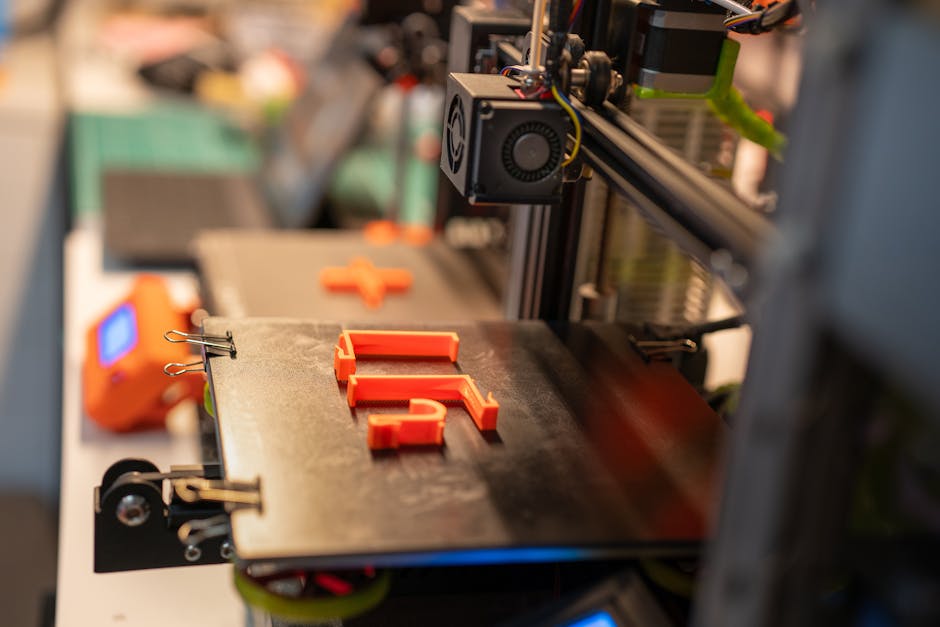

Amidst a global economic slowdown, manufacturers are increasingly adopting low-volume production strategies to innovate and stay competitive. As detailed by 3Dnatives, this approach not only reduces development risks but also accelerates market validation. Low-volume production strategies are particularly advantageous in industries that rely on high precision and customization, such as medical devices, aerospace, and automotive. By leveraging low-volume production methods, companies can reduce the financial burden associated with large-scale manufacturing while still offering bespoke solutions to their customers. This flexibility allows manufacturers to quickly test new ideas without committing significant resources upfront. For instance, a startup developing a new surgical tool may not have enough demand for a full-scale production run, but by employing low-volume production techniques, they can produce prototypes that are both functional and cost-effective.
The shift towards low-volume production is particularly significant in sectors like medical devices, aerospace, and automotive, where bespoke solutions are essential. Companies such as IN3DTEC have leveraged this trend to develop innovative applications that were previously unfeasible with traditional manufacturing methods. IN3DTEC, for example, has used their advanced 3D printing technology to create custom prosthetics for patients in developing countries. These low-volume productions not only meet the unique needs of individual patients but also provide a platform for continuous improvement and refinement of designs based on real-world feedback. In the aerospace industry, companies like Boeing have adopted similar strategies to produce lightweight, high-strength components for their aircraft, which are critical for both performance and cost savings.
Advancements in 3D printing materials and processes play a critical role in driving these innovations. The introduction of high-purity polymers, resins, and metal alloys significantly enhances print quality and durability. For instance, the use of true DLP Precision technology by IN3DTEC allows for faster and more accurate prints, enabling manufacturers to achieve higher output rates without compromising on precision. In contrast, traditional manufacturing methods often involve multiple stages of production, which can be time-consuming and less efficient. The ability to produce complex geometries directly from digital designs in a single step is a significant advantage in the highly competitive landscape of modern manufacturing.
Moreover, the flexibility and scalability offered by 3D printing make it an ideal solution for low-volume production. The ability to switch materials or change designs mid-production is a game-changer in agile manufacturing environments. As reported by Raise3D, their industrial-grade printers support large composite parts, elastic engineering-grade resins, and cost-effective metal printing. These capabilities are crucial for bridging the 'last mile' from prototype to mass application. For example, a company developing a new automotive component can quickly iterate designs using 3D printing before committing to more expensive injection molding processes. This flexibility allows manufacturers to remain agile in response to changing market demands and technological advancements.
The impact of these advancements on low-volume manufacturing is profound. Companies can now rapidly iterate designs, reduce lead times, and minimize inventory costs through just-in-time production models. For example, in medical device manufacturing, custom implants can be produced quickly and efficiently using 3D printing, ensuring timely delivery to patients while maintaining high standards of quality. This approach not only improves patient outcomes but also enhances the overall efficiency of healthcare systems by reducing wait times for surgeries and treatments.
Furthermore, these innovations have far-reaching implications beyond cost savings and speedier time-to-market. They also contribute to greater sustainability by reducing waste associated with traditional manufacturing processes. As the demand for personalized products grows, 3D printing offers a scalable solution that aligns with consumer preferences for customized goods. Traditional manufacturing methods often involve significant amounts of wasted material due to the need for tooling and molds. In contrast, 3D printing allows for near-zero waste production, as only the necessary amount of material is used to create each part. This not only reduces environmental impact but also lowers overall costs by minimizing resource consumption.
The benefits of low-volume production extend beyond individual companies to entire industries. By embracing these technologies, manufacturers can drive innovation and adapt more quickly to changing market demands. For instance, in the aerospace industry, 3D printing has enabled the development of lighter, stronger components that improve fuel efficiency and reduce emissions. This not only leads to cost savings for airlines but also contributes to a broader sustainability agenda by reducing the environmental impact of air travel.
At Elk Valley 3D, we are committed to leveraging these advancements to provide our clients with premium materials and unparalleled White-Glove Service. Our high-purity manufacturing processes ensure the highest quality prints, while our dedicated team supports every step of your project from start to finish. Whether you need custom medical devices or intricate aerospace components, our expertise in 3D printing can help drive innovation in your industry. We work closely with clients to understand their unique needs and tailor solutions that meet both functional and aesthetic requirements.
Looking ahead, Elk Valley 3D remains at the forefront of this transformative technology. By embracing low-volume production strategies and cutting-edge 3D printing capabilities, we are poised to revolutionize manufacturing processes for a broader range of applications. We believe that as more companies adopt these technologies, we will see a significant shift towards greater customization, faster innovation cycles, and reduced environmental impact. As the demand for personalized products continues to grow, 3D printing offers a scalable solution that aligns with consumer preferences and industry trends.
We are excited about the future of manufacturing and the role that 3D printing will play in shaping it. Stay tuned as we continue to explore how these innovations will shape the future of industry and drive positive change across various sectors.