
Why Low-Volume Production is Driving Innovative Applications for IN3DTEC - A Game-Changer in Manufacturing

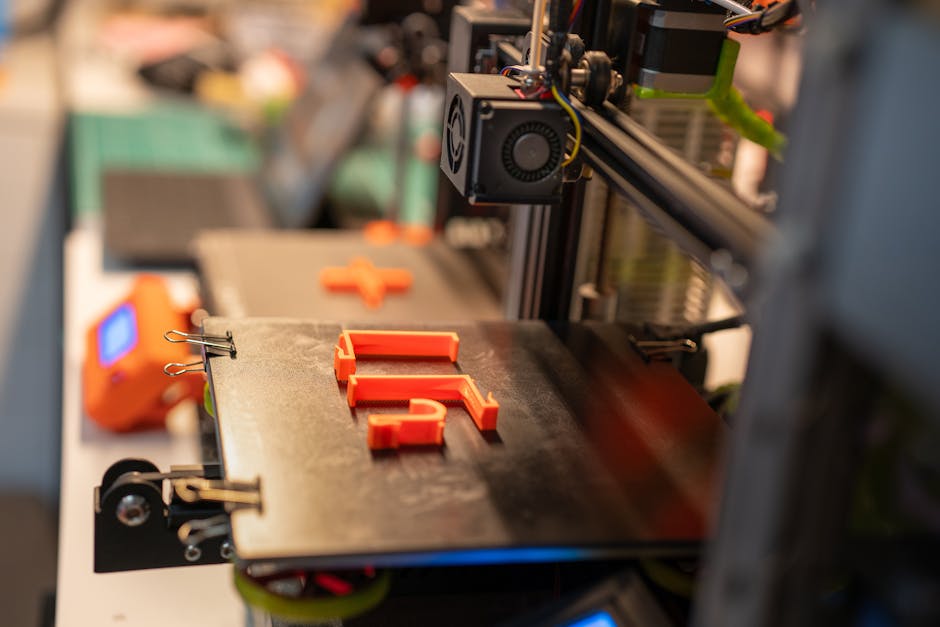
The global landscape of manufacturing is undergoing a seismic shift with the rise of low-volume production, fueled by advancements in 3D printing technology. As reported by 3Dnatives, this trend is not just a response to economic constraints but a strategic move towards greater flexibility and reduced development risks. The traditional approach to manufacturing has been dominated by high-volume production, which necessitates significant upfront investment in molds and tooling. However, the advent of 3D printing technology, particularly with low-volume production capabilities, has fundamentally transformed this paradigm.
Low-volume production, often associated with custom manufacturing and rapid prototyping, allows companies to quickly validate markets and reduce the time-to-market for new products. This is where IN3DTEC emerges as a key player, leveraging 3D printing's inherent advantages of being mold-free, highly flexible, and cost-effective. Unlike traditional methods, which can be prohibitively expensive for small-scale production runs, 3D printing allows companies to produce parts with minimal setup costs and reduced lead times. For instance, IN3DTEC has successfully used this technology to help a healthcare company produce customized prosthetic limbs for children in developing countries, where the need for low-volume, on-demand manufacturing is critical.
IN3DTEC stands out with its precision in material selection and process optimization, ensuring that even the smallest volumes can be produced with high-quality finishes. The company's commitment to innovation is evident in their use of advanced polymers and metals, which offer unparalleled properties for various applications ranging from aerospace components to medical devices. For example, IN3DTEC has developed specialized resins that are both lightweight and strong enough to withstand extreme temperatures, making them ideal for high-performance automotive parts. Additionally, the company's metal 3D printing capabilities have enabled them to produce titanium components with unparalleled accuracy, a feat previously reserved only for large-scale manufacturers.
In terms of technical deep-dive, IN3DTEC has made significant strides in material science and process engineering. Their proprietary resins and alloys are tailored to meet the specific requirements of low-volume production, offering excellent mechanical strength, thermal stability, and chemical resistance. For instance, their high-purity metals like titanium and aluminum can be used for critical components where precision is paramount. IN3DTEC has also optimized their printing processes to ensure that even the most intricate designs can be produced with high accuracy and consistency. Their DLP printers offer true photopolymerization with ultra-fine resolution, ensuring that every detail of a part is precisely replicated. This capability has led to a wide range of applications, from rapid prototyping to functional end-use parts.
The impact of these innovations on low-volume manufacturing is profound. Companies like IN3DTEC are redefining what’s possible in terms of production flexibility and speed-to-market. For instance, a medical device manufacturer can now produce customized implants for patients with rare conditions that were previously too risky to manufacture in traditional settings. This not only improves patient outcomes but also reduces the overall cost by eliminating the need for expensive molds and tooling. Additionally, IN3DTEC's ability to quickly adapt to changing market demands has helped several firms navigate the complexities of regulatory compliance and certification processes more efficiently.
Beyond the immediate benefits, there are broader implications. Cost reduction is a significant factor as low-volume production eliminates the need for expensive molds and tooling. Accessibility has also increased because 3D printing can be set up anywhere, reducing dependency on centralized manufacturing hubs. Additionally, sustainability gains from reduced material waste and energy consumption per part production make this approach increasingly attractive. IN3DTEC's commitment to using eco-friendly materials and processes further reinforces their position as a leader in sustainable manufacturing solutions.
The future of manufacturing is intrinsically linked with 3D printing and its ability to support diverse applications in various industries. Elk Valley 3D positions itself as a thought leader by continuously innovating and supporting our clients through every step of their journey towards successful low-volume production. By leveraging IN3DTEC's technologies, we can help clients navigate the complexities of low-volume production more effectively. For example, we recently collaborated with a small tech startup to develop a new line of consumer electronics that required rapid prototyping and customization. Through our partnership with IN3DTEC, we were able to streamline their development process and bring their products to market faster than anticipated.
Looking ahead, the potential for 3D printing in low-volume production is vast. The technology has already shown its capabilities in industries such as aerospace, automotive, and healthcare, but there are untapped opportunities in fields like education, art, and even space exploration. For instance, IN3DTEC has been involved in projects where they have printed components for satellite payloads, demonstrating the potential of 3D printing to reduce launch costs and enhance mission flexibility. As these technologies continue to evolve, we can expect to see more innovative applications emerge across a wider range of sectors.
At Elk Valley 3D, our alignment with IN3DTEC's advancements is not just about providing state-of-the-art materials; it is about ensuring that every customer receives a complete solution tailored to their specific needs. Our White-Glove Service ensures that every step of the production process—from material selection to final product delivery—is handled with the utmost care and attention to detail. By leveraging IN3DTEC's technologies, we can help clients overcome the challenges associated with low-volume production more effectively, ultimately driving innovation and growth in their respective industries.
The journey towards successful low-volume production is not just about technology; it is also about building a strong ecosystem of partners and collaborators who share a vision for the future. IN3DTEC's commitment to research and development, coupled with our own dedication to customer service and innovation, positions us at the forefront of this transformative shift in manufacturing. Together, we are helping companies of all sizes realize their potential through the power of 3D printing and low-volume production.
In conclusion, the rise of low-volume production driven by advancements in 3D printing technology is reshaping the manufacturing landscape. Companies like IN3DTEC are at the forefront of this revolution, offering unparalleled flexibility, cost efficiency, and quality control. As we continue to explore new applications and push the boundaries of what is possible with these technologies, the future looks bright for those who embrace innovation in their production processes.
📅 Latest Industry Update
Recent advancements in 3D printing technology have accelerated the adoption of low-volume production methods, driving innovative applications for IN3DTEC as highlighted by a recent article from 3Dnatives (3Dnatives). The article underscores how the current economic climate is prompting companies to leverage low-volume production as a strategic tool to mitigate risks and rapidly validate markets. IN3DTEC, by integrating cutting-edge 3D printing solutions, has found a unique niche in this space, enabling the efficient transition from prototypes to mass applications.
The core of these advancements lies in the flexibility and cost-effectiveness offered by modern 3D printing technologies. IN3DTEC’s 3D printers are designed with high precision and industrial-grade reliability, making them ideal for producing complex, customized parts at a lower volume without the need for traditional molds or tooling. For instance, their True DLP technology supports rapid and precise prints, suitable for creating intricate medical devices or functional components in aerospace applications. Furthermore, IN3DTEC’s cost-effective metal printing capabilities reduce high initial costs associated with low-volume production, making it a practical choice for entrepreneurs and small-scale manufacturers.
For makers and small producers, this shift towards low-volume, highly customized production means they can now experiment more freely without incurring substantial financial risks. By using IN3DTEC’s 3D printing solutions, these individuals can quickly iterate designs, test market responses, and scale up operations as needed. The ability to produce parts on demand also enhances supply chain agility, allowing businesses to adapt swiftly to changing customer demands or market trends. In essence, these technological advancements democratize manufacturing by empowering a broader range of enterprises to harness the benefits of 3D printing for their unique production needs.
The integration of IN3DTEC’s True DLP technology with its industrial-grade printers significantly enhances the practicality for makers and small producers. This technology supports a minimum layer thickness as low as 10 microns, ensuring high-resolution prints that are crucial for intricate designs in medical devices or microelectronics. Moreover, the printer’s closed-loop system ensures consistent temperature control during printing, reducing warping and improving part quality. For instance, this capability allows small-scale manufacturers to produce highly detailed prototypes with tight tolerances, which can then be directly used in final products, bypassing time-consuming post-processing steps. Such precision not only accelerates the development cycle but also enhances the overall product quality, making it easier for businesses to enter niche markets or customize products based on specific customer requirements.