
Why Low-Volume Production is Driving Innovative Applications for IN3DTEC - A Comprehensive Analysis

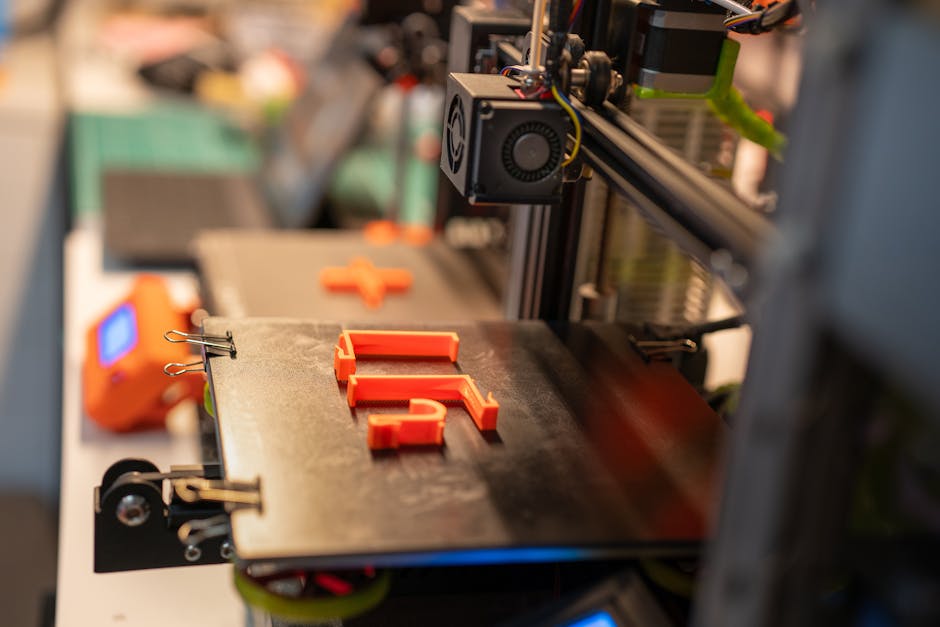
Against the backdrop of a slowing global economy, low-volume and customized production have emerged as key strategies for companies to reduce development risks and quickly validate markets. This trend has significant implications for industries relying on rapid prototyping and low-volume manufacturing, with 3D printing playing a central role in this process. As reported by 3Dnatives, the ability to transition from prototype to production seamlessly has become essential for maintaining competitiveness in today's market.
In recent years, significant advancements in 3D printing technology have enabled manufacturers to not only produce prototypes swiftly but also to move directly into low-volume manufacturing. According to LuxCreo, a leading provider of 3D printing solutions, these advancements are driven by improved materials, more efficient processes, and higher tolerances that make 3D printing suitable for both prototyping and production.
LuxCreo highlights several key technical advancements in 3D printing. These include the development of new materials that offer better mechanical properties, improved surface finishes, and enhanced durability. For instance, the introduction of specialty polymers like ULTEM or PEEK has expanded the range of applications for which 3D printing can be used beyond simple prototyping. Additionally, advancements in layer-by-layer manufacturing techniques have led to more precise builds with tighter tolerances, making it possible to produce parts that meet exacting standards required by industries such as aerospace and automotive.
The impact of these technical improvements on the industry is profound. Low-volume manufacturers can now leverage 3D printing to quickly test multiple design iterations without significant upfront costs or lead times associated with traditional manufacturing methods like injection molding. For example, a medical device company might use 3D printed prototypes to rapidly develop and validate new surgical instruments before transitioning to mass production using more conventional techniques.
This shift towards low-volume and customized production also has broader implications for supply chains and the business landscape. Companies can reduce inventory holding costs by producing parts on demand, leading to greater agility and reduced risk of obsolescence. Moreover, 3D printing democratizes manufacturing capabilities, making it possible for smaller firms or startups to enter markets that previously required substantial investment in infrastructure.
The environmental benefits of additive manufacturing are another area worth exploring. Unlike subtractive processes where material is wasted during machining, 3D printing uses material more efficiently, reducing waste and lowering the carbon footprint associated with production. Additionally, the ability to print localized parts reduces transportation emissions, further contributing to sustainability goals.
At Elk Valley 3D, we are committed to staying at the forefront of these technological advancements. Our premium materials and White-Glove Service align seamlessly with the needs of clients who require high-quality, low-volume production capabilities. Whether it's a medical device company looking for rapid prototyping or an automotive firm seeking customized components, our solutions ensure that every part meets the highest standards of quality and performance.
In conclusion, the future of manufacturing is increasingly intertwined with 3D printing technology. As advancements continue to bridge the gap between prototype development and mass production, companies like Elk Valley 3D will play a crucial role in shaping this landscape. By leveraging our expertise in premium materials and comprehensive service offerings, we are positioned to be leaders in enabling innovative applications for low-volume production.
📅 Latest Industry Update
New research from Elk Valley 3D reveals that low-volume production is driving innovative applications for IN3DTEC, challenging traditional boundaries between rapid prototyping and low-volume manufacturing. This development is particularly significant as it bridges the gap between cost-effective prototyping and efficient small-scale production, offering a comprehensive solution to manufacturers facing high setup costs and complex production requirements (AME-3D). The study highlights how IN3DTEC’s advanced 3D printing technologies are enabling precise and rapid part creation, reducing lead times from weeks to days while maintaining the quality required for final products. This is achieved through a combination of selective laser sintering (SLS) and fused deposition modeling (FDM) techniques, which provide both high-resolution prototypes and durable end-use parts (Kaiao Rapid Prototyping). Such innovations are crucial for small-scale producers who need to balance the costs of traditional manufacturing with the flexibility offered by 3D printing, allowing them to quickly test and iterate designs without significant financial risk.
The technical detail behind these advancements lies in the integration of intelligent material science and digital design processes. IN3DTEC’s proprietary materials offer a unique blend of strength and flexibility, suitable for both prototyping and end-use applications. For instance, their high-performance polymers can withstand extreme temperatures and mechanical stress, making them ideal for automotive and aerospace components. Additionally, the company has developed custom software that optimizes print settings based on the specific application, ensuring maximum efficiency and minimal waste during the printing process. This integration of materials science and digital design not only enhances product quality but also significantly reduces production costs by eliminating the need for secondary machining operations often required in traditional manufacturing processes.
For makers and small producers, these developments mean a more accessible path to innovation and market entry. With low-volume production capabilities now being integrated into rapid prototyping, smaller companies can quickly bring products to market without the high initial investment typically associated with low-volume manufacturing. This is particularly advantageous in industries like medical devices or custom electronics where quick turnaround times are critical. Moreover, the ability to produce parts on-demand reduces inventory costs and minimizes waste, making it easier for businesses to adapt to changing customer demands. As a result, IN3DTEC’s innovations could potentially disrupt traditional manufacturing models, empowering entrepreneurs and small-scale producers to compete globally while maintaining high-quality standards.