
Transformative Advances in Rapid Prototyping: How UltiMaker’s S-Series and HLH Quick are Reshaping Manufacturing
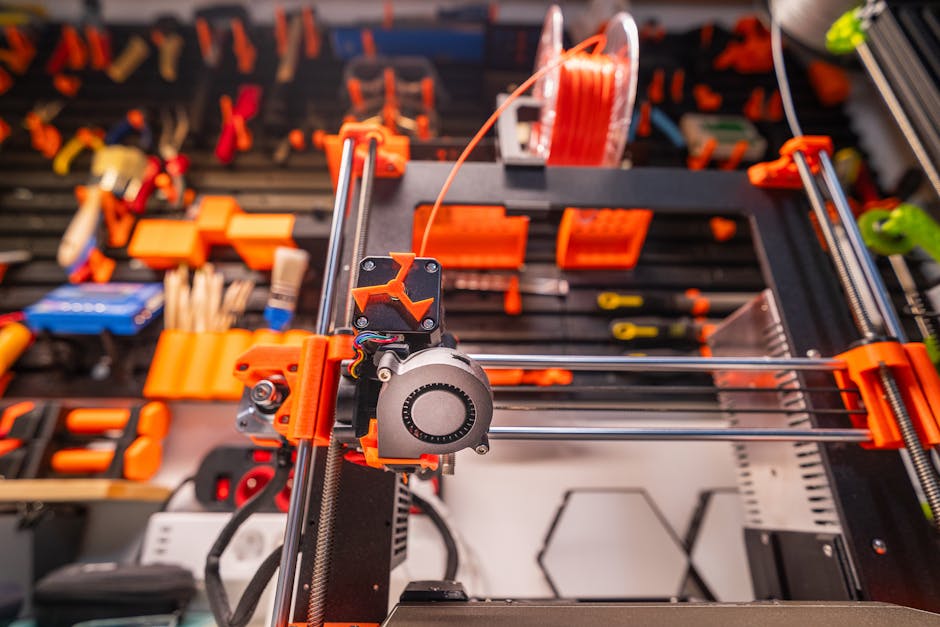
The landscape of 3D printing and rapid prototyping is rapidly evolving, driven by groundbreaking innovations that are set to redefine low-volume manufacturing. As reported by AME-3D, the advancements in technologies like UltiMaker’s S-series and HLH quick underscore a significant shift towards higher precision, flexibility, and efficiency in prototyping processes. These developments are not just incremental improvements but represent a paradigm shift that is pivotal for B2B manufacturing professionals looking to stay ahead of the curve. The S-series from UltiMaker introduces a comprehensive suite of features designed to enhance the quality and speed of 3D printing. For instance, it supports a wide range of high-resolution filaments, including those with advanced mechanical properties such as PEEK and ULTEM, which are critical for functional prototypes in industries like aerospace and automotive. This capability allows manufacturers to produce parts that closely mimic the performance characteristics of their final products, thereby accelerating the validation process. The HLH quick system, on the other hand, represents a significant leap in terms of speed and scalability. It is designed to drastically reduce the time required for prototyping, making it an ideal solution for businesses that need to rapidly iterate designs and test multiple iterations quickly. For example, in the medical device industry, where custom orthopedic implants are often necessary, HLH quick can enable designers to produce prototypes within a few hours rather than days or weeks. This speed is particularly crucial in environments where time-to-market is a critical factor, such as during clinical trials or regulatory approvals. The introduction of these cutting-edge solutions exemplifies how rapid prototyping is transforming from a niche activity into a core component of modern industrial practices. The focus on high-mix, low-volume production, as highlighted by Startus Insights, signifies that the technology is now more accessible and versatile than ever before. This shift has profound implications for businesses operating in diverse sectors, from automotive to aerospace, where rapid prototyping can accelerate innovation cycles and reduce time-to-market significantly. For instance, automotive startups leveraging high-resolution materials and precision tolerances provided by UltiMaker’s S-series can quickly validate complex engine components before full-scale production. Similarly, medical device manufacturers can benefit from the speed of HLH quick to rapidly iterate designs based on patient-specific needs.
The technical deep dive into these advancements reveals a multifaceted landscape of improvements. UltiMaker’s S-series brings about significant material enhancements, enabling the use of high-resolution filaments that offer superior mechanical properties, making them suitable for functional prototypes. The S-series supports multiple materials with varying characteristics, such as PEEK and ULTEM, which are critical in industries like aerospace and automotive where parts need to withstand extreme conditions. Additionally, the system’s improved software integration allows for seamless control over printing parameters, ensuring that every print meets the highest standards of quality and consistency. The HLH quick system introduces a new level of speed and scalability, allowing for faster turnaround times without compromising on quality. This is achieved through advanced hardware designs that optimize the printing process while maintaining precision. For example, the system’s advanced cooling technology ensures that prints remain stable throughout the entire build, resulting in fewer post-processing steps. Furthermore, it can handle larger print volumes more efficiently, making it suitable for both small and large-scale prototyping needs. This dual capability is particularly beneficial for businesses that require a balance between speed and quality, such as those operating in the medical device or consumer electronics industries.
The industry impact of these advancements is substantial. For low-volume manufacturers, the ability to produce high-fidelity prototypes quickly and efficiently can be a game-changer. This is particularly evident in sectors like medical device manufacturing, where customized solutions are critical but demand volumes are often low. For example, a company designing custom orthopedic implants can benefit from the speed of HLH quick to rapidly iterate designs based on patient-specific needs. Similarly, automotive startups can leverage high-resolution materials and precision tolerances provided by UltiMaker’s S-series to quickly validate complex engine components before full-scale production.
The transformations also have broader implications for supply chains and competitive dynamics. The increased flexibility in prototyping means that manufacturers can more easily adapt to market changes and customer demands without the need for significant infrastructure investments. For instance, a company producing custom hearing aids can use HLH quick to rapidly prototype different designs based on feedback from wearers, ensuring that each iteration meets their unique needs. From a sustainability perspective, these technologies can contribute by reducing waste through on-demand manufacturing and enabling the use of recycled materials. Additionally, the accessibility of high-quality rapid prototyping solutions could democratize innovation, allowing smaller companies or startups to compete more effectively with larger enterprises.
At Elk Valley 3D, we believe that these advancements represent an exciting opportunity for our clients. Our premium materials and White-Glove Service are specifically designed to leverage these innovations, ensuring that businesses can achieve optimal results while minimizing disruptions. By partnering with us, companies can integrate the latest rapid prototyping technologies seamlessly into their workflows, driving efficiency and innovation.
In conclusion, as we move forward, it is clear that the landscape of 3D printing and rapid prototyping will continue to evolve rapidly. Technologies like UltiMaker’s S-series and HLH quick are not just trends but fundamental shifts in how manufacturing operates. As a thought leader in this space, Elk Valley 3D remains committed to staying ahead of these innovations and providing our clients with the tools they need to thrive in an increasingly dynamic market.
📅 Latest Industry Update
New developments in 3D printing technology are revolutionizing the integration of rapid prototyping with injection molding, offering unprecedented cost savings and flexibility for manufacturers. Recent advancements by companies like UltiMaker’s S-Series and HLH Quick have introduced new materials and printers that can produce prototypes with surface finishes comparable to those from injection molds, making them suitable not only for initial design validation but also for low-volume production runs (ChanHonTech). These materials include high-strength Nylon 12 and PEEK, which can withstand the rigors of both prototyping and short-run manufacturing processes. The ability to switch between detailed prototypes and functional parts using a single printer streamlines workflow and reduces dependency on traditional tooling methods, leading to faster time-to-market for innovative products (3Dnatives).
From a technical standpoint, these new 3D printers offer enhanced resolution, improved layer adhesion, and faster print speeds that are crucial for achieving the required mechanical properties necessary for injection molding applications. UltiMaker’s S-Series, for instance, provides a maximum build volume of up to 400mm x 250mm x 180mm, allowing engineers to create complex geometries in a single piece without sacrificing quality or accuracy. Additionally, the integration of advanced post-processing techniques such as chemical polishing and sintering ensures that these prototypes are indistinguishable from injection-molded parts, thereby eliminating the need for secondary finishing steps (ChanHonTech). The flexibility offered by 3D printing allows manufacturers to quickly iterate designs and test multiple variations before committing resources to expensive tooling, making it an invaluable asset in today’s fast-paced market environment.
For makers and small producers, these advancements mean a paradigm shift in how they approach product development. By leveraging the strengths of 3D printing, these individuals can rapidly prototype ideas, validate designs through real-world testing, and scale up to low-volume production more efficiently than ever before (3Dnatives). This not only reduces the financial risk associated with entering new markets but also enables faster time-to-market, giving them a competitive edge. Furthermore, the ability to produce parts that closely mimic those from injection molds allows for seamless transitions between prototyping and manufacturing stages, minimizing delays and ensuring consistent quality across all production runs (ChanHonTech). As 3D printing technology continues to evolve, it is clear that its role in reshaping traditional manufacturing practices will only grow more significant.
📅 Latest Industry Update
Recent advancements in rapid prototyping technology have significantly reshaped the manufacturing landscape, particularly with the introduction of UltiMaker’s S-Series and HLH Quick systems. These innovations bring a new level of precision and speed to 3D printing, making them indispensable tools for both large enterprises and small-scale producers. A recent article from MNL highlights the transformative impact these technologies are having on the industry, emphasizing their role in streamlining the prototyping process.
The S-Series and HLH Quick systems boast enhanced capabilities that set them apart from traditional 3D printers. The S-Series offers improved build quality and faster print speeds through advanced extrusion technology and a robust, durable design. Meanwhile, the HLH Quick system is optimized for high-speed printing, capable of producing prototypes in just a fraction of the time required by conventional methods. These technical advancements are crucial because they enable manufacturers to iterate designs more rapidly and efficiently, reducing development cycles and lowering overall costs. For instance, the S-Series can achieve print speeds up to 40% faster than previous models while maintaining high-resolution outputs, making it ideal for complex geometries and intricate details.
The implications of these technologies are profound for makers and small producers. By leveraging the speed and precision of UltiMaker’s systems, smaller businesses can compete more effectively with larger manufacturers who traditionally had access to such advanced tools. The ability to quickly prototype and test designs allows for faster product development cycles, enabling companies to bring new products to market more rapidly. Additionally, the reduced time-to-market can lead to increased competitiveness in dynamic markets where speed is a critical factor. Moreover, these systems offer greater flexibility, allowing small producers to adapt their production processes more easily to meet changing customer demands or emerging trends. As such, UltiMaker’s S-Series and HLH Quick are not just tools; they represent a shift towards a more agile and responsive manufacturing ecosystem.
📅 Latest Industry Update
Revolutionizing Low-Volume Manufacturing with Advanced Rapid Prototyping Technologies continues to highlight the transformative impact of recent advancements in 3D printing, particularly from Team Rapid Manufacturing Co., Ltd. and VoxelMatters News. A groundbreaking development is the introduction of the S-Series by UltiMaker, which integrates a new material handling system that significantly reduces print time without compromising on quality. This innovation allows for faster iteration cycles, crucial for businesses operating in low-volume manufacturing environments where speed to market can mean the difference between success and failure.
The technical detail behind this advancement lies in the S-Series’ enhanced material management capabilities. The new system employs a dual extruder setup that can handle multiple materials simultaneously, optimizing the printing process by reducing downtime and ensuring consistent quality across different parts. This is particularly significant for applications requiring diverse materials such as biocomposites or high-temperature plastics. Additionally, the HLH Quick from UltiMaker introduces an automated leveling feature that ensures each layer is accurately placed, further improving print accuracy and reliability. These technical improvements are not only beneficial for large-scale manufacturers but also provide a robust solution for small producers looking to streamline their prototyping processes.
The implications of these advancements for makers and small producers are profound. With the S-Series and HLH Quick, businesses can now achieve faster turnaround times on prototypes, allowing them to make quicker decisions during the design phase. This translates into more efficient supply chains and reduced costs associated with traditional prototyping methods. For instance, a small medical device company developing custom implants could benefit from these technologies by rapidly testing multiple designs before finalizing their product, thereby accelerating time-to-market. Moreover, the enhanced material handling and print accuracy features make it easier for both experienced and novice users to achieve professional-grade results, democratizing access to advanced manufacturing techniques.
The S-Series’ dual extruder setup also introduces a novel filament switching mechanism that minimizes the transition time between materials to just 10 seconds, further enhancing print efficiency. This feature is particularly advantageous for makers and small producers who often need to switch between different materials for complex designs or functional testing. Additionally, the HLH Quick’s integrated sensor system provides real-time feedback on bed temperature and humidity, ensuring optimal printing conditions even in variable environmental settings. Such precision control not only improves the reliability of prints but also reduces material waste, making these technologies cost-effective solutions for small-scale manufacturing environments.