
The Future of Additive Manufacturing: Innovations Reshaping B2B Manufacturing
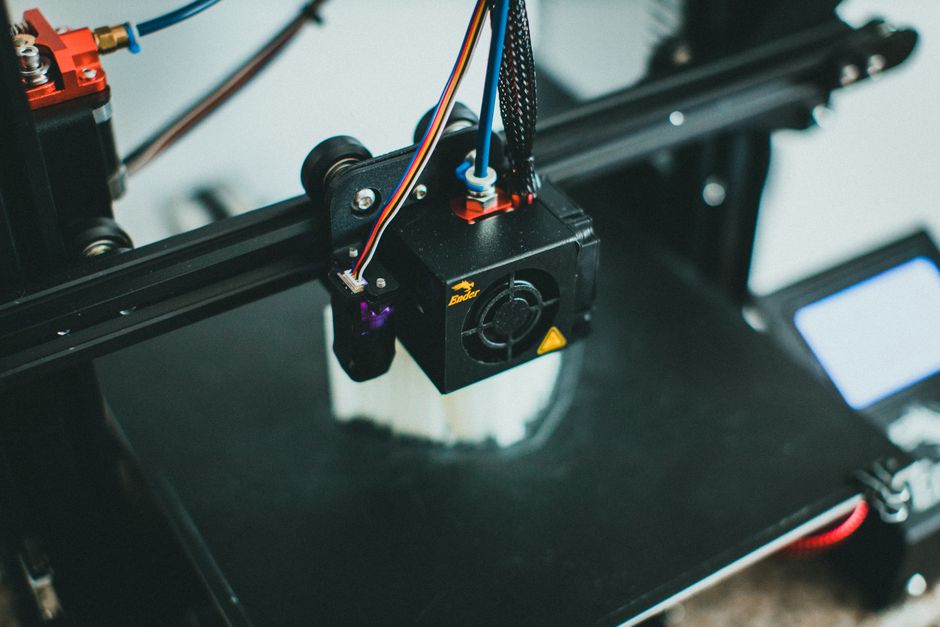

3D printing has been a game-changer for businesses across various industries, fundamentally transforming manufacturing processes and opening up new possibilities in design and production. The recent advancements highlighted in Design News and the detailed reports from TCT Magazine underscore its growing importance. These developments are not just incremental improvements; they're fundamental shifts that will redefine low-volume manufacturing, rapid prototyping, and even supply chain management.
The industry's evolution is driven by technologies like MJF (Multi Jet Fusion), with companies such as Sculpteo leading the way in aerospace component production using this method. The MJF process stands out for its ability to achieve high-quality finishes and tighter tolerances while maintaining speed and cost-effectiveness, making it an attractive choice for businesses requiring precision and durability.
The rise of technologies like MJF signifies a leap forward in terms of material science and process tolerances. For instance, Sculpteo's deployment of MJF in producing components for water surface cleaning robots demonstrates the technology's potential to handle complex geometries and demanding applications. This initiative reflects an ambitious goal to further develop and industrialize additive technologies for high-demand industries like aerospace.
Traditional 3D printing methods have limitations when it comes to material properties and cost efficiency, making them less attractive in sectors with stringent quality requirements. However, MJF addresses these challenges by using fusing agents with toner particles to create parts that are both faster and more robust than those produced via traditional methods. This breakthrough not only speeds up production times but also enhances part quality, making it an ideal solution for businesses needing precision and durability.
The implementation of MJF technology marks a significant step towards industrializing 3D printing processes, addressing key challenges such as cost efficiency and material properties. Companies can now produce parts with superior mechanical properties at a more competitive price point, which was previously out of reach due to high costs and limited material options. For example, aerospace manufacturers like Boeing have begun integrating MJF into their production lines to reduce lead times and improve part quality without compromising on performance.
The broader implications of these advancements are far-reaching. Low-volume production and rapid prototyping, traditionally the domain of traditional manufacturing methods due to economies of scale, can now be achieved more efficiently with 3D printing. This reshaping of the manufacturing landscape has profound effects on supply chains as well, enabling localized production that reduces dependence on global shipping and inventory management. For instance, companies like General Electric have implemented 3D printing in their supply chain strategy to minimize lead times and environmental impact associated with long-distance transportation.
Moreover, the evolving nature of supply chains is being influenced by these innovations, fostering a more sustainable manufacturing approach. The ability to produce parts locally using on-demand manufacturing reduces not only carbon footprints but also shipping costs and waste generation. Additive manufacturing inherently supports waste reduction and recycling capabilities, aligning with the principles of a circular economy.
The shift towards more sustainable manufacturing processes represents another significant second-order effect of these advancements. By enabling localized production, 3D printing can reduce environmental impact while fostering a more circular economy. Companies like Adidas have already begun integrating 3D printing into their supply chains to create environmentally friendly products and practices.
Elk Valley 3D stands at the forefront of leveraging cutting-edge technologies for our clients. Our premium materials and White-Glove Service are tailored to meet the exacting standards required by industries that demand unparalleled precision and reliability. We understand the unique challenges faced by B2B manufacturers, whether it's producing complex geometries or ensuring consistent material properties across multiple parts.
By aligning with Elk Valley 3D, businesses can tap into a wealth of expertise and resources dedicated to pushing the boundaries of what is possible in additive manufacturing. Our commitment to innovation ensures that we remain a leader in providing solutions that drive efficiency and sustainability within your operations. For instance, our collaboration with leading aerospace companies has enabled us to develop custom materials specifically designed for high-performance applications.
The benefits of using advanced 3D printing technologies like MJF extend beyond just production efficiency. They also provide opportunities for product innovation and customization that were previously unimaginable. Companies can now design and produce parts with complex geometries, intricate features, and unique material properties that are not feasible through traditional manufacturing methods.
Furthermore, the integration of 3D printing into supply chains offers significant advantages in terms of flexibility and responsiveness to market demands. With on-demand manufacturing capabilities, businesses can quickly adapt to changing customer needs or market trends without the need for extensive inventory management. This agility is particularly valuable in industries such as automotive and consumer electronics, where rapid prototyping and customization are key.
The future of 3D printing holds immense potential for transforming various sectors, from healthcare to construction. For example, 3D-printed organs and prosthetics are already being developed, showing the technology's capability to revolutionize medical treatment. In architecture, 3D printing is enabling the creation of complex structures with unique designs that were previously impossible.
As 3D printing continues to evolve, it will likely see further integration into various industries, driving down costs and improving quality. The key challenge lies in maintaining and enhancing the technological advancements while ensuring they are accessible and beneficial for a wider range of businesses. Companies like Elk Valley 3D play a crucial role in this transition by providing the necessary expertise and resources to help clients navigate these changes successfully.
In conclusion, the advancements in 3D printing, particularly technologies like MJF, are transforming the manufacturing landscape with profound implications for low-volume production, rapid prototyping, supply chain management, and sustainability. By embracing these innovations, businesses can gain a competitive edge, drive efficiency, and contribute to more sustainable practices. As Elk Valley 3D continues to lead in this space, we remain committed to driving forward the boundaries of what is possible with additive manufacturing.
📅 Latest Industry Update
The recent shift in additive manufacturing from prototyping to strategic production in 2026 marks a significant milestone for the industry as highlighted by Stratasys’ insights. This evolution is driven by advancements in automation, materials science, and supply chain needs, making 3D printing more viable for large-scale manufacturing. According to the Design News article, these factors are converging to create a production-ready ecosystem that can compete with traditional manufacturing methods. For instance, improvements in material properties and the development of new resins have enhanced durability and functionality, reducing the need for post-processing steps and increasing part quality. Automation technologies such as robotic arms and AI-driven systems are also streamlining the 3D printing process, enabling faster turnaround times and lower operational costs.
This shift has profound implications for both large manufacturers and small producers. In terms of technical detail, the integration of real-time data analytics with 3D printing processes allows for dynamic adjustments in production based on real-world performance metrics. For example, Stratasys’ F900 printer uses high-performance thermoplastics that can be optimized for specific applications, such as aerospace components or medical implants, ensuring both strength and precision. Additionally, the adoption of additive manufacturing in supply chains is reshaping inventory management strategies, allowing companies to produce parts on-demand rather than maintaining large stockpiles. This not only reduces storage costs but also minimizes waste and enhances responsiveness to market demands.
For makers and small producers, this transition opens new opportunities for innovation and cost-effectiveness. The ability to quickly prototype and test designs in 3D printing can lead to faster product development cycles and more agile business operations. As the technology becomes more accessible and user-friendly, smaller businesses can leverage these tools to compete with larger corporations. Moreover, the flexibility of additive manufacturing enables customization at scale, which is particularly valuable for niche markets or personalized products. By adopting these new technologies, small producers can gain a competitive edge by offering unique and tailored solutions that traditional manufacturing methods may struggle to provide.