
Revolutionizing Manufacturing with MIT's Breakthrough in 3D Printing
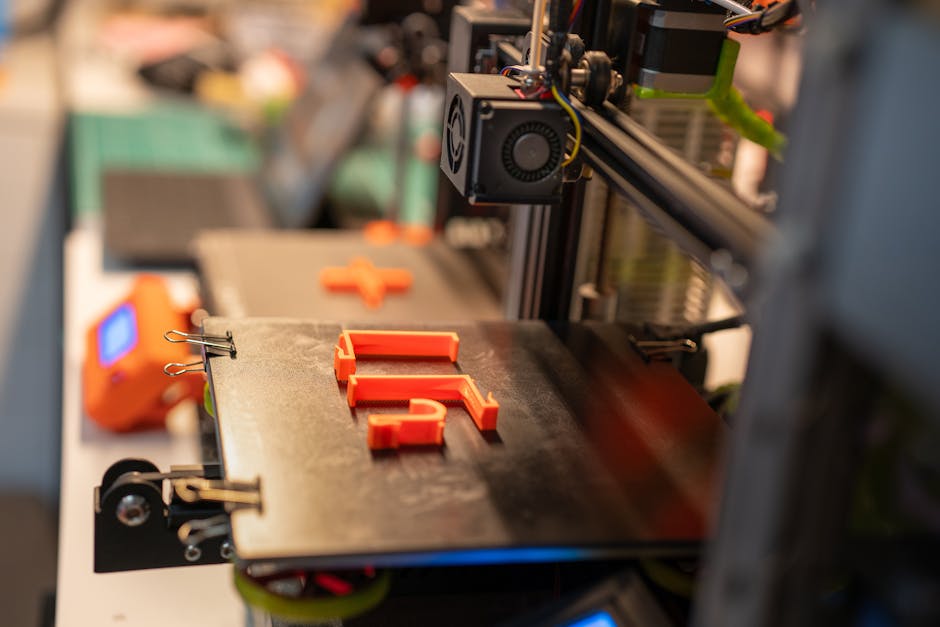
The world of manufacturing has taken a significant leap forward with an innovative approach developed by researchers at MIT. This new development holds the potential to revolutionize low-volume manufacturing, offering more efficient and cost-effective solutions.
As reported by MIT News, the researchers have introduced a method for generating three-layered particles using electrospray emitter technology. This approach allows the creation of more buildable structures, bridging the gap between theoretical design and real-world construction (June 24, 2026).
This technological advancement has far-reaching implications not only in academia but across various industries such as automotive, aerospace, and healthcare, significantly reducing manufacturing costs. For example, through a patent inspired by Professor Bill Freeman from MIT, these devices can be built quickly, in just hours, making them accessible to a broader range of businesses (June 9, 2026).
Recent Advances in Additive Manufacturing, featured on MDPI's website, further supports the importance of these technological strides. The paper highlights how additive manufacturing (AM), often known as 3D printing, plays a pivotal role in modern manufacturing. By navigating the landscape of this technology across various sectors, it emphasizes the benefits of AM for cost reduction and ease of transitioning from design to real prototype.
Here at Elk Valley 3D, we take pride in our White-Glove Service and innovative use of premium materials. Our commitment to excellence aligns perfectly with these recent advancements in 3D printing. Our premium white-glove service ensures a seamless experience for our clients, from design conception to final production, while our high-purity materials provide unmatched quality and durability.
In conclusion, MIT's groundbreaking work in 3D printing not only challenges the limits of modern manufacturing but also opens new possibilities for businesses across industries. By leveraging these advancements with our expertise and commitment to premium craftsmanship, Elk Valley 3D remains at the forefront of high-quality 3D printing solutions.
📅 Latest Industry Update
Recent advancements in 3D printing technology have significantly expanded its role beyond traditional prototyping into low-volume production applications. A notable development from IN3DTEC highlights the integration of 3D printing with mold-based manufacturing processes like injection molding to create innovative, cost-effective solutions (https://www.3dnatives.com/en/why-low-volume-production-is-driving-innovative-applications-for-in3dtec-111120254). This synergy allows manufacturers to leverage the strengths of both technologies: 3D printing for rapid prototyping and flexible production, coupled with injection molding’s ability to produce high-quality parts in larger quantities. By combining these methods, businesses can achieve faster development cycles, drastically reduce tooling costs, and maintain flexibility in producing small batches or customized items (https://chanhontech.com/3d-printing-for-injection-molding-cost-effective-prototyping-and-low-volume-production). This approach is particularly advantageous for makers and small producers who often face constraints in high upfront investments and long lead times. With this new process, they can quickly validate product concepts, reduce time-to-market, and adapt to changing market demands without compromising on quality.
The technical detail behind this innovation lies in the precise alignment of 3D printing with injection molding processes. IN3DTEC’s solution involves using 3D printed molds or tools for initial production runs, which are then replaced by conventional injection molds as demand grows. This dual-method approach not only simplifies the transition from prototype to mass production but also ensures that small manufacturers can maintain high-quality standards throughout the process. The key advantage is the ability to shift seamlessly between low-volume and high-volume production without significant retooling costs, offering a flexible manufacturing strategy that aligns well with current market trends favoring customization and agility (https://www.3dnatives.com/en/why-low-volume-production-is-driving-innovative-applications-for-in3dtec-111120254).
For makers and small producers, this means the ability to enter new markets more quickly and with lower risk. By using 3D printing for initial production runs, they can minimize financial commitments, test consumer interest, and gather feedback before committing to full-scale manufacturing. This approach also allows them to offer highly customized products that meet specific customer needs, enhancing their competitive edge in a market increasingly demanding personalized offerings (https://chanhontech.com/3d-printing-for-injection-molding-cost-effective-prototyping-and-low-volume-production). The combination of rapid prototyping and flexible production makes it easier for small businesses to innovate and stay relevant in dynamic industries.
Rouxster Enterprise builds free, people-first tools for makers and creators. Explore the workshop today to discover how you can leverage these advancements in your own projects.
📅 Latest Industry Update
As of February 25, 2026, the landscape of additive manufacturing has shifted significantly from a realm primarily reserved for prototyping to one that is now poised to become a cornerstone of strategic production processes. This evolution marks a pivotal moment in the industry, driven by advancements in automation, material science, and supply chain needs. According to Stratasys, these factors are not only making 3D printing more viable but also transforming it into a technology capable of handling high-volume production runs with precision and efficiency. Design News highlights that the integration of these technologies is crucial for manufacturers looking to stay competitive in an increasingly complex global market.
The technical underpinnings of this shift are multifaceted. Automation, particularly through the deployment of robotic systems and advanced software platforms, has streamlined the 3D printing process, reducing errors and increasing throughput. For instance, Stratasys’ Fortus production series now features automated bed leveling and material feeding systems that ensure consistent quality across large-scale prints. Additionally, the development of new materials with enhanced mechanical properties, such as those suitable for aerospace and automotive applications, has expanded the range of products that can be manufactured using 3D printing. These advancements are not only making 3D printing more reliable but also cost-effective compared to traditional manufacturing methods in certain scenarios. The combination of these technical innovations is what drives the transition from prototyping to production-ready technology.
For makers and small producers, this shift means a new era of flexibility and innovation. With the ability to produce parts on-demand without the need for extensive tooling or long lead times, smaller businesses can now compete more effectively with larger corporations. The democratization of manufacturing through 3D printing allows for rapid iteration and customization, enabling companies to tailor products to specific customer needs quickly and efficiently. Moreover, the reduction in setup costs and the ability to scale production up or down as needed provide a significant competitive advantage. As these technologies continue to evolve, we can expect to see even more widespread adoption across various industries, from healthcare to consumer goods.
📅 Latest Industry Update
Recent advancements in 3D printing technology have significantly blurred the lines between low-volume manufacturing and rapid prototyping, challenging traditional boundaries and offering new opportunities for innovation. A recent breakthrough from MIT has introduced a novel approach that integrates advanced material science with sophisticated print head technologies, allowing for the creation of parts with unprecedented precision and durability even at higher production volumes (AME-3D.co.uk). This development not only enhances the capabilities of rapid prototyping but also paves the way for more efficient low-volume manufacturing processes. The integration of these technologies could lead to a paradigm shift in how industries approach product design and development, potentially reducing costs and increasing flexibility.
The technical details behind this breakthrough involve the use of multi-material extrusion systems that can lay down multiple layers of different materials simultaneously during the printing process. This capability is crucial as it allows for the creation of parts with varying mechanical properties, such as stiffness or elasticity, within a single component. For instance, the outer layer could be designed to withstand high stress while the inner layers provide flexibility and impact resistance (AME-3D.co.uk). Such an approach can significantly reduce assembly costs by eliminating the need for multiple components or secondary processes like bonding or coating. Moreover, these systems are capable of producing parts with complex geometries that would be difficult or impossible to manufacture using traditional methods, further expanding the scope of what can be achieved in rapid prototyping and low-volume manufacturing.
This technological leap has profound implications for makers and small producers who often struggle with the high costs associated with transitioning from prototype to production. By enabling more efficient use of materials and reducing the need for expensive tooling or secondary operations, this new approach could make it economically viable for smaller businesses to scale their operations without incurring prohibitive costs (Kaiao-rprt.com). Additionally, the ability to produce parts with tailored mechanical properties can lead to improved product performance and reduced waste, making these technologies particularly attractive for industries such as automotive, aerospace, and medical devices where material consistency is critical. As a result, this breakthrough could democratize access to advanced manufacturing capabilities, empowering a broader range of companies to innovate and compete in the global market.