
Revolutionizing Industry Standards: Key Advancements in 3D Printing
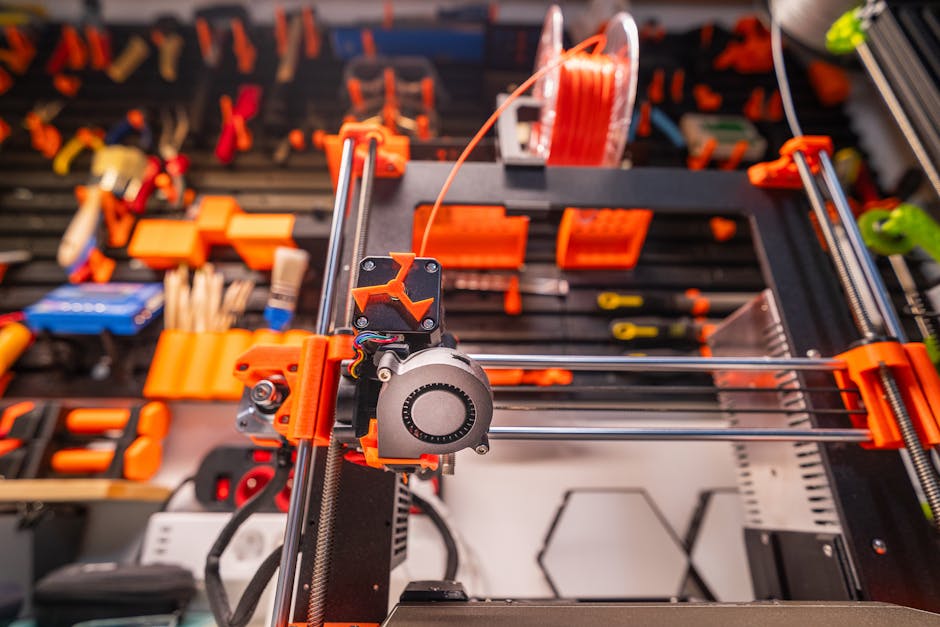
The world of manufacturing is poised for a seismic shift with recent advancements in 3D printing that are not just about speed or volume but fundamentally altering how we approach prototyping, production, and sustainability. From the development of new materials to innovative processes that enhance build quality and speed, 3D printing technology continues to push boundaries, making it an essential tool for high-profile projects and rapid prototyping.
📅 Latest Industry Update
The integration of 3D printing into injection molding processes is revolutionizing the manufacturing landscape by offering a seamless blend of rapid prototyping and low-volume production capabilities. Companies like ChanHonTech have demonstrated that combining these technologies can significantly reduce development cycles, lower tooling costs, and enhance overall agility in producing high-quality parts in small batches. A recent article from ChanHonTech highlights how this synergy allows manufacturers to quickly iterate designs, test functionalities, and bring products to market faster than ever before. Moreover, the global trend towards low-volume production is driving innovation, as evidenced by 3Dnatives, which underscores that 3D printing’s mold-free and flexible nature makes it an indispensable tool for reducing development risks and validating markets. This approach not only addresses the challenges of high upfront costs in traditional injection molding but also paves the way for more efficient, adaptable manufacturing processes.
📅 Latest Industry Update
New developments in 3D printing technology continue to transform the landscape of rapid prototyping. Notably, advancements in material science have enabled the creation of more durable and biocompatible materials suitable for a wide range of applications, from medical devices to consumer electronics. For instance, Stratasys has introduced new bioresins that can be used to create intricate anatomical models with high precision, a breakthrough that could revolutionize medical education and surgical planning Stratasys. These materials not only offer improved mechanical properties but also reduce the need for costly and time-consuming traditional methods, making rapid prototyping more accessible to a broader range of companies.
The technical specifications of these new 3D printing technologies are particularly noteworthy. For example, Stratasys’ Fortus 450mc uses digital light processing (DLP) technology to achieve faster print speeds and higher resolution models. This advancement is crucial for industries where quick turnaround times are essential, such as automotive and aerospace. Additionally, the integration of artificial intelligence in post-processing steps has further enhanced precision and efficiency. AI algorithms can automatically detect and correct minor defects, ensuring that each prototype meets strict quality standards with minimal human intervention Stratasys. These technical improvements not only streamline the prototyping process but also reduce operational costs and improve overall product development cycles.
For makers and small producers, these new developments mean increased flexibility and reduced barriers to entry. With access to advanced 3D printing technologies, smaller companies can now rapidly prototype complex designs without significant investments in infrastructure or skilled labor. This democratization of prototyping allows for more iterative design processes, enabling businesses to test multiple iterations quickly and efficiently. Moreover, the ability to produce prototypes using biocompatible materials opens up new markets, particularly in healthcare and consumer goods, where product safety is paramount. As a result, small producers can remain competitive by leveraging these technologies to innovate and bring new products to market faster ScienceDirect.
📅 Latest Industry Update
New developments in 3D printing technology are redefining the landscape of injection molding by enabling cost-effective prototyping and low-volume production that was previously unattainable with traditional methods. Recent advancements in material science have led to the development of new 3D printing materials specifically designed for injection molding applications, such as ULTEM and PPSF, which offer properties similar to those found in engineering thermoplastics used in industrial manufacturing. These materials are capable of withstanding high temperatures and mechanical stresses, making them suitable for functional prototypes and even limited production runs.
The integration of 3D printing into injection molding processes is facilitated by the use of multi-material printers that can extrude several types of filaments simultaneously, allowing for the creation of complex geometries and multi-component parts in a single build. This capability reduces assembly time and costs associated with traditional assembly methods. Additionally, the advent of digital twin technologies enables manufacturers to simulate the behavior of 3D printed molds under real-world conditions before actual tooling is made, significantly reducing development risks and lead times. The precision and repeatability of modern 3D printers ensure that these virtual prototypes closely mirror final product performance, further enhancing the accuracy and efficiency of the prototyping process.
For makers and small producers, this synergy between 3D printing and injection molding opens up new avenues for innovation and market entry. By leveraging 3D printing to quickly test and refine designs, smaller businesses can iterate more rapidly and cost-effectively than ever before. This agility allows them to stay competitive in a rapidly evolving market where customization and flexibility are key differentiators. Furthermore, the ability to produce low-volume runs using 3D printed molds reduces the financial burden of initial tooling investments, making high-end manufacturing processes accessible to a wider range of companies. As these technologies continue to advance, we can expect even greater integration and innovation in manufacturing practices, empowering more businesses to achieve their product development goals.