
Rapid Prototyping Services - Revolutionizing Low-Volume Manufacturing with Innovation
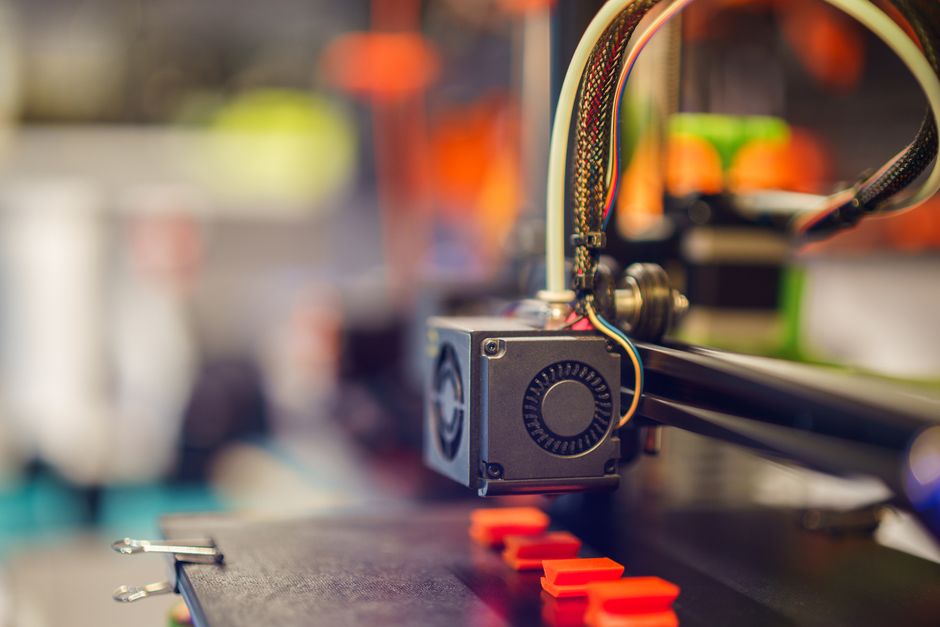
Advancements in rapid prototyping services are fundamentally reshaping the landscape of low-volume manufacturing. From precision composite, metal, and resin parts to industrial additive manufacturing (AM) technologies, there's a marked shift towards more agile and scalable production capabilities.
Recent developments include cutting-edge selectivelaser melting (SLM) technology as showcased by Nikon SLM Solutions. This innovative method allows for the layer-by-layer creation of intricate structures with high precision and minimal waste. By employing advanced algorithms to optimize material usage, this process significantly reduces both production time and costs.
The impact on low-volume manufacturing is substantial. Traditionally, scaling up production required massive upfront investment in expensive equipment and labor that could not be justified for smaller quantities. However, with technologies like SLM, manufacturers can now produce high-quality components cost-effectively even at low volumes. This democratizes access to cutting-edge manufacturing capabilities, enabling startups and mid-sized businesses to innovate and scale without major financial burden.
Elk Valley 3D stands as an industry leader in meeting this demand. Our White-Glove Service offers unparalleled support for prototyping, tooling, and end use production using professional-grade materials such as carbon fiber reinforced polymers (CFRP) and high-purity resins. Coupled with our cutting-edge AM systems from Markforged and Formlabs, we provide the precision and quality required by the most demanding applications. With nationwide delivery options, Elk Valley 3D ensures that businesses can rapidly transform designs into functional parts without having to make expensive equipment investments or manage physical fulfillment centers.
In conclusion, rapid prototyping services with innovations like SLM represent a breakthrough for low-volume manufacturing. They offer unprecedented flexibility, efficiency, and cost-effectiveness. For business professionals looking to innovate and grow, Elk Valley 3D provides the expertise, materials, and support needed to turn ideas into reality at any scale.
📅 Latest Industry Update
New advancements in 3D printing technology are reshaping the landscape of rapid prototyping and low-volume manufacturing. Notably, UltiMaker’s S-series has introduced a significant leap with its enhanced material capabilities and increased print speed, making it an ideal choice for designers and manufacturers seeking to streamline their prototyping processes. This new hardware is complemented by HLH quick’s high-mix, low-volume production solutions, which demonstrate the versatility of 3D printing in handling complex geometries at scale. These innovations not only accelerate the design-to-manufacturing cycle but also reduce costs associated with traditional methods, ultimately making rapid prototyping more accessible to a wider range of businesses.
The technical details behind these advancements are equally compelling. The S-series from UltiMaker boasts improved layer resolution and adhesion, allowing for finer details in prototypes without compromising on structural integrity. Moreover, its dual extruder system enables the use of multiple materials simultaneously, enhancing both aesthetic and functional aspects of the final product. On the other hand, HLH quick’s technology focuses on optimizing post-processing steps, significantly reducing time spent on finishing and preparing parts for testing or integration into real-world applications. These technical breakthroughs address key pain points in rapid prototyping—speed, precision, and material versatility—thereby driving the industry towards more efficient and sustainable manufacturing practices.
The implications of these advancements are profound for makers and small producers. With tools like UltiMaker’s S-series and HLH quick’s production techniques, it becomes easier for entrepreneurs to innovate without significant upfront investment in traditional tooling or molds. This democratization of prototyping means that even smaller businesses can compete on the global stage by quickly iterating designs based on customer feedback. Furthermore, the reduced time-to-market allows companies to stay agile and responsive to market trends, ensuring they remain competitive in a rapidly changing industry landscape. As these technologies continue to evolve, the barrier to entry for innovative ideas is steadily lowered, fostering a more dynamic and inclusive manufacturing environment.
📅 Latest Industry Update
Rapid prototyping services continue to evolve with groundbreaking developments that are reshaping low-volume manufacturing. Notably, recent advancements in 3D printing technologies have introduced more efficient and cost-effective solutions for small-scale production. For instance, the introduction of new slicing software from SLICED has significantly improved the accuracy and speed of 3D printing processes. This software utilizes advanced algorithms to optimize print settings, ensuring that even intricate models are produced with minimal waste and maximum precision. The integration of machine learning capabilities further enhances its capabilities by adapting to various material properties and print environments, making it a valuable tool for makers and small producers who require high-quality prototypes without the need for extensive programming knowledge.
Technically, these advancements matter due to their impact on reducing production time and cost. For example, 3DEO’s proprietary metal additive manufacturing process has been refined to offer faster turnaround times and lower material costs compared to traditional methods. This process uses a unique approach that combines high-speed laser sintering with advanced cooling systems to achieve precise layer-by-layer construction of complex parts. The result is not only quicker but also more environmentally friendly, as the reduced use of raw materials translates to lower waste. Such innovations are crucial for small producers and makers who often operate on tight budgets and need flexible production methods that can scale up or down quickly.
For makers and small producers, these technical improvements translate into greater flexibility in product development cycles. With faster prototyping and reduced costs, entrepreneurs can test ideas more rapidly and refine their products before committing to larger-scale manufacturing. This not only accelerates the time-to-market but also allows for iterative design processes that can optimize both functionality and aesthetics. Furthermore, the ability to produce complex geometries that are difficult or impossible with traditional methods opens new possibilities in innovation. As these technologies become more accessible, they empower a broader range of businesses to innovate without the constraints of conventional manufacturing limitations.
📅 Latest Industry Update
What's new in the realm of rapid prototyping is the emergence of advanced technologies like UltiMaker’s S-series and HLH quick, which are revolutionizing low-volume manufacturing processes. These innovations represent significant advancements over traditional methods by offering higher precision, faster production times, and more cost-effective solutions for small-scale manufacturers. According to Startus Insights, these new systems are particularly well-suited for high-mix, low-volume production scenarios, where the ability to quickly iterate and adapt is crucial. The S-series and HLH quick utilize advanced materials and software that enhance both the speed and quality of prototyping, making them indispensable tools in today’s fast-paced manufacturing environment.
The technical details behind these innovations are impressive. For instance, UltiMaker’s S-series employs a dual-nozzle system that allows for multiple material extrusions simultaneously, significantly reducing print times without compromising on detail or accuracy. Additionally, the HLH quick’s high-speed printing capabilities enable it to produce parts up to 50% faster than conventional FDM (Fused Deposition Modeling) printers, all while maintaining structural integrity and surface finish quality. These technical advancements matter because they directly impact the efficiency and cost-effectiveness of manufacturing processes. For instance, a small manufacturer can now prototype multiple iterations of a product in just hours rather than days, drastically reducing development time and bringing products to market faster.
The implications for makers and small producers are profound. With these new technologies, smaller businesses no longer need to rely on external prototyping services or high-cost equipment. They can now handle their own rapid prototyping needs in-house, leading to greater control over the design process and reduced dependency on third-party vendors. This not only saves money but also enhances the agility of small-scale production, allowing for more responsive business strategies and quicker adaptation to market demands. Furthermore, the ability to quickly produce high-quality prototypes means that makers can test their designs with real users earlier in the development cycle, gathering valuable feedback that can be used to refine and improve products before full-scale production begins.
📅 Latest Industry Update
Recent developments highlight the pivotal role that low-volume production is playing in driving innovative applications for IN3DTEC, as detailed in a recent article from 3Dnatives. This trend is particularly significant against the backdrop of a slowing global economy, where companies are increasingly relying on low-volume and customized production to mitigate development risks and swiftly validate markets. IN3DTEC’s innovative approach leverages 3D printing technology to bridge the gap from prototype to mass application, offering mold-free, highly flexible, and cost-effective solutions that traditional manufacturing methods struggle to match.
The technical prowess of IN3DTEC lies in its ability to harness advanced 3D printing technologies such as SLS (Selective Laser Sintering) and DLP (Digital Light Processing). These technologies enable the creation of high-precision prints, industrial-grade materials, and complex geometries that are essential for low-volume production. For instance, IN3DTEC’s True DLP Precision technology offers faster print speeds while maintaining high output quality, making it ideal for applications requiring both speed and precision. Additionally, their resin-based systems support the use of engineering-grade materials like elastic polymers and carbon fiber composites, which are crucial for prototyping and small-scale manufacturing. The integration of these technologies not only enhances product development cycles but also significantly reduces the high costs and long lead times associated with low-volume production, making it more accessible to a broader range of businesses.
For makers and small producers, IN3DTEC’s innovations mean that they can now access cutting-edge 3D printing capabilities without the hefty investment typically required. This democratization of advanced manufacturing technologies allows smaller entities to compete on a level playing field with larger corporations by enabling rapid prototyping, customization, and efficient production runs. The ability to quickly iterate designs and test market responses is invaluable in today’s fast-paced business environment. Moreover, the cost-effectiveness and flexibility offered by IN3DTEC’s solutions can help these businesses scale their operations more efficiently, potentially leading to increased competitiveness and profitability. As such, IN3DTEC’s contributions are not only advancing the field of 3D printing but also reshaping the landscape of low-volume production for a wide array of industries.