
Navigating Low-Volume Manufacturing vs Rapid Prototyping: Where Precision and Efficiency Converge
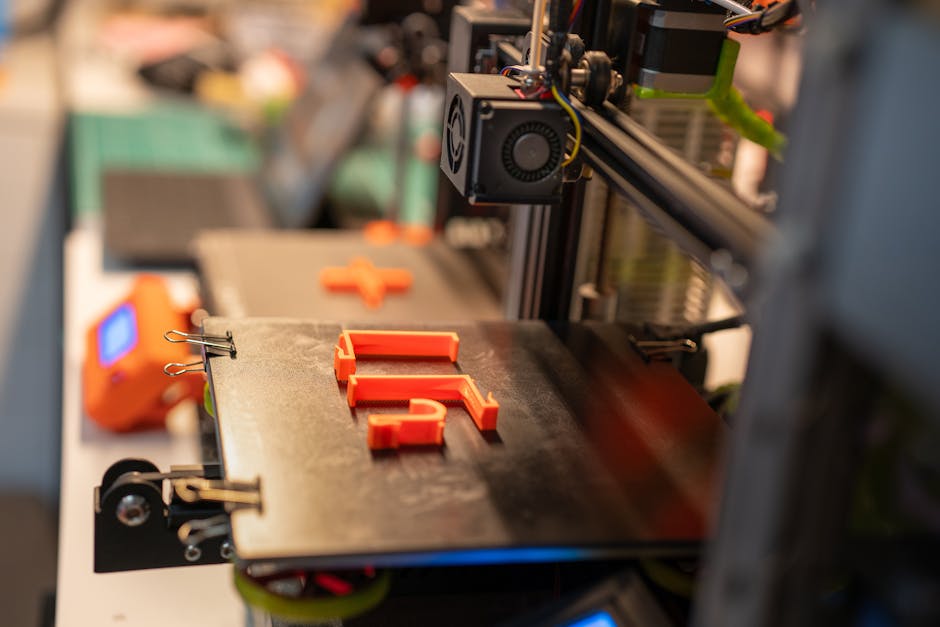

As reported by Site Editor, in the intricate world of product development, it's critical to distinguish between low-volume manufacturing and rapid prototyping. The ability to accurately produce a single part versus producing consistently reliable parts in small batches is a distinction that often eludes procurement teams and lead engineers. Misinterpreting these roles can lead to significant budget overruns and project delays. This article will explore the technical advancements, industry impact, deeper implications, and how Elk Valley 3D aligns with these innovations.
In today's fast-paced manufacturing landscape, precision and efficiency are paramount. Low-volume manufacturing involves producing a limited number of parts or products to meet specific customer needs, often requiring high-quality materials and stringent tolerances. Rapid prototyping, on the other hand, focuses on quickly generating functional prototypes for design validation, iteration, and testing. The boundary between these two processes has become increasingly blurred as technology advances, leading to confusion in their application.
The technical advancements in this domain are significant. Prototype Projects highlights several key developments such as digital light projection (DLP) and selective laser sintering (SLS), both of which offer higher resolution and accuracy compared to traditional rapid prototyping methods. DLP 3D printing, for instance, uses a projector to cure liquid resin layer by layer, resulting in parts with finer details than stereolithography (SLA). SLS technology, meanwhile, allows the creation of parts from powdered materials using laser sintering, offering improved mechanical properties and reduced post-processing needs. These advancements have expanded the capabilities of rapid prototyping, making it more suitable for low-volume production runs.
The industry impact of these technological advancements is profound. Traditional low-volume manufacturing processes often rely on manual labor and specialized equipment, which can be costly and time-consuming. In contrast, modern rapid prototyping techniques offer faster turnaround times and greater flexibility in design iterations. For instance, a medical device manufacturer might use SLS to quickly prototype custom components for clinical trials, ensuring that the final product meets exacting standards without the need for extensive tooling or setup costs. This capability not only accelerates time-to-market but also allows companies to iterate on designs more efficiently, reducing development risks.
The second-order effects of these advancements include cost reductions, increased accessibility, and enhanced sustainability. As rapid prototyping methods become more efficient, the cost per part decreases, making low-volume production more viable for smaller businesses. Additionally, the ability to produce complex geometries with minimal material waste aligns well with sustainable manufacturing practices. For example, Elk Valley 3D's use of high-purity materials and advanced additive manufacturing techniques not only ensures superior product quality but also minimizes environmental impact by reducing material usage.
Elk Valley 3D leverages these advancements to offer premium solutions for clients in need of precise low-volume manufacturing or rapid prototyping. Our White-Glove Service ensures that every project, from concept to completion, is handled with the same level of care and attention. Whether you require high-resolution DLP prints for detailed prototypes or SLS parts for rigorous testing, we provide unparalleled support and expertise. By aligning our offerings with these technological breakthroughs, we ensure that our clients benefit from the latest innovations in 3D printing and rapid prototyping.
In conclusion, as the boundaries between low-volume manufacturing and rapid prototyping continue to blur, it is essential for industry professionals to understand the unique strengths of each process. By leveraging advanced technologies such as DLP and SLS, companies can achieve greater precision, efficiency, and sustainability in their production workflows. At Elk Valley 3D, we are committed to staying at the forefront of these developments, providing our clients with the tools they need to innovate and succeed.
📅 Latest Industry Update
Recent developments highlight how low-volume production is driving innovative applications across various industries, with 3D printing playing a pivotal role. A key example is IN3DTEC’s exploration of low-volume manufacturing as they harness the flexibility and speed offered by 3D printing to test and refine prototypes before transitioning to mass production. This approach not only reduces development risks but also accelerates market validation, making it particularly advantageous in today’s slow global economy. 3Dnatives has detailed IN3DTEC's journey, showcasing how their innovative use of 3D printing technology can bridge the gap between prototype and mass production efficiently. The combination of low-cost, mold-free, and highly flexible processes allows companies like IN3DTEC to pivot rapidly and adapt to changing market demands, ensuring that they remain competitive.
The technical details underpinning this success lie in the capabilities of 3D printing technology itself. For instance, Raise3D’s industrial-grade DLP printers offer high-precision prints with true DLP precision, enabling faster print times while maintaining quality. These machines are particularly suited for applications requiring elastic and engineering-grade materials, making them ideal for small-scale production runs where speed and accuracy are crucial. The ability to produce large composite parts quickly and reliably is a game-changer, as it allows manufacturers to meet tight deadlines without compromising on the quality of their products. Moreover, the cost-effectiveness of these systems reduces the financial burden associated with low-volume production, making them accessible even for smaller operations.
This shift towards low-volume production has significant implications for makers and small producers. By leveraging 3D printing technology, they can achieve rapid prototyping and testing, reducing time-to-market and minimizing risks. This approach also encourages a more agile manufacturing process, enabling businesses to respond quickly to market changes and customer feedback. For instance, the ability to print with industrial-grade materials in a cost-effective manner allows small producers to create robust and functional prototypes that would traditionally require expensive molds or extensive tooling. As a result, these companies can innovate faster and stay ahead of the competition, making 3D printing an indispensable tool in their arsenal.