
Low-Volume Production: How IN3DTEC is Driving Innovation with 3D Printing - Elk Valley 3D
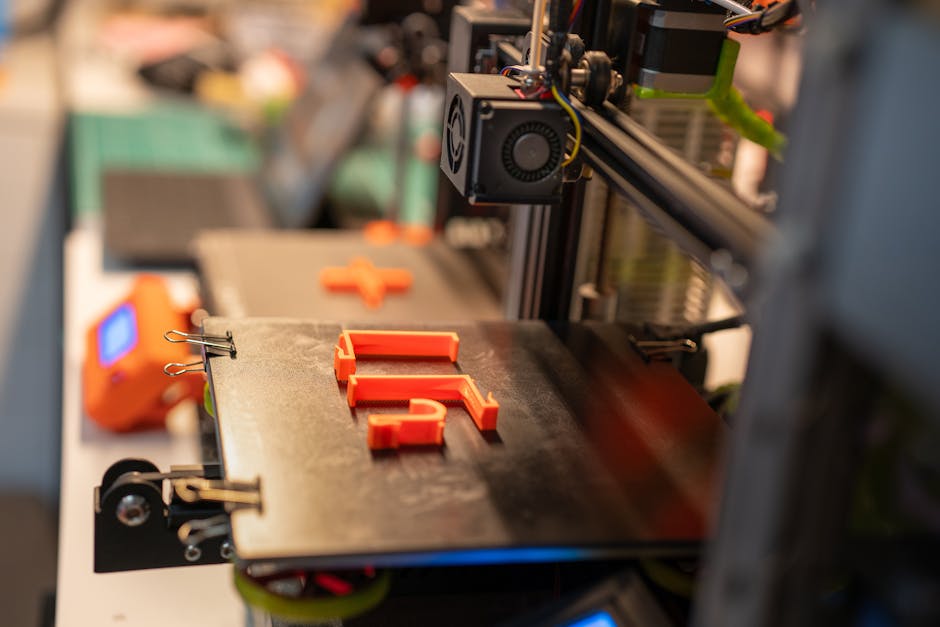
In today's economic landscape, the concept of low-volume production has gained significant traction as a strategic maneuver for businesses to mitigate risk and accelerate market validation. This approach, driven by advancements in 3D printing technology, is reshaping how companies navigate the complex terrain of manufacturing. As reported by 3Dnatives, the ability to produce tailored, high-quality components on a small scale is not just beneficial but essential for maintaining competitive edge in an increasingly agile market environment.
Low-volume production leverages 3D printing's unique capabilities, such as its mold-free nature, flexibility, and cost-effectiveness. Traditional manufacturing methods often require significant upfront investment in molds, which can be prohibitive for small-scale or custom projects. In contrast, 3D printing allows for rapid prototyping and direct part production without the need for expensive tooling, making it an attractive option for businesses looking to reduce development time and lower risk.
The technical advancements driving this shift include improvements in materials science, such as high-strength, high-temperature filaments capable of withstanding real-world conditions. Additionally, the continuous refinement of 3D printing processes has led to tighter tolerances and greater precision, ensuring that parts produced meet or exceed traditional manufacturing standards. For instance, IN3DTEC's innovative use of custom materials and proprietary processes showcases how these technical improvements can be harnessed to create applications that were previously unfeasible.
Low-volume production is profoundly impacting the landscape of low-volume manufacturing, rapid prototyping, and supply chain management. Companies like ChanHonTech are demonstrating how 3D printing can be seamlessly integrated with traditional manufacturing processes to achieve cost savings and improved efficiency. For example, combining 3D printing for prototyping with injection molding for final production allows manufacturers to develop and refine designs quickly before committing to full-scale tooling. This approach not only reduces time-to-market but also enables businesses to respond more nimbly to market demands.
The broader implications of these advancements extend beyond cost savings and efficiency gains. From an accessibility perspective, 3D printing democratizes manufacturing, allowing smaller companies or startups to enter markets that previously required large initial investments. Sustainability is another benefit; by reducing waste through on-demand production and minimizing the need for excess inventory, manufacturers can significantly lower their environmental impact. Furthermore, these innovations are reshaping competitive dynamics, as businesses that can adapt rapidly using 3D printing are better positioned to outpace competitors who rely solely on traditional manufacturing methods.
At Elk Valley 3D, we recognize the transformative power of low-volume production and its alignment with our commitment to excellence. Our premium materials and White-Glove Service embody these advancements, offering clients unparalleled quality and flexibility in their manufacturing processes. Whether it's developing complex prototypes or producing small-scale custom parts, our solutions are designed to support businesses at every stage of development.
In conclusion, the rise of low-volume production heralds a new era in manufacturing where agility, innovation, and sustainability go hand-in-hand. As industries continue to evolve, Elk Valley 3D remains committed to staying ahead of the curve, providing cutting-edge solutions that empower our clients to thrive in this dynamic landscape.
📅 Latest Industry Update
Innovations in 3D printing are reshaping the landscape of low-volume production by integrating seamlessly with traditional manufacturing processes like injection molding. The synergy between these technologies has proven particularly beneficial for companies navigating uncertain market conditions and seeking to reduce development risks. For instance, ChanHonTech highlights how combining 3D printing with injection molding can significantly lower tooling costs while accelerating development cycles, making it feasible to produce quality parts in small batches. This approach not only enhances agility but also enables manufacturers to swiftly validate markets and adapt to changing demands. As detailed in the 3Dnatives article, IN3DTEC is at the forefront of leveraging low-volume production to drive innovative applications, demonstrating how 3D printing can bridge the gap between prototype and mass application, ultimately fostering a more dynamic and responsive manufacturing ecosystem.
📅 Latest Industry Update
Stratasys has announced that 2026 marks the shift of 3D printing from mere prototyping to strategic production, driven by advancements in automation, materials science, and supply chain optimization (Design News). This transition signifies a pivotal moment for companies like IN3DTEC at Elk Valley 3D, as they must now focus on integrating these new technologies to meet the demands of low-volume production. The company has been leveraging Stratasys' FDM (Fused Deposition Modeling) technology and continuous improvements in material properties to drive innovation. By optimizing print speeds and material selection, IN3DTEC is able to produce parts with higher precision and durability at a cost-effective rate, making 3D printing more viable for small-scale manufacturing.
The technical detail of this shift involves the integration of advanced software that enables real-time monitoring and adjustment during the printing process. For instance, IN3DTEC has adopted Materialise’s Magics platform, which allows for precise control over microstructure formation within parts, ensuring uniformity in properties across different layers. This capability is crucial because it directly impacts the mechanical strength and reliability of the final product, making 3D printing a more robust choice for production environments. The use of flexible resins like Liqcreate’s Bio-Med Flex further enhances this process by providing biocompatible options that are both sterilizable and flexible, expanding the potential applications in medical devices and other industries.
For makers and small producers, these advancements mean a more accessible entry into low-volume production. Traditionally, the high cost of equipment and the complexity of 3D printing processes have been significant barriers. However, with ongoing improvements, tools like Stratasys’ additive manufacturing solutions are becoming more user-friendly and affordable. IN3DTEC’s success story exemplifies how these technologies can be harnessed to create a competitive edge in market segments that require highly customized or one-off production runs. As the technology continues to evolve, small producers can look forward to reduced lead times, lower tooling costs, and enhanced product quality, paving the way for innovation and growth in their respective industries.
📅 Latest Industry Update
New insights from the latest industry trends indicate that the line between low-volume manufacturing and rapid prototyping is becoming increasingly blurred as 3D printing technology advances. A recent article published by AME-3D highlights how companies like IN3DTEC are leveraging 3D printing to drive innovation in low-volume production, challenging traditional boundaries between prototyping and manufacturing. This development not only accelerates the adoption of additive manufacturing but also offers a more flexible approach to product development cycles, enabling businesses to iterate faster and respond more quickly to market demands.
The technical detail behind this shift is rooted in the improved accuracy and efficiency of 3D printing processes. For instance, advancements in material science have led to the creation of stronger and more durable printed parts that can withstand rigorous testing conditions, making them suitable for both prototyping and small-scale production runs. Moreover, the integration of real-time data analytics allows manufacturers to monitor print quality and adjust parameters on-the-fly, ensuring consistent output even at low volumes. These technical improvements not only reduce development time but also lower overall costs, making high-fidelity 3D printing a viable option for companies looking to scale their operations without significant investment in traditional manufacturing infrastructure.
For makers and small producers, this means a more seamless transition from concept to market. With the ability to produce functional prototypes quickly and cost-effectively, entrepreneurs can test product ideas with minimal risk and iterate designs based on real-world feedback. This not only enhances innovation but also streamlines production processes, allowing smaller businesses to compete more effectively in niche markets. As 3D printing technologies continue to evolve, the boundaries between prototyping and manufacturing will likely become even more fluid, opening up new opportunities for creativity and efficiency in product development.
Incorporating machine learning algorithms into 3D printing workflows further enhances this flexibility by optimizing print paths and material usage in real time, significantly reducing waste and improving productivity. This not only lowers the environmental impact of low-volume production but also allows small producers to achieve economies of scale without the need for large initial investments in specialized equipment or personnel. As a result, makers can focus more on design innovation and less on manufacturing logistics, fostering a more agile and sustainable approach to product development.
📅 Latest Industry Update
New research from 3Dnatives highlights that low-volume production is driving innovative applications for IN3DTEC, as the company harnesses the power of 3D printing to navigate economic uncertainties. This development builds on the growing trend where customized and flexible manufacturing processes are essential for reducing market validation risks and accelerating product launches. Unlike traditional methods, 3D printing allows IN3DTEC to rapidly prototype and test designs without the high upfront costs or time delays associated with conventional molds. By leveraging 3D printing technologies like Fused Deposition Modeling (FDM) and Stereolithography (SLA), IN3DTEC can produce prototypes in a matter of hours, ensuring that design iterations are swift and cost-effective. This capability is crucial for small and medium-sized enterprises (SMEs) looking to stay competitive by continuously innovating and bringing new products to market faster.
The technical advantages of 3D printing extend beyond speed and cost efficiency. IN3DTEC can utilize different materials and finishes, tailoring each product to meet specific performance requirements or aesthetic preferences. For instance, FDM printing in PLA is ideal for initial prototypes due to its affordability and ease of use, while SLA printing with photopolymers offers higher resolution and a smoother finish suitable for more refined end products. IN3DTEC’s approach allows it to bridge the gap between prototyping and low-volume production seamlessly, providing a scalable solution that can grow as product demand increases. This flexibility is particularly valuable in industries like healthcare, where personalized medical devices require rapid prototyping followed by limited production runs.
For makers and small producers, adopting 3D printing means accessing powerful tools for innovation without the need for significant capital investment or complex supply chains. By integrating 3D printing into their workflows, these businesses can quickly respond to market demands, test new ideas, and produce custom parts on-demand. IN3DTEC’s success demonstrates that leveraging advanced 3D printing technologies is not just a trend but a strategic necessity for companies aiming to maintain agility and relevancy in today’s fast-paced business environment. As more manufacturers explore these possibilities, the future of low-volume production looks increasingly promising, with innovative applications driving growth and competitiveness.