
Innovative Low-Volume Production: How IN3DTEC and 3D Printing are Reshaping Manufacturing
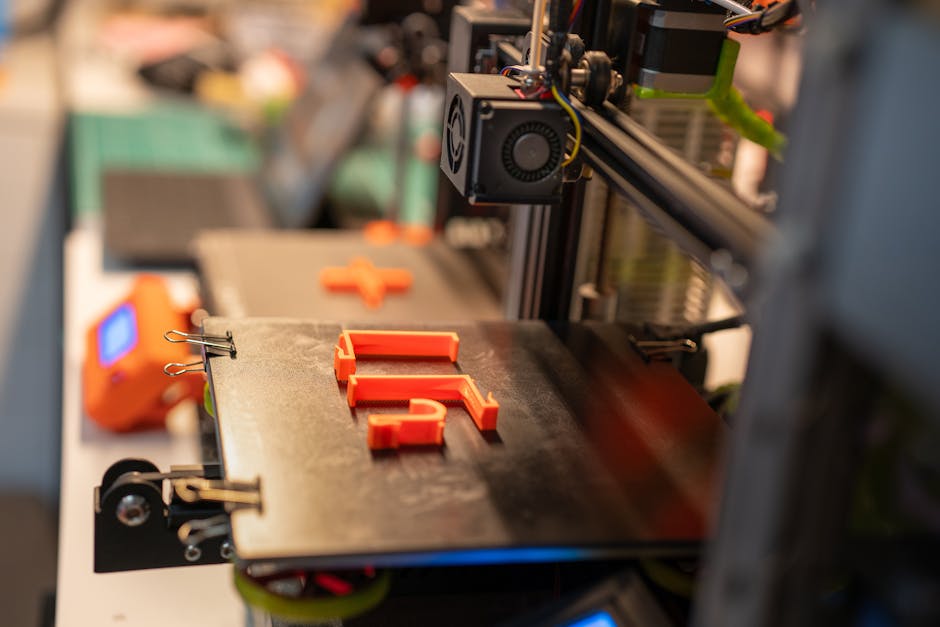
Why is low-volume production driving innovative applications for IN3DTEC? In an era where the global economy faces significant headwinds, companies must innovate to stay competitive. The shift towards low-volume and customized production has emerged as a strategic response, enabling businesses to reduce development risks and quickly validate markets with agile manufacturing processes. This approach is particularly advantageous in industries like aerospace, automotive, and medical device manufacturing, where product lifecycles are shortening, and market demands are becoming more diverse. By leveraging 3D printing technologies, companies can rapidly iterate designs, test functional prototypes, and even fulfill small-scale orders without the need for expensive hard tooling.
Low-volume production is especially crucial in niche markets where traditional manufacturing methods may not be financially viable due to high setup costs. For example, a medical device startup might use 3D printers to quickly produce customized implants for patient-specific treatments, reducing the time from design to market by months. These rapid prototyping capabilities allow for faster time-to-market with highly accurate models that closely mimic final products. This is particularly valuable in industries such as automotive, aerospace, and medical device manufacturing where design validation and regulatory compliance are critical.
The shift towards low-volume production also has wider implications beyond just manufacturing. It influences cost structures, making it more accessible for smaller businesses and startups to enter competitive markets without large upfront investments in tooling. For instance, a small automotive company might use 3D printing to produce complex parts for prototypes or end-use components without incurring the significant costs associated with traditional injection molding processes. This flexibility is crucial for companies looking to reduce their initial investment while still achieving high-quality results.
Moreover, low-volume production can lead to better resource utilization and reduced environmental impact. By using additive manufacturing techniques, manufacturers can produce parts on-demand, thereby minimizing waste associated with overproduction in traditional batch manufacturing processes. This approach aligns with the growing trend towards sustainable manufacturing practices, where reducing material usage and decreasing carbon footprints are key differentiators.
A recent article from 3Dnatives highlights the transformative impact of 3D printing in low-volume and customized production, emphasizing its mold-free nature, flexibility, and cost-effectiveness. This technology allows manufacturers to rapidly iterate designs, test functional prototypes, and even fulfill small-scale orders without the need for expensive hard tooling. For example, IN3DTEC’s proprietary material blends enable the production of parts with enhanced durability and precision while maintaining low-cost benefits. These technical improvements have significantly bridged the gap between prototyping and mass application, making 3D printing a viable solution for both small-scale manufacturing operations and high-end applications.
Advancements in materials science have been crucial to the success of these innovations. Today’s 3D printers can use a wide range of materials including thermoplastics, metal alloys, and specialty materials that offer superior mechanical properties, thermal performance, and chemical resistance. For instance, IN3DTEC utilizes high-performance polymers like PEI (Polyetherimide) for demanding applications requiring robustness and stability in extreme environments, such as aerospace components. On the other hand, metal 3D printing technologies enable the production of complex geometries with intricate internal structures that are difficult to achieve through conventional manufacturing methods.
The integration of these materials into additive manufacturing processes has opened up new possibilities for innovation across various industries. In the medical field, biocompatible materials like titanium alloys and bio-resorbable polymers can be used to create patient-specific implants and surgical tools, significantly improving treatment outcomes. Similarly, in the automotive sector, lightweight and high-strength composite materials enable the development of more fuel-efficient vehicles with improved performance.
The adoption of these technologies has profound implications for various sectors. In the realm of rapid prototyping, companies can now achieve faster time-to-market with highly accurate models that closely mimic final products. This is particularly valuable in industries such as automotive, aerospace, and medical device manufacturing where design validation and regulatory compliance are critical. For instance, a small medical startup might use 3D printing to quickly produce customized implants for patient-specific treatments, leveraging the flexibility of this technology to create complex geometries that would be difficult or impossible with traditional methods.
Moreover, the shift towards low-volume production also has broader economic and environmental benefits. By enabling more flexible and localized manufacturing operations, businesses can reduce transportation costs and carbon emissions associated with global supply chains. This trend aligns with the growing demand for sustainable business practices as customers become increasingly aware of companies’ environmental impacts.
The combination of 3D printing technologies and advanced materials has created a transformative impact on various industries. For example, in the consumer goods sector, companies can offer highly customized products with unique designs that appeal to niche markets. This approach not only enhances customer satisfaction but also drives innovation by encouraging continuous improvement based on user feedback.
At Elk Valley 3D, we leverage these cutting-edge advancements to provide our clients with premium materials and unparalleled White-Glove Service. Our IN3DTEC-based solutions enable rapid prototyping and low-volume production, ensuring that your projects can benefit from the latest in additive manufacturing technology without the complexities often associated with such processes.
For instance, we work closely with automotive manufacturers to produce complex parts for concept vehicles, allowing them to test new designs more quickly and efficiently. By utilizing 3D printing, our clients can reduce development cycles by several months compared to traditional methods. Additionally, we support medical device companies in producing patient-specific implants and surgical tools, ensuring that their products meet stringent regulatory standards while maintaining high levels of precision and quality.
The shift towards low-volume production also has wider implications beyond just manufacturing. It influences cost structures, making it more accessible for smaller businesses and startups to enter competitive markets without large upfront investments in tooling. For instance, a small automotive company might use 3D printing to produce complex parts for prototypes or end-use components without incurring the significant costs associated with traditional injection molding processes. This flexibility is crucial for companies looking to reduce their initial investment while still achieving high-quality results.
Moreover, as industries become increasingly aware of their carbon footprints, sustainable practices are becoming a key differentiator. By adopting additive manufacturing techniques, businesses can significantly reduce material waste and overall environmental impact. For example, IN3DTEC’s proprietary recycling processes allow for the reuse of materials, further enhancing sustainability. This approach not only aligns with corporate social responsibility goals but also positions companies as leaders in green practices.
In conclusion, the innovations driving low-volume production highlight a broader trend towards more flexible and sustainable manufacturing practices. As businesses continue to navigate economic challenges, technologies like 3D printing will play an increasingly vital role in shaping the future of manufacturing. At Elk Valley 3D, we are committed to being at the forefront of these developments, offering solutions that help our clients stay competitive and innovative.
📅 Latest Industry Update
Recent advancements in the field of 3D printing have significantly expanded its applications beyond traditional manufacturing processes, particularly in rapid prototyping. A recent article from Stratasys highlights how companies are leveraging 3D printing to accelerate product development cycles and enhance innovation. This new approach allows for the rapid creation of prototypes, enabling businesses to test designs more efficiently and make necessary adjustments before committing to full-scale production. For instance, Stratasys showcases a case study where a company was able to reduce its prototyping time from weeks to just days using 3D printing technology. This not only speeds up the development process but also reduces costs associated with traditional methods.
The technical details behind these advancements are rooted in the precision and versatility of modern 3D printers. These machines can now handle a wide range of materials, including thermoplastics, metals, and even bio-based materials, catering to diverse industrial needs. For example, the Fortus 450mc printer from Stratasys is capable of producing parts with high strength-to-weight ratios and excellent surface finish, making it ideal for functional prototypes that require durability and aesthetic appeal. The integration of advanced technologies such as multi-material printing and direct digital manufacturing (DDM) further enhances the capabilities of these printers. DDM, in particular, allows for the creation of complex geometries directly from CAD files without the need for tooling, significantly reducing production time and costs.
For makers and small producers, these advancements mean a more accessible path to innovation and market entry. By adopting 3D printing, smaller businesses can compete with larger corporations by quickly iterating on product designs and bringing them to market faster. This is especially beneficial in industries where rapid iteration is crucial, such as consumer electronics or medical devices. Moreover, the ability to produce functional prototypes in-house reduces dependency on external manufacturers, providing greater control over production processes and quality assurance. As 3D printing technology continues to evolve, it is expected that more businesses will adopt this approach, driving down costs and increasing accessibility for a broader range of applications.
📅 Latest Industry Update
New developments in 3D printing technology are pushing the boundaries of low-volume production and rapid prototyping, making it increasingly difficult to draw a clear distinction between the two. A recent study published by AME Group LTD highlights that advancements such as high-resolution printers and specialized materials are enabling manufacturers to produce complex parts with unprecedented precision at lower volumes, effectively blurring the line between prototyping and low-volume production. This shift not only challenges traditional definitions but also opens new possibilities for product development cycles, where rapid iterations can lead directly to viable prototypes and early-stage manufacturing runs.
The technical detail behind these advancements is particularly significant as it allows for a greater degree of customization and flexibility in the manufacturing process. For instance, the integration of AI algorithms into 3D printing systems can optimize material usage and print settings based on real-time data, reducing waste and improving efficiency. Additionally, advanced post-processing techniques such as surface finishing and chemical treatment are becoming more accessible, ensuring that parts printed for low-volume production meet stringent quality standards comparable to those found in high-volume manufacturing processes. These technical improvements are crucial because they ensure that the transition from prototyping to low-volume production is seamless, maintaining product integrity while significantly reducing development time.
This evolution has profound implications for makers and small producers who can now leverage 3D printing to rapidly test concepts and bring products to market more efficiently than ever before. By eliminating the need to set up multiple manufacturing lines or rely heavily on external suppliers, these businesses can focus on innovation and design refinement. Furthermore, the ability to produce low-volume runs with high precision means that small-scale manufacturers can offer custom solutions without incurring high setup costs typically associated with traditional manufacturing methods. This democratization of production capabilities paves the way for a more agile and responsive supply chain, better meeting the demands of modern market dynamics.