
How Low-Volume Production Is Accelerating Innovation Through IN3DTEC’s Cutting-Edge Additive Manufacturing Solutions
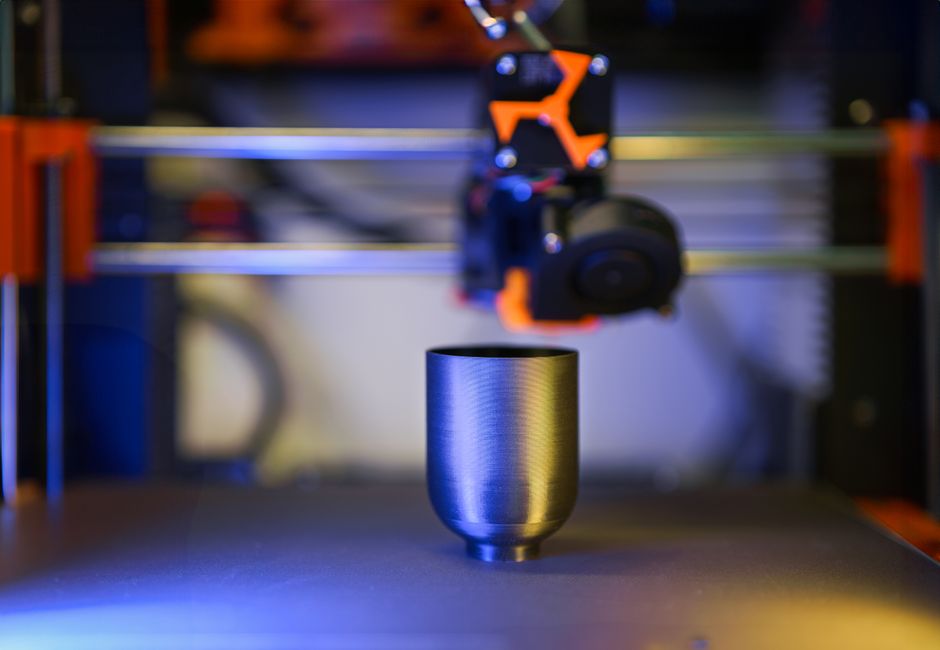

Amidst economic uncertainty and shifting market demands, low-volume production is emerging as a pivotal strategy for companies. According to the latest insights from 3Dnatives, this approach not only mitigates development risks but also enables rapid market validation through advanced technologies like 3D printing. In today's fast-paced business environment, where speed and flexibility are paramount, the role of IN3DTEC in driving these innovations cannot be overstated. The ability to quickly iterate designs and test prototypes has become a competitive advantage in an increasingly complex market landscape. By leveraging 3D printing technology, companies can bypass traditional molds and achieve unparalleled flexibility, significantly reducing costs. For instance, medical device manufacturers often need to produce customized implants that require precise geometries and fine tolerances. Traditional manufacturing methods would involve lengthy development cycles and high upfront costs. With 3D printing, however, these manufacturers can rapidly prototype and test their designs, making adjustments in real-time based on feedback from clinicians or patients.
The advancements in 3D printing are not just about speed; they represent a fundamental shift in how products are developed and manufactured. For instance, the use of advanced polymers and metals now allows for greater precision and durability. IN3DTEC’s proprietary materials offer unmatched properties that enable complex geometries and fine tolerances unattainable through conventional manufacturing methods. This technological leap is reshaping low-volume production by making it more feasible to produce specialized items in smaller quantities without compromising quality. In the automotive industry, bespoke parts are increasingly being produced using 3D printing. These parts can be quickly adjusted based on feedback or changing market demands. For example, a car manufacturer might use 3D printed components for prototypes during the design phase, allowing them to test and refine their designs without the need for expensive tooling.
The implications extend beyond just cost savings and production efficiency. The democratization of manufacturing is a key driver here. As 3D printing becomes more accessible, it opens up new opportunities for small businesses and entrepreneurs to enter the market without significant upfront capital investment. Additionally, from an environmental perspective, additive manufacturing can reduce waste compared to subtractive methods, contributing positively to sustainability efforts. By eliminating the need for excess raw materials, 3D printing reduces the overall carbon footprint of production processes. For instance, in the aerospace industry, complex parts are often produced using traditional subtractive machining techniques that involve significant material wastage. With 3D printing, these parts can be manufactured with minimal waste, significantly reducing the environmental impact of production.
For businesses, this means the ability to swiftly transition from concept to reality. A case study involving medical device manufacturers showcases how IN3DTEC’s solutions have enabled rapid prototyping and small-scale production of customized implants. These implants are often used in complex surgeries where precision is critical. Traditional manufacturing methods would involve lengthy development cycles and high upfront costs, making it difficult for smaller companies to enter the market. With 3D printing, these manufacturers can quickly produce prototypes and test them in clinical settings, gathering feedback that can be used to refine their designs further. This rapid iteration process allows them to bring products to market faster while maintaining quality standards.
In another example, automotive companies are using 3D printing for bespoke parts that can be quickly adjusted based on feedback or changing market demands. For instance, a car manufacturer might use 3D printed components during the development of a new model. These components can be tested and refined in real-time, allowing the company to make adjustments to the design without waiting for traditional manufacturing processes. This flexibility is particularly valuable in an industry where market trends can change rapidly. By using 3D printing, automotive companies can quickly adapt their designs to meet customer needs or address emerging trends.
The benefits of low-volume production and 3D printing extend beyond just these specific industries. In the consumer goods sector, for instance, small businesses can use 3D printing to produce limited-run products that appeal to niche markets. This approach allows them to test the market with a smaller investment before committing to full-scale production. For example, a company might design and print custom jewelry pieces using advanced polymers or metals. These pieces can be sold to customers who value unique, personalized items. By leveraging 3D printing, the company can produce these items in small quantities without the need for expensive tooling or molds.
The implications of low-volume production are also significant for supply chains. Traditional manufacturing processes often involve long lead times and high costs associated with setting up and maintaining production lines. With 3D printing, companies can reduce these costs and improve their agility by producing parts on-demand. For instance, a company might have a small inventory of spare parts that can be quickly printed when needed, reducing the need for large-scale stockpiling. This approach not only saves money but also reduces the risk of obsolete inventory.
The future of manufacturing will continue to be shaped by innovations in 3D printing and low-volume production techniques. Elk Valley 3D stands at the forefront of these developments, committed to driving innovation and enabling our clients to stay competitive in an ever-evolving marketplace. Our premium materials offer unparalleled purity and performance characteristics, ensuring that every part or prototype meets the highest standards. Furthermore, our White-Glove Service ensures seamless integration of technology into your workflow, providing support from design through production. By partnering with Elk Valley 3D, companies can leverage these cutting-edge solutions to drive their own innovations and stay ahead of the competition.
📅 Latest Industry Update
How Low-Volume Production Is Accelerating Innovation Through IN3DTEC’s Cutting-Edge Additive Manufacturing Solutions IN3DTEC has been at the forefront of low-volume production innovation, leveraging advanced additive manufacturing technologies to drive rapid prototyping and small-scale production. Recent developments in their CNC machining capabilities have further enhanced their ability to deliver precise and complex parts with unparalleled speed and accuracy. IN3DTEC’s integration of state-of-the-art CNC milling, turning, and routing machines has enabled them to offer a comprehensive suite of services that cater to the diverse needs of small-scale manufacturers and innovators.
These advancements are particularly significant as they allow for the production of intricate geometries and tight tolerances with high repeatability. For instance, IN3DTEC’s CNC machining processes can achieve surface finishes down to 16 microinches, making them suitable for applications requiring minimal finishing work or where aesthetic quality is paramount. The precision and flexibility offered by their CNC machines also enable the production of parts that are difficult or impossible to manufacture using traditional methods. This capability is especially valuable in industries such as aerospace, medical devices, and automotive, where component accuracy can significantly impact performance and safety.
For makers and small producers, these innovations mean access to high-quality, low-volume production solutions that were previously out of reach due to cost or technical limitations. IN3DTEC’s services now allow entrepreneurs and startups to quickly iterate on designs, test prototypes, and bring products to market faster than ever before. This not only accelerates the innovation cycle but also reduces time-to-market, allowing businesses to stay competitive in rapidly evolving markets. Moreover, the integration of additive manufacturing with CNC machining provides a seamless workflow that can significantly reduce overall production costs while maintaining or even improving product quality.
The integration of IN3DTEC’s CNC machining with their additive manufacturing capabilities has opened new avenues for material innovation in low-volume production. For instance, the company now supports a wide range of materials including advanced composites and bio-compatible metals, which were previously challenging to work with using traditional methods. This expansion allows makers and small producers to explore novel design possibilities that can lead to breakthroughs in product functionality and performance. Moreover, IN3DTEC’s use of intelligent software solutions for process optimization ensures consistent quality across multiple production runs, a critical factor for maintaining reliability in small-scale manufacturing environments. These advancements not only enhance the technical capabilities but also streamline workflows, making it easier for innovators to focus on design and development rather than manufacturing logistics.
📅 Latest Industry Update
According to the latest insights from 3Dnatives, low-volume production is driving innovative applications for IN3DTEC, a leading provider of additive manufacturing solutions. This trend has emerged as companies seek to reduce development risks and rapidly validate markets in the face of a slowing global economy. The key advantage lies in leveraging 3D printing technology, which offers mold-free, highly flexible, and cost-effective production capabilities that are essential for these strategies.
The technical details behind this phenomenon highlight IN3DTEC’s cutting-edge solutions, such as their advanced additive manufacturing processes like SLS (Selective Laser Sintering) and DLP (Digital Light Processing). These technologies enable the creation of complex geometries and functional materials with high precision, making them ideal for low-volume production. For instance, IN3DTEC’s True DLP Precision 3D printer offers true DLP technology that significantly reduces print time while maintaining high resolution, allowing for faster prototyping cycles. Additionally, their industrial-grade Raise3D printers support various materials including engineering-grade resins and carbon fiber composites, ensuring both precision and reliability in every print job. These technical advancements are crucial because they bridge the “last mile” from prototype to mass application, enabling businesses to scale up production without the high costs and long lead times traditionally associated with low-volume manufacturing.
For makers and small producers, these innovations mean a paradigm shift in how they approach product development and market validation. With IN3DTEC’s solutions, even small-scale operations can now affordably produce complex parts and prototypes, accelerating their time-to-market. This is particularly beneficial for startups and emerging technologies where rapid iteration and customization are critical. Moreover, the flexibility offered by 3D printing allows businesses to tailor products precisely to customer needs, fostering a more personalized and responsive approach in the marketplace. As IN3DTEC continues to push the boundaries of what’s possible with additive manufacturing, it is likely that even more innovative applications will emerge, further cementing its role as a leader in low-volume production solutions.