
Functional Prototype Printing - Transforming Low-Volume Manufacturing with Advanced Additive Technologies
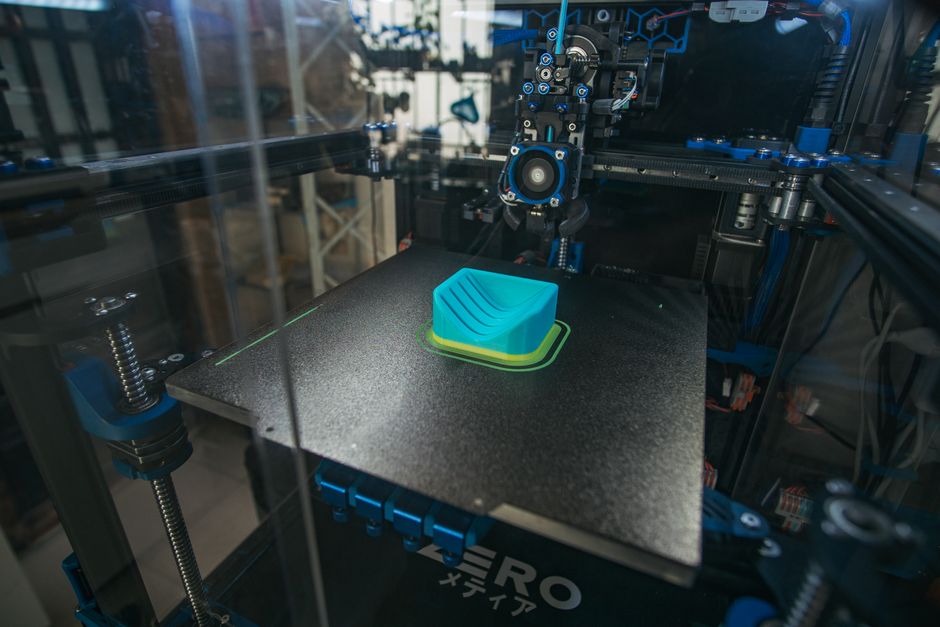
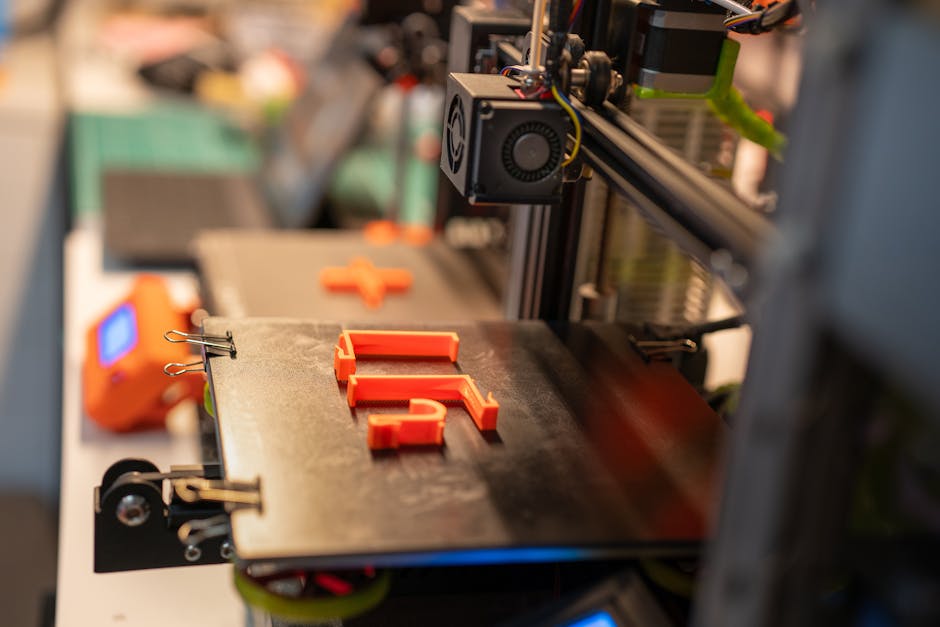
Imagine a future where innovation is no longer constrained by traditional manufacturing limitations. A place where ideas can be turned into tangible products in days, not weeks or months. This is the promise of modern additive manufacturing and rapid prototyping, revolutionizing how businesses approach low-volume production. As reported by Bing, the advancements in 3D printing and CNC machining are making this a reality. Elk Valley 3D, leveraging Markforged and Formlabs technologies, is at the forefront of this transformation.
The key to unlocking this future lies in the precise control over materials, processes, and tolerances offered by these advanced additive manufacturing systems. Unlike traditional methods, which often require significant upfront investment in equipment, 3D printing allows businesses to move from CAD design directly to functional parts with minimal setup time and cost. For instance, a startup designing a custom medical device can quickly prototype components using Markforged’s continuous fiber technology, ensuring both the strength and accuracy required for such critical applications. Similarly, Formlabs’ high-purity resin materials enable the creation of intricate geometries with tight tolerances, crucial in industries like aerospace and automotive where precision is paramount.
From precision composite and metal parts built using Markforged’s continuous fiber technology to high-purity resin creations through Formlabs’ advanced materials, the range of applications is vast. These systems enable the production of intricate geometries with tight tolerances that would be challenging or impossible to achieve with conventional methods. For example, the aerospace industry relies heavily on 3D printing for creating lightweight yet robust components such as engine parts and airframe structures. These parts can be designed with precisely controlled internal voids and complex lattice structures, significantly reducing weight while maintaining structural integrity.
The changes here are significant, as they not only improve the quality and performance of parts but also accelerate time-to-market for new products. Companies like SpaceX have successfully integrated 3D printing into their production processes to rapidly develop and test components for spacecraft. This accelerated prototyping cycle has enabled them to make iterative improvements more quickly, ultimately reducing development times and bringing new technologies to market faster.
The impact on low-volume manufacturing cannot be overstated. Traditional production lines often struggle to justify their cost for small batches, leading to long lead times and high inventory costs. With 3D printing, businesses can quickly produce prototypes, tooling, and even end-use parts in quantities as low as one piece. This agility is crucial for startups and established companies alike, allowing them to test market demand, refine designs, and launch products more efficiently. A medical device company might use 3D printing to rapidly prototype a new surgical instrument, ensuring that it meets both functional and ergonomic requirements before proceeding with larger-scale production.
The ripple effects extend beyond just manufacturing processes. Cost savings are substantial, as overhead costs associated with setting up and maintaining traditional production lines can be drastically reduced. Accessibility also improves, as the barrier to entry for adopting advanced manufacturing technologies is lowered. For instance, a small business with limited resources might find it prohibitively expensive to invest in conventional CNC machines, but 3D printing allows them to gain access to similar capabilities without significant capital expenditure.
Sustainability comes into play too; 3D printing allows for on-demand production, reducing waste and the carbon footprint associated with transporting goods across long distances. According to a report by McKinsey & Company, additive manufacturing can reduce material usage by up to 90% compared to traditional methods, making it an environmentally friendly choice. Additionally, the ability to print parts locally or even in remote locations minimizes transportation emissions, further reducing the environmental impact.
Elk Valley 3D’s commitment to premium materials and White-Glove Service ensures that our clients benefit from these advancements without the complexities of managing new technologies in-house. Our industrial additive manufacturing services support prototyping, tooling, and end-use production with professional grade materials and nationwide delivery, making us a trusted partner for businesses looking to innovate and grow.
As we look ahead, it’s clear that 3D printing and CNC machining are not just trends but transformative forces in the world of manufacturing. Elk Valley 3D is ready to help you harness these technologies, driving your business forward into a future where possibility knows no bounds. Join us on this journey of innovation.
Elk Valley 3D’s commitment to premium materials and White-Glove Service ensures that our clients benefit from these advancements without the complexities of managing new technologies in-house. We offer a wide range of materials, including high-strength composites, metals, and specialized resins, tailored to meet the specific needs of various industries. For instance, our collaboration with Markforged’s Eiger and Carbon fiber-enhanced materials enables us to produce parts that are both lightweight and robust, ideal for applications such as sports equipment or consumer electronics.
Our expertise extends beyond material selection; we also provide comprehensive design support, helping customers optimize their CAD models for efficient printing. This includes analyzing part geometry to identify potential issues early in the design process, ensuring that parts not only meet functional requirements but are also optimized for production efficiency. By leveraging our extensive experience and state-of-the-art equipment, we can deliver exceptional results even for complex geometries or custom designs.
At Elk Valley 3D, we understand that every client has unique needs and challenges. Our team of experienced engineers works closely with clients to understand their requirements and develop tailored solutions. For example, a company developing advanced prosthetic devices might require high-resolution parts with tight tolerances. We can provide the precision required by using Formlabs’ SLA (Stereolithography) technology, which offers resolutions as fine as 25 microns.
The benefits of our services go beyond just part production; we also offer comprehensive tooling and end-use production solutions. For businesses needing customized tools or jigs, our additive manufacturing capabilities allow for rapid prototyping and production. This accelerates the development cycle, enabling companies to bring products to market faster. In the automotive industry, this can mean the difference between launching a new vehicle model on schedule or facing delays due to tooling issues.
Our commitment to sustainability is also reflected in our approach to waste reduction. We utilize closed-loop systems and recycling programs to minimize material waste during production. By reprocessing unused materials into usable feedstock, we not only reduce environmental impact but also lower overall costs for our clients. Additionally, by offering flexible order quantities, we ensure that businesses can scale their operations without overproducing or generating unnecessary waste.
As Elk Valley 3D continues to push the boundaries of what is possible with additive manufacturing, we are also exploring emerging technologies and techniques. One such area is hybrid manufacturing, which combines traditional subtractive methods like CNC machining with additive processes. This approach allows for greater flexibility in part production while maintaining high quality standards.
Another exciting development is the integration of AI and machine learning into our operations. By analyzing data from each print job, we can continuously refine our processes to improve efficiency and reduce errors. For instance, our systems can detect issues like under- or over-extrusion early in the printing process, allowing us to make real-time adjustments before a part is damaged.
As the manufacturing landscape continues to evolve, Elk Valley 3D remains at the forefront of innovation. We are committed to staying ahead of industry trends and providing our clients with cutting-edge solutions that drive their success. Whether you’re a startup looking to disrupt your market or an established company seeking to maintain a competitive edge, we have the expertise and technology to help you achieve your goals.
Join us on this exciting journey as we redefine what is possible in manufacturing. Together, let’s explore new frontiers of innovation and create a future where ideas can be realized with ease. Contact us today to learn more about how Elk Valley 3D can support your business growth through advanced additive manufacturing techniques.