
Exploring the Latest Advancements in Rapid Prototyping | Q2 2024
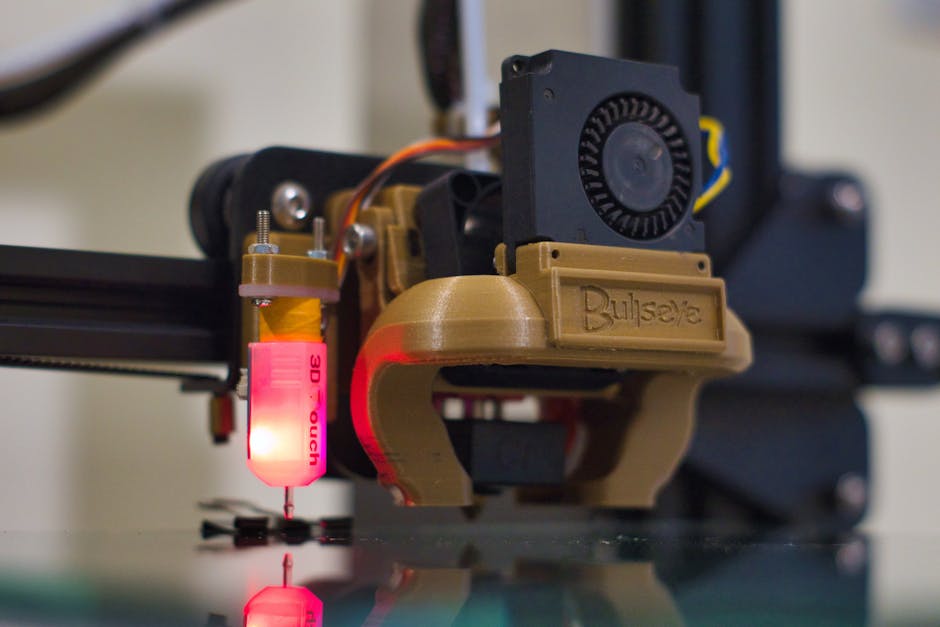

In the rapidly evolving world of manufacturing and prototyping technologies, recent advancements are transforming the way industries operate. From automotive to healthcare, rapid prototyping is now more than just a tool; it's a strategic asset that can significantly impact supply chain efficiency and product development timelines. As detailed in this insightful article, the introduction of the UltiMaker S-series exemplifies how cutting-edge technology is driving innovation. This new generation of 3D printers offers improved accuracy, speed, and reliability, setting a new standard for high-end prototyping needs.
The advancements in rapid prototyping are not just about hardware; they encompass a wide range of materials, processes, tolerances, and partnerships that are reshaping the landscape. For instance, the UltiMaker S-series utilizes advanced composite materials that offer superior mechanical properties, making them ideal for automotive parts, aerospace components, and medical devices. These materials can withstand high temperatures, resist corrosion, and maintain dimensional stability under various conditions, ensuring consistent performance even in demanding environments.
Moreover, these technologies facilitate faster iteration cycles, allowing companies to bring products to market quicker while maintaining high-quality standards. In the automotive industry, for example, rapid prototyping enables engineers to quickly test design iterations, reducing development time from months to weeks. This accelerated process not only helps in identifying and resolving issues early on but also allows manufacturers to stay ahead of competitors in a highly competitive market. The healthcare sector is another prime beneficiary, where customized medical devices can be rapidly prototyped and tested before final production, ensuring that patients receive the most precise and effective treatments.
For businesses looking to stay ahead, understanding these developments and leveraging them for competitive advantage is crucial. Rapid prototyping facilitates faster iteration cycles, allowing companies to bring products to market quicker while maintaining high-quality standards. This article delves into the specific advancements in materials, processes, tolerances, and partnerships that are reshaping the landscape.
One of the key areas driving innovation in rapid prototyping is the diversification of materials used for printing. Advanced resins offer unparalleled detail accuracy, suitable for intricate medical devices or aerospace components. For instance, bioresorbable polymers can be used to create temporary implants that dissolve over time, reducing the need for surgical removal. Meanwhile, metal 3D printing is revolutionizing low-volume manufacturing by enabling the production of complex geometries that were previously unattainable through traditional methods. Companies like General Electric are using metal 3D printing to produce lightweight, strong parts for aircraft engines, significantly improving fuel efficiency and reducing maintenance costs.
These advancements in materials technology not only enhance the physical properties of printed objects but also expand the range of applications across various industries. In low-volume manufacturing, for example, companies can now produce smaller batches more cost-effectively, reducing waste and improving inventory management. This is particularly beneficial in sectors like healthcare, where customized medical devices are increasingly demanded. For instance, orthopedic implants can be tailored to individual patient needs, leading to better treatment outcomes and enhanced patient satisfaction.
The impact of these technological strides extends far beyond the immediate realm of prototyping. In low-volume manufacturing, for example, companies can now produce smaller batches more cost-effectively, reducing waste and improving inventory management. This is particularly beneficial in sectors like healthcare, where customized medical devices are increasingly demanded. For instance, orthopedic implants can be tailored to individual patient needs, leading to better treatment outcomes and enhanced patient satisfaction.
Furthermore, rapid prototyping plays a crucial role in supply chain optimization by enabling manufacturers to test designs quickly and make necessary adjustments before full-scale production begins. This reduces the risk of costly errors and delays associated with traditional manufacturing methods. For example, automotive companies can use 3D printing to create mock-ups of vehicle components early in the design process. These prototypes can then be tested on physical vehicles or virtual simulation platforms, allowing engineers to refine designs without committing significant resources to full-scale production.
The second-order effects of these advancements include broader accessibility and sustainability initiatives. As 3D printing technology becomes more widely adopted, the cost of entry is decreasing, making it accessible to smaller businesses that might not have considered this option previously. Additionally, sustainable materials are becoming a focus area, with a growing emphasis on recycling and biodegradable options. Companies like HP are investing in eco-friendly filament made from recycled plastics, reducing the environmental impact of 3D printing while lowering costs for users.
These innovations also create new competitive dynamics, as companies must adapt their strategies to incorporate these technologies effectively. For instance, manufacturers need to invest in training programs for staff who can operate and maintain advanced 3D printers. They also need to develop robust quality control processes to ensure that printed parts meet stringent industry standards. Collaboration with suppliers of advanced materials and software solutions is crucial to stay at the forefront of technological advancements.
At Elk Valley 3D, we align our premium materials and White-Guide Service with these cutting-edge advancements. Our commitment to quality and excellence ensures that clients benefit from the latest in rapid prototyping technology. By leveraging the UltiMaker S-series and other state-of-the-art solutions, we offer unparalleled precision and reliability for your most demanding projects.
As we look ahead, the future of manufacturing is undoubtedly intertwined with rapid prototyping technologies. Elk Valley 3D continues to be at the forefront of this evolution, positioning ourselves as a thought leader in the industry. Our expertise and commitment to innovation enable us to deliver cutting-edge solutions that meet the evolving needs of our clients. Whether you are working on complex medical devices, aerospace components, or automotive parts, we have the technology and experience to help you achieve your goals.
📅 Latest Industry Update
New developments in rapid prototyping continue to push the boundaries of what is possible with 3D printing technologies. A recent breakthrough involves the integration of AI algorithms into 3D printing workflows, significantly enhancing design optimization and material selection processes. According to a report from AME-3D (AME-3D News), these advancements allow for more efficient and precise prototypes by automating the analysis of complex geometries and predicting performance outcomes with greater accuracy. This integration not only accelerates the prototyping phase but also reduces material waste, making it a significant step forward in sustainable manufacturing practices.
The technical details behind this innovation involve machine learning models that analyze design parameters and predictive simulations to optimize print settings. For instance, the AI system can evaluate the strength-to-weight ratio of different materials, identify potential failure points early in the design phase, and suggest alternative materials or structural modifications. This level of detail is crucial for engineers who need high-fidelity prototypes quickly, as seen in the work-begins-04 (work-begins) project, where rapid prototyping plays a critical role in meeting tight deadlines and customer expectations. Such tools not only streamline the development process but also ensure that the final product meets or exceeds performance specifications.
For makers and small producers, these advancements mean faster time-to-market for their products. With more accurate predictions and optimized designs, they can reduce the iterative cycles needed to refine their prototypes, thereby cutting down on both time and cost. Additionally, the ability to quickly test multiple design iterations without substantial material waste offers a competitive edge in today’s fast-paced market environment. As AME-3D and work-begins-04 continue to lead the way with these technologies, smaller businesses can leverage them to innovate more efficiently and stay ahead of larger competitors.
The integration of AI into 3D printing also enhances surface finish prediction and post-processing optimization, allowing for more accurate finishing plans upfront. This means that makers and small producers can reduce the time spent on trial-and-error post-processing steps, ensuring a consistent high-quality finish from the start. Moreover, AI-driven workflow management tools can automate file preparation, slicing, and print monitoring, further reducing human intervention and potential errors. These automated processes not only increase efficiency but also allow designers to focus more on creative aspects of product development rather than technicalities, fostering innovation and productivity in small-scale manufacturing environments.