
Advancements in Resin 3D Printing: The Role of Support Structures and Beyond
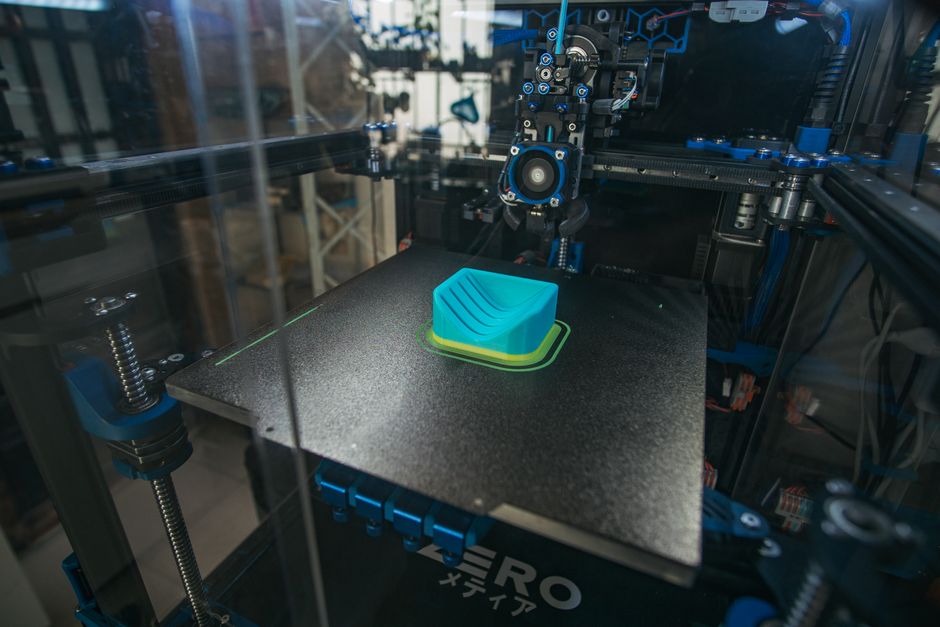

Resin 3D printing has transformed how manufacturers produce complex geometries with precision and speed. However, the integration of support structures is crucial for achieving these feats. As reported by 3Dnatives, support structures enable the creation of overhangs, thin features, and intricate designs that would otherwise collapse during printing. Yet, they come with their own set of challenges, such as increased material consumption and manual removal processes. For B2B manufacturing, understanding these nuances is essential for optimizing production workflows. Support structures ensure that the resin 3D printed objects maintain their integrity throughout the printing process. These supports are typically designed to be removed after the object has been printed, but they can significantly impact the overall efficiency of the printing process.
The complexity and accuracy of support structures have evolved dramatically over recent years. New materials with improved mechanical properties allow for more intricate and detailed designs. For instance, high-tech resins offer better dimensional stability during the printing process, reducing warping and ensuring that the supports remain firmly in place without causing damage to the main structure. Additionally, advances in 3D printer technology have enabled more precise control over the placement of support structures, leading to a reduction in excess material usage.
Support structures are typically made from two types of materials: temporary and permanent. Temporary supports, such as those made from polyvinyl alcohol (PVA), are easily dissolved or melted away after printing, making them ideal for complex geometries where precise overhangs need to be maintained. Permanent supports, on the other hand, require a selective etching process using chemicals like hydrofluoric acid to remove them without damaging the final object. These materials and processes have significantly improved the efficiency of 3D printing by allowing for more intricate designs with minimal post-processing.
The advent of high-resolution printers has allowed for more detailed and compact support structures, reducing the overall amount needed and minimizing post-processing. For example, a SolidWorks user might design a part with numerous overhangs that would be impractical to print without support structures. With high-resolution printing capabilities, these supports can be designed and placed in such a way that they are minimized or even eliminated entirely, leading to significant time and material savings.
The technical deep dive into advancements in resin 3D printing reveals significant improvements in material science and printing processes. 3D Printing Daily highlights that materials like high-viscosity resins can enhance the accuracy of support structures, allowing for more complex geometries with minimal overhangs. These resins are designed to be less prone to movement during the curing process, ensuring that the supports remain firmly in place. Additionally, advances in laser technology have enabled finer control during the curing process, ensuring that both the model and supports are printed accurately and efficiently.
For instance, Luminary 3D has developed high-viscosity resins specifically for support structures. These materials have a higher viscosity than traditional resin, making them less likely to move or shift during the printing process. This stability allows for more precise and accurate placement of supports, reducing the risk of defects in the final print. Furthermore, Luminary’s proprietary curing technology uses multiple laser beams that can be precisely controlled to ensure even curing across both the model and support structures.
The industry impact of these advancements is profound, reshaping low-volume manufacturing and rapid prototyping. For instance, a Siemens medical device manufacturer can now quickly iterate on complex prototypes without extensive manual labor or expensive tooling. This speed-to-market advantage is crucial in industries where time to production can mean the difference between success and failure. Furthermore, supply chains are being disrupted as companies integrate 3D printing into their operations, reducing reliance on traditional manufacturing methods.
Second-order effects of these advancements include cost reduction and increased accessibility. The integration of artificial intelligence (AI) in generative design algorithms is revolutionizing how engineers approach complex designs. Engineers can input performance parameters and constraints, and the program generates optimized designs that take advantage of 3D printing's capabilities. This not only saves time but also reduces material waste, making 3D printing more cost-effective.
For example, Altair DesignSpace offers an AI-driven design optimization tool that can generate support structures and main parts simultaneously. This integration allows for a much more efficient workflow where engineers can quickly iterate on designs while ensuring that the supports are optimized for both strength and ease of removal. The result is not only better-designed parts but also fewer materials wasted, leading to significant cost savings.
At Elk Valley 3D, we align with these innovations through our premium materials and White-Glove Service. Our high-purity resins ensure the best possible outcomes for your projects, while our dedicated support team guarantees a seamless experience from design to delivery. By leveraging the latest advancements in resin 3D printing, we offer unparalleled precision and efficiency to our clients. For instance, our state-of-the-art printers can handle high-viscosity resins with ease, ensuring that even the most intricate designs are printed accurately.
Looking ahead, the future of 3D printing is bright, with ongoing research and development driving continuous improvements. Elk Valley 3D remains at the forefront of this technological landscape, committed to providing top-tier solutions that meet the evolving needs of our clients. As we move forward, expect further advancements in materials science and process optimization, ensuring that 3D printing continues to revolutionize manufacturing. For instance, new developments in biocompatible resins could open up exciting opportunities for medical applications, where precise control over support structures is critical.
The integration of AI and advanced material science will continue to push the boundaries of what is possible with resin 3D printing. As these technologies mature, we can expect even more complex designs and faster production times. This will not only benefit traditional manufacturing industries but also enable new applications in fields like aerospace, automotive, and healthcare.
In conclusion, support structures play a crucial role in the success of resin 3D printing projects. By understanding their importance and leveraging advancements in material science and printing processes, manufacturers can achieve higher levels of precision and efficiency. At Elk Valley 3D, we are committed to staying at the forefront of these innovations, providing our clients with premium materials and expert support. As we continue to push the boundaries of what is possible with 3D printing, we look forward to seeing how this technology will transform various industries in the years to come.
📅 Latest Industry Update
New developments in resin 3D printing have introduced innovative support structures that significantly enhance print quality and reduce material waste, marking a substantial advancement over traditional methods. These new designs utilize a lattice structure with optimized geometry to minimize the amount of support needed while ensuring structural integrity during the printing process. For instance, research published by AME Group LTD highlights how this approach can reduce material usage by up to 40%, leading to cost savings and more sustainable manufacturing practices.
The technical details of these new support structures involve intricate design algorithms that analyze the object's geometry and determine the most efficient placement and shape of supports. This involves complex computational processes, such as finite element analysis (FEA), to predict stress points and ensure optimal support distribution. The success of this approach is demonstrated by its implementation in high-end 3D printers like UltiMaker’s S-series, which integrate these advanced support structures to achieve unparalleled print quality and efficiency. These technical advancements not only improve the accuracy of 3D prints but also streamline the post-processing steps, reducing overall production time.
For makers and small producers, this innovation means a more cost-effective and sustainable workflow. By minimizing material waste and reducing the need for manual support removal, these new support structures can significantly cut down on labor costs and environmental impact. Additionally, the improved print quality allows for greater design freedom, enabling smaller businesses to produce high-resolution prototypes that closely match final products. This not only accelerates the product development process but also enhances the precision of end-use parts, making 3D printing a more viable option for a wider range of applications in both prototyping and low-volume production.
The integration of machine learning (ML) algorithms into support structure design further optimizes the printing process by dynamically adjusting support structures based on real-time print data. This adaptive approach ensures that each layer receives the precise amount of support needed, reducing over-support and improving material efficiency. For makers and small producers, this means reduced waste and faster turnaround times, as printers can automatically adjust to different materials and object geometries without manual intervention. Such automation not only streamlines production but also allows for more efficient use of resources, making 3D printing a more accessible technology for smaller-scale operations.
📅 Latest Industry Update
A recent article from 3Dnatives titled "Why Low-Volume Production is Driving Innovative Applications for IN3DTEC" highlights how low-volume and customized production are reshaping the landscape of 3D printing, particularly with resin-based technologies. This shift is spearheaded by companies like IN3DTEC, which are leveraging these methods to explore new markets and applications that were previously unfeasible due to high upfront costs or complex manufacturing processes. The article emphasizes how 3D printing allows for rapid prototyping and customized solutions without the need for traditional molds, making it an ideal tool for low-volume production.
The technical advancements in resin-based 3D printers are central to achieving these innovative applications. For instance, IN3DTEC is utilizing high-precision printers that offer excellent surface finish and dimensional accuracy, critical for small-scale manufacturing. These printers use advanced materials such as photopolymers that can be finely tuned for specific properties like strength or flexibility. The integration of machine learning algorithms also optimizes printing parameters in real-time, ensuring consistent quality across large numbers of parts. Such technical improvements are essential because they address the "last mile" challenge—transforming prototypes into production-ready items with minimal wastage and higher efficiency.
For makers and small producers, these advancements mean greater flexibility and accessibility in bringing new ideas to market faster than ever before. With lower entry barriers and the ability to produce customized products on-demand, manufacturers can quickly adapt to changing customer needs or niche markets that larger companies might overlook. Moreover, the increased precision and repeatability offered by modern 3D printing technologies enable these producers to meet stringent quality standards often required in industries like aerospace or medical devices. This democratization of manufacturing processes is empowering entrepreneurs and small businesses to innovate and compete globally without needing substantial capital investments in traditional manufacturing infrastructures.
The integration of intelligent post-processing systems further enhances the efficiency and quality of resin 3D prints. Post-processing tools like UV curing stations ensure consistent hardening of photopolymers, while automated deburring machines remove excess material with precision, saving time and reducing human error. For small producers, these tools are game-changers as they allow for规模化生产前的精细化处理,确保每一件产品的质量一致性。这不仅提高了生产的效率和质量,还降低了对人工干预的需求,使得小规模制造商能够更好地控制成本并提高竞争力。