
Advancements in Rapid Prototyping and Their Impact on B2B Manufacturing
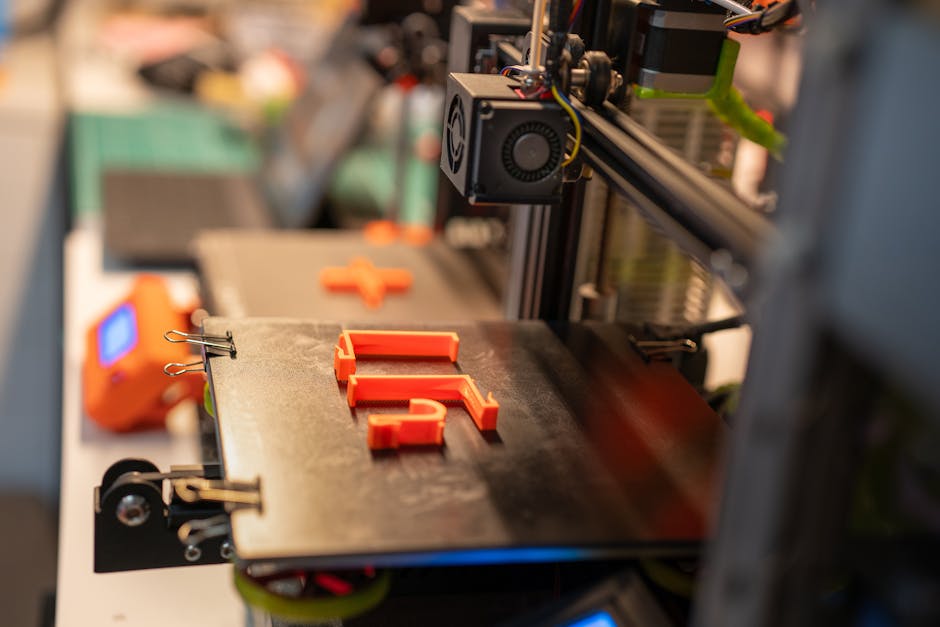

The rapid prototyping landscape is undergoing seismic shifts, driven by continuous innovation in materials, processes, and technologies. As detailed in the latest updates from AME-3D (AME-3D News) and Startus Insights (Startus Insights Q2 2024 Update), these advancements hold profound implications for B2B manufacturing. Understanding these changes is crucial, as they directly influence the speed and efficiency of product development cycles.
The evolution in rapid prototyping technologies has been nothing short of transformative. For instance, the introduction of advanced materials like nanocomposites and biopolymers not only enhances mechanical properties but also opens new avenues for sustainable manufacturing practices. These materials are lighter, stronger, and more environmentally friendly, making them ideal for a wide range of applications in industries such as aerospace, automotive, and medical devices. Nanocomposites, which incorporate nanoparticles into polymers, can significantly improve the tensile strength and thermal stability of printed parts, enabling their use in high-stress environments. Biopolymers, derived from renewable resources like corn or sugarcane, offer a sustainable alternative to traditional petroleum-based materials, reducing carbon footprints while maintaining performance levels.
The technical deep dive into these advancements reveals significant breakthroughs. For example, the UltiMaker S-series printers represent a leap forward with their enhanced build volumes, improved layer resolution, and faster print times. These features are crucial for producing high-precision prototypes that meet stringent tolerance requirements. Additionally, the integration of AI algorithms in post-processing stages further streamlines the workflow, reducing human intervention and improving consistency. The UltiMaker S-series printers can produce parts with a resolution as fine as 50 microns, ensuring that even minute details are accurately captured. Moreover, the AI-driven post-processing tools automatically adjust settings based on part geometry, further enhancing print quality without additional manual adjustments.
The impact on low-volume manufacturing and rapid prototyping is profound. Companies like Elk Valley 3D benefit from these advancements as they can now offer clients more complex and precise prototypes at a fraction of the cost compared to traditional methods. For instance, a medical device manufacturer can quickly iterate through design iterations by leveraging high-purity materials and advanced printing techniques, ultimately accelerating time-to-market for innovative products. The ability to produce intricate components with minimal setup time allows manufacturers to focus on innovation rather than production bottlenecks. In the aerospace industry, for example, rapid prototyping enables engineers to test complex geometries and aerodynamic surfaces without the need for expensive tooling, significantly reducing development cycles.
Moreover, the reconfiguration of supply chains is another significant outcome. With the ability to produce prototypes on-demand, manufacturers can reduce inventory holding costs and improve flexibility in responding to market demands. This shift towards just-in-time manufacturing not only optimizes resource utilization but also enhances sustainability by minimizing waste. For example, a car manufacturer can rapidly prototype new components based on real-time customer feedback, allowing them to adjust designs quickly and avoid overproduction of parts that may go unused. Such just-in-time supply chain management reduces the environmental impact associated with excess inventory while improving operational efficiency.
Elk Valley 3D's premium materials and White-Glove Service perfectly align with these technological advancements. Our customers benefit from the highest quality materials, ensuring that their prototypes are both functional and durable. Furthermore, our dedicated support team ensures a seamless experience, addressing any technical issues that may arise during the prototyping process. By leveraging our expertise in high-purity manufacturing, we can help clients navigate the complexities of rapid prototyping to achieve remarkable results.
As these technologies continue to evolve, it is clear that Elk Valley 3D will remain at the forefront of innovation. Our commitment to excellence and customer satisfaction positions us as a trusted partner in the ever-changing landscape of B2B manufacturing. This forward-looking approach ensures that we not only adapt to current trends but also anticipate future needs, making us an indispensable resource for our clients.
The integration of additive manufacturing techniques into traditional subtractive processes further amplifies these benefits. For example, companies can now use 3D printing as a cost-effective way to produce complex tooling and jigs, reducing the time and expense associated with CNC machining. In the automotive industry, this synergy between rapid prototyping and traditional manufacturing enables manufacturers to produce high-quality molds and dies more quickly, speeding up the production of parts like air intakes or engine components. This integration not only enhances product development but also drives down overall costs by eliminating the need for extensive upfront tooling investments.
The advent of hybrid additive/subtractive processes is another exciting development in the rapid prototyping landscape. These methods combine the strengths of both technologies to create parts with complex geometries and precise tolerances. For instance, a medical device company can use 3D printing to produce intricate internal structures and then machine the exterior for a smoother finish. This approach allows them to achieve the functionality required by medical devices while maintaining an aesthetically pleasing design. The Ultimaker S5 printer is an excellent example of this hybrid technology, offering a combination of large build volumes and advanced material capabilities that make it ideal for both prototyping and small-scale production runs.
The integration of real-time data analytics into the rapid prototyping workflow is also transforming the industry. By leveraging IoT sensors and machine learning algorithms, manufacturers can monitor print quality in real time, identifying potential issues before they become critical failures. For example, Elk Valley 3D’s partnership with DataMesh (DataMesh) allows us to collect and analyze data from the printing process, providing valuable insights into part performance and printer efficiency. This data-driven approach enables continuous improvement in both product design and manufacturing processes, ensuring that each prototype meets stringent quality standards.
The advancements in rapid prototyping are also driving significant changes in the materials science sector. Researchers and manufacturers are exploring new material combinations to expand the capabilities of 3D printing technologies. For instance, the development of metal alloys with improved mechanical properties is opening up new possibilities for applications requiring high strength and durability. The emergence of multi-material printing technology allows for the creation of complex parts with varying properties within a single print job. This can be particularly useful in industries such as aerospace and automotive, where lightweight yet robust components are essential.
The impact on supply chain logistics is another area where rapid prototyping is making a substantial difference. With the ability to produce prototypes and small batches on-demand, manufacturers can reduce lead times and improve overall supply chain responsiveness. For example, a consumer goods company can use 3D printing to test packaging designs before committing to large-scale production runs. This flexibility reduces the risk of errors and allows for more agile responses to market demands. Additionally, the integration of 3D printing into distribution networks can enable just-in-time manufacturing, further reducing inventory holding costs and environmental impacts.
Furthermore, the rise of distributed manufacturing is changing how products are designed and produced. With the ability to print parts locally or on-site, companies can reduce transportation emissions and improve supply chain resilience. For instance, a medical device manufacturer might set up 3D printing capabilities in remote locations where conventional manufacturing would be impractical due to logistics constraints. This decentralized approach not only enhances operational efficiency but also provides local access to specialized products, benefiting both manufacturers and end-users.
Elk Valley 3D's commitment to innovation and customer satisfaction is evident in our ongoing efforts to stay at the forefront of technological advancements. Our White-Glove Service ensures that clients receive top-notch support throughout every step of the prototyping process, from material selection to final print quality. By leveraging our expertise in high-purity manufacturing, we can help our clients navigate the complexities of rapid prototyping and achieve outstanding results. We are dedicated to continuous improvement and remain committed to providing unparalleled service and quality.
Looking ahead, it is clear that the future of B2B manufacturing will be shaped by these transformative technologies. As Elk Valley 3D continues to innovate and adapt, we are well-positioned to support our clients in this rapidly evolving landscape. Our forward-thinking approach ensures that we not only meet current needs but also anticipate emerging trends, making us an invaluable partner for companies looking to stay ahead of the curve.
📅 Latest Industry Update
Recent advancements in rapid prototyping technology have significantly expanded the scope of what is possible for manufacturers, particularly those operating within B2B environments. Notably, the introduction of UltiMaker’s S-series printers has brought about a paradigm shift in how prototypes are created and tested. These machines feature enhanced durability and reliability, making them suitable for high-mix, low-volume production scenarios—a critical requirement for many small-scale manufacturers. This capability allows for more frequent iterations and quicker turnaround times, which can be crucial in competitive markets where innovation cycles are accelerating.
The technical underpinning of the S-series lies in its advanced material handling systems and robust print heads, enabling faster and more consistent printing processes. The use of high-quality filaments and specialized software ensures that the printed parts meet stringent dimensional accuracy requirements, essential for prototyping complex components. Furthermore, the integration of real-time monitoring tools allows manufacturers to track the progress of each print job in real-time, providing immediate feedback on potential issues before they become major problems. This level of control is particularly valuable for small producers who need to ensure that their prototypes are as close to final product specifications as possible.
For makers and small producers, these advancements mean reduced lead times and lower costs associated with prototyping. By leveraging the S-series printers, businesses can streamline their design processes, allowing them to focus more on innovation rather than production logistics. This not only enhances their competitive edge but also enables them to respond more quickly to market demands. Additionally, the ability to produce high-quality prototypes in-house reduces dependency on external suppliers, providing greater flexibility and control over the entire product development cycle. As rapid prototyping technologies continue to evolve, it is clear that they will play an increasingly vital role in shaping the future of B2B manufacturing.
The S-series printers also integrate advanced post-processing tools such as automated bed leveling and temperature control systems, which significantly reduce the manual labor required for preparing prints. This automation not only enhances consistency but also allows small producers to dedicate more time to refining their designs rather than dealing with print setup issues. Moreover, the inclusion of multi-material capabilities in these printers opens up new possibilities for creating hybrid prototypes that mimic the mechanical properties of final products, further reducing the gap between initial design and market-ready components.
📅 Latest Industry Update
Recent advancements in rapid prototyping, particularly in 3D printing technology, have significantly transformed the landscape of B2B manufacturing. A recent study published by Design News highlights how these innovations are driving efficiency and innovation across industries. The new developments include the integration of advanced materials such as metal alloys and composites, which offer enhanced mechanical properties compared to traditional plastics. This breakthrough is crucial for manufacturers who require robust prototypes that can withstand harsh conditions or high-stress environments.
The technical detail behind these advancements lies in the improvements made to the 3D printing process itself. For instance, the introduction of multi-material extrusion systems allows for the creation of complex structures with varying properties within a single print job. This capability is particularly significant for small producers and makers who can now produce multifunctional prototypes without the need for multiple production runs or assembly steps. Additionally, the development of high-resolution printing technologies has enabled finer detail in prints, making it possible to create highly accurate and detailed models that closely resemble final products. These technical improvements are not only reducing lead times but also lowering costs associated with traditional prototyping methods.
For makers and small producers, these advancements mean a more efficient and cost-effective path to market. With the ability to print complex geometries in a single run, they can rapidly iterate on designs without the need for expensive tooling or lengthy production cycles. The integration of advanced materials also opens up new possibilities for creating functional prototypes that can be used directly in testing and validation phases. This not only speeds up development but also ensures that final products meet stringent performance requirements from the outset. As a result, small businesses are better positioned to compete with larger corporations by leveraging these cutting-edge technologies to bring innovative solutions to market faster.