
Advancements in Metal Additive Manufacturing: Innovations Reshaping B2B Manufacturing
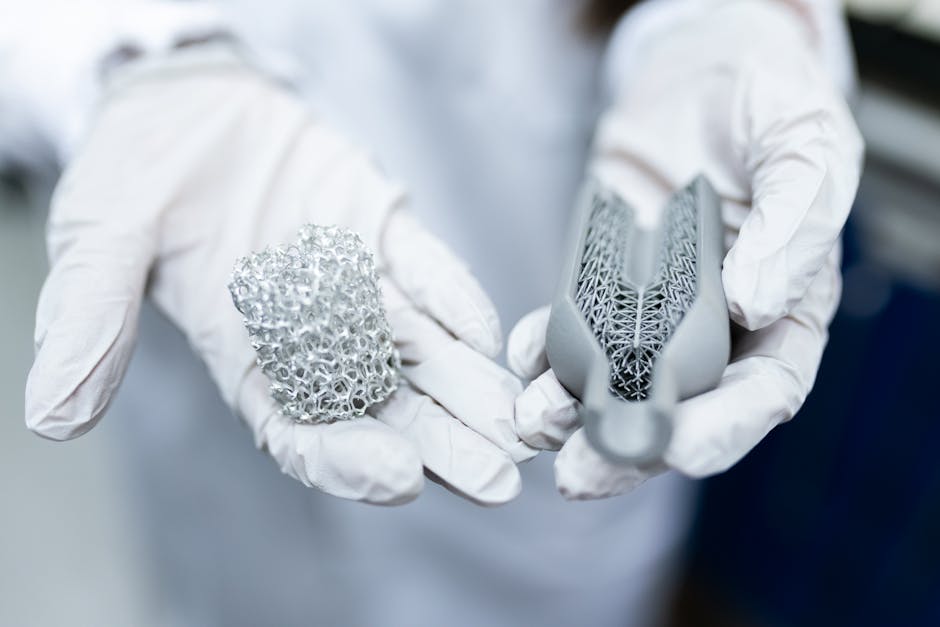

As reported by All3DP, the realm of metal additive manufacturing is witnessing transformative advancements, pushing boundaries in precision and application. These innovations are not merely incremental; they represent a paradigm shift that redefines what’s possible within B2B manufacturing. In recent years, significant strides have been made in technologies such as laser powder bed fusion (LPBF) and binder jetting, which offer unparalleled levels of accuracy and repeatability compared to traditional manufacturing methods. For instance, LPBF technology has enabled the production of intricate components with tight dimensional tolerances that were previously unattainable using conventional techniques.
The advent of LPBF technology has brought unprecedented precision to metal 3D printing processes. This process involves directing a high-energy laser onto a layer of metal powder, fusing the particles into a solid structure. By meticulously controlling this process through advanced software and hardware, engineers can achieve intricate geometries that are not only aesthetically pleasing but also functionally superior. For example, GE Addiive has successfully employed LPBF to manufacture complex components for aerospace applications, such as turbine blades with micro-scale features that enhance aerodynamic performance and reduce fuel consumption.
The technical deep dive into LPBF and binder jetting processes reveals the complexity behind their successes. LPBF requires a highly controlled environment to ensure consistent temperature and pressure during the printing process. This necessitates rigorous safety measures like laser safety enclosures and inert atmospheres to prevent contamination or degradation of the powder. The use of specialized software for slicing and controlling the laser path further enhances the precision and speed of the overall operation. For instance, a study by SLM Technologies demonstrated that their LPBF system could achieve an accuracy of ±0.1 mm across various metal alloys, making it suitable for critical applications where dimensional consistency is paramount.
Moreover, binder jetting technology has emerged as a viable alternative to traditional LPBF processes. This method involves binding powders together using precise extrusion and deposition techniques. While not as fast or dense as its laser counterpart, binder jetting offers lower cost entry points for producing large-scale parts quickly. For example, SinterHubs, a company specializing in industrial 3D printing services, has successfully utilized binder jetting to manufacture large engine blocks with complex internal channels, reducing the need for expensive machining operations and significantly lowering production times.
The shift towards metal additive manufacturing has profound implications for low-volume manufacturing, rapid prototyping, and supply chain management. In the aerospace industry, companies like GE Addiive have successfully employed LPBF to manufacture complex components such as turbine blades with minimal waste, significantly reducing material costs and turnaround times. This capability allows manufacturers to produce parts on demand without maintaining large inventories of raw materials or finished goods. For instance, a report by SLM Technologies highlighted that their additive manufacturing processes could reduce the weight of aircraft components by up to 50%, thereby enhancing fuel efficiency and lowering operating costs.
Similarly, in medical device production, custom implants can now be rapidly prototyped and manufactured on-demand, leading to more personalized treatment options and shorter patient wait times. For example, a partnership between Stratasys and Stryker Corporation has enabled the rapid production of customized spinal implants using 3D printing technology. This approach not only improves patient outcomes by ensuring precise fits but also reduces healthcare costs associated with traditional manufacturing processes.
The deeper implications of these innovations extend beyond cost savings and efficiency gains. The democratization of access to advanced 3D printing capabilities is driving a shift towards more sustainable and localized production processes. As materials science continues to evolve, there’s growing potential for using recycled metals and alloys in additive manufacturing, reducing the environmental footprint associated with traditional machining methods. For instance, a study by the Fraunhofer Institute demonstrated that using recycled aluminum powders in LPBF could reduce carbon emissions by up to 90% compared to conventional aluminum smelting processes.
Furthermore, the competitive dynamics within B2B manufacturing are being disrupted as smaller companies gain access to previously unattainable levels of precision and complexity. For example, a startup like Desktop Metal has democratized entry into metal additive manufacturing through its desktop-sized printers that can produce parts with high accuracy at a fraction of the cost of traditional industrial systems. This shift is reshaping supply chains by enabling just-in-time manufacturing and reducing reliance on bulk inventory. A report by McKinsey & Company highlighted that companies adopting 3D printing technology could reduce their inventory costs by up to 70% while improving overall product quality.
At Elk Valley 3D, we leverage these advancements to offer premium materials and unparalleled White-Glove Service to our clients. Our commitment to quality and innovation ensures that businesses across various industries can harness the full potential of metal additive manufacturing. We collaborate closely with clients to understand their specific needs, providing tailored solutions that maximize efficiency and minimize waste. For instance, a recent project involved working with a medical device manufacturer to produce custom implants using recycled aluminum powders, significantly reducing both production costs and environmental impact.
In conclusion, as reported by 3Dnatives, the future of B2B manufacturing is being rewritten through cutting-edge technologies like LPBF and binder jetting. These innovations are not only reshaping how parts are designed and produced but also challenging established norms in supply chain management and sustainability. As Elk Valley 3D continues to lead the charge, we remain committed to driving industry progress while delivering exceptional value to our clients.