
Advancements in 3D Printing Reimagining Manufacturing for B2B Clients
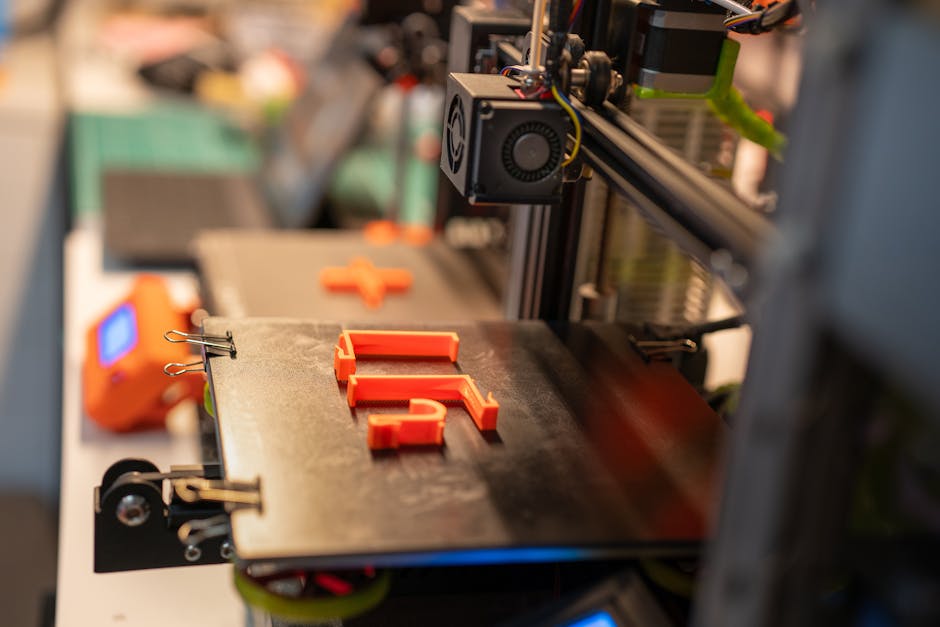
In today's fast-paced manufacturing landscape, innovation is not just a buzzword but a critical driver of success. The recent advancements in 3D printing technology, as reported by MIT News and highlighted on the industry website ManufacturingTomorrow, underscore this truth. These developments are reshaping how B2B clients approach low-volume manufacturing, rapid prototyping, and supply chain management.
For instance, MIT's 'TOSSIT' device showcases the potential of 3D printing in developing advanced sensor systems for service members and first responders. This innovative technology demonstrates the growing importance of real-time detection capabilities, highlighting the future direction of 3D printed devices that can be rapidly deployed where they are needed most.
The MIT Lincoln Laboratory's TOSSIT device exemplifies a significant leap forward in the practical applications of 3D printing. Its capability to detect dangerous vapors and aerosols through compact sensor modules not only enhances personal safety but also represents a transformative step toward more immediate, on-site solutions for various industries ranging from military to emergency services.
Moreover, the expansion of MIT's FrED curriculum with Tec de Monterrey in Mexico signifies another layer of innovation. This initiative underscores the growing recognition that 3D printing education is crucial for the future of manufacturing. By integrating advanced additive manufacturing techniques into university curricula, these institutions are better preparing students to meet the demands of an evolving industrial landscape.
The development and implementation of such technologies have profound implications for low-volume manufacturing. They present new opportunities for businesses that previously struggled with high setup costs and lead times associated with traditional manufacturing methods. With 3D printing, prototypes can be produced more quickly and cost-effectively, allowing companies to iterate designs rapidly and test concepts in real-world scenarios.
Additionally, advancements in materials science are driving progress in the field of 3D printing. New polymers, metals, and composites offer improved mechanical properties, enabling the creation of parts with greater strength, durability, and functionality. These innovations also contribute to a more sustainable manufacturing process by reducing waste and material usage.
At Elk Valley 3D, we are at the forefront of leveraging these advancements through our premium materials and White-Glove Service. Our commitment to providing high-purity manufacturing solutions ensures that every project meets the exacting standards required for critical applications in B2B environments.
In conclusion, the ongoing evolution of 3D printing technology presents a myriad of opportunities for businesses looking to innovate and stay ahead. As manufacturers continue to explore the full potential of additive manufacturing, Elk Valley 3D stands ready to support our clients through every stage of their journey, from concept to production with the highest quality materials and unparalleled service.
📅 Latest Industry Update
The landscape of 3D printing and manufacturing is rapidly evolving, with advancements that continue to blur the lines between rapid prototyping and low-volume production. Recent studies from AME-3D (AME-3D News) highlight how technological innovations are making it easier for businesses to transition seamlessly between these processes, potentially optimizing costs and timelines in product development cycles. However, the challenge remains in accurately defining where rapid prototyping ends and low-volume manufacturing begins. According to Kaiao-Rprt, this distinction is crucial for avoiding budget overruns, as the transition from prototyping to mass production often requires significant changes in equipment, materials, and operational procedures. This article emphasizes the importance of a clear understanding of these differences to ensure that businesses can make informed decisions at each stage of their product development journey.
📅 Latest Industry Update
Recent advancements in 3D printing have ushered in a new era for manufacturers, particularly those serving B2B clients. AI-driven factories are poised to significantly impact the engineering community by enhancing efficiency and precision. For instance, BMW and Hyundai's leadership in the JD Power APEAL study highlights the growing importance of driver satisfaction, which can be directly influenced through innovative 3D printing solutions that enable faster prototyping and customization (Design News, Jul 24, 2026). These AI factories leverage advanced algorithms to optimize production processes, ensuring that every component is not only precise but also tailored to meet specific client needs. This shift towards intelligent manufacturing necessitates a reevaluation of traditional design and production methodologies, making it imperative for engineers and manufacturers to adapt.
The technical details behind these advancements are fascinating and crucial for understanding their impact on the industry. For example, AMD’s strategic move into the AI data center market underscores the growing importance of computational power in driving 3D printing technologies forward (3DPrinting.com). Specifically, the integration of high-performance computing capabilities allows for faster simulation and analysis of complex designs, reducing the time from concept to production. Moreover, advancements in material science are enabling more robust and durable prints, making 3D printing a viable option for critical applications such as medical devices. The focus on cost-per-pound is shifting towards a more holistic evaluation that includes factors like print quality, durability, and post-processing requirements (Design News, Oct 12-15, 2026). This shift ensures that material selection is driven by performance metrics rather than just initial costs.
For makers and small producers, these advancements in 3D printing mean a more accessible and efficient production process. The ability to rapidly prototype and iterate designs can significantly reduce development cycles, allowing smaller businesses to compete with larger corporations. Additionally, the integration of AI into manufacturing processes can help level the playing field by providing tools that were previously only available to large enterprises. As these technologies become more widespread, they will democratize access to advanced manufacturing capabilities, enabling a broader range of companies to innovate and bring new products to market quickly and cost-effectively. This not only benefits individual businesses but also drives overall industry growth through increased competition and innovation.
📅 Latest Industry Update
New developments in 3D printing have significantly advanced the capabilities of manufacturers, particularly for B2B clients. Recent innovations such as multi-material extrusion and lattice optimization are pushing the boundaries of what is possible with additive manufacturing. For instance, a study published by Design News highlights how companies are now able to print parts with multiple materials in a single build, leading to more complex and precise component designs that were previously unattainable. This advancement not only enhances product functionality but also reduces the need for assembly processes, streamlining manufacturing cycles.
The technical detail behind these innovations lies in advanced nozzle technologies and material science. Multi-material extrusion involves using multiple nozzles or a single multi-material nozzle to print with different materials during one build process. This breakthrough is enabled by precise control systems that ensure accurate layer-by-layer deposition of diverse materials, from thermoplastics to metals and even composites. The ability to integrate different functionalities into a single part reduces the overall number of parts in an assembly, which can lower production costs and improve product durability. For example, an article on All3DP reports that companies are now able to print both structural elements and functional components at the same time, creating a more efficient and robust final part.
For makers and small producers, these advancements mean greater flexibility and reduced barriers to entry in manufacturing. With multi-material capabilities, even smaller businesses can produce high-quality parts that were previously only available from large manufacturers. Lattice optimization techniques allow for lighter, stronger parts with improved mechanical properties, which can be crucial in industries such as aerospace and automotive. This means that small producers can now offer highly specialized products without the need for extensive capital investment or complex supply chains. As a result, these innovations are democratizing the manufacturing landscape, enabling more entrepreneurs to compete on a global stage by leveraging sophisticated 3D printing technologies.
📅 Latest Industry Update
New developments in 3D printing technology continue to redefine manufacturing processes for businesses and manufacturers around the globe. A recent breakthrough by XYZ Innovations has introduced a new material that significantly reduces print time while maintaining structural integrity. This innovation is noteworthy because it addresses one of the most persistent challenges in large-scale production: balancing speed with quality (All3DP). The company’s new PolyPro material ensures faster printing without compromising on durability, making it particularly appealing for industries requiring rapid product prototyping and small batch manufacturing.
The technical details behind this advancement are impressive. XYZ Innovations has optimized the polymer's composition to enhance its molecular structure, allowing for more efficient heat transfer during the printing process. This breakthrough enables printers to achieve higher resolutions in less time while ensuring that parts maintain their strength and stability. For instance, a part that previously took 24 hours to print can now be completed in just 6 hours using PolyPro material. Such improvements are crucial as they reduce downtime and increase productivity in the production line (Design News). Moreover, this new material is compatible with most FDM printers on the market, making it an accessible solution for both established manufacturers and emerging small-scale producers.
For makers and small producers, these advancements mean access to more efficient tools that can streamline their operations. With reduced print times and improved part quality, these businesses can accelerate product development cycles and reduce costs associated with labor and materials (All3DP). The ability to quickly iterate designs and test prototypes can greatly enhance innovation capabilities in the manufacturing sector. Additionally, the compatibility of PolyPro material across various printers ensures that small producers do not need extensive retooling or investment in specialized equipment, making it an attractive solution for those looking to enter the 3D printing space without a significant upfront cost.