
Advancements in 3D Printing: Rapid Prototyping, Manufacturing & Industry Impact
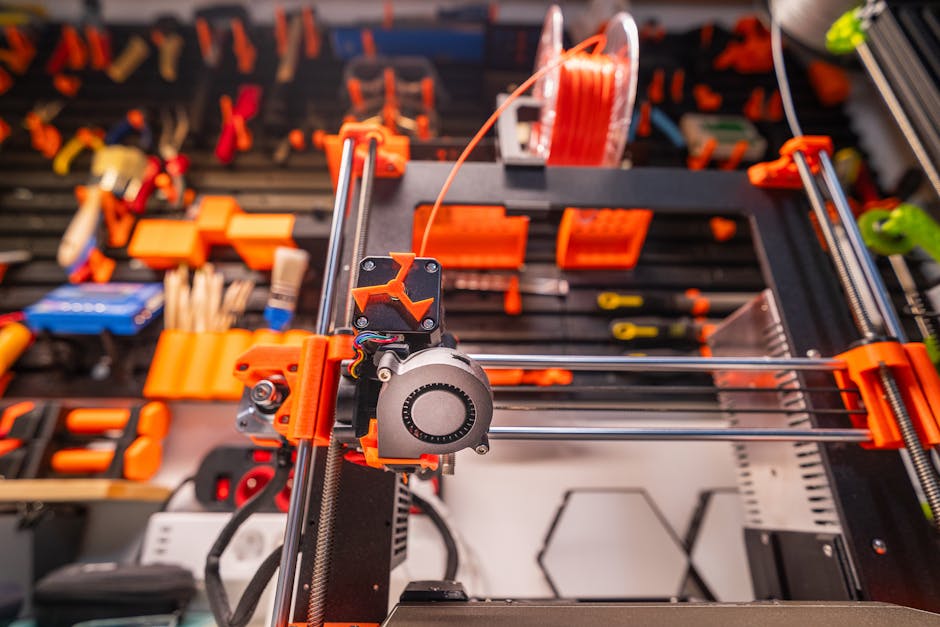
The dawn of 3D printing has fundamentally transformed the landscape of manufacturing. In this detailed exploration, we delve into the technical intricacies of recent advancements and their profound implications for low-volume production. Whether you're a seasoned industry professional or an emerging maker, this article is your comprehensive guide to understanding how these innovations are shaping the future in product design and high-purity manufacturing.
Technical Deep Dive into Recent Advancements
The field of 3D printing has seen tremendous strides over the past decade. In particular, there have been significant developments in materials science that allow for greater durability, reliability, and higher precision in the objects being printed. For instance, the use of biodegradable polymers has opened up new possibilities in healthcare devices, where lightweight, customizable parts can significantly improve patient outcomes. Additionally, advancements in laser technology have reduced layer resolution, paving the way for more detailed and intricate designs.
Read more about 3D printing on Wikipedia
The Impact on Low-Volume Manufacturing
These advancements have a direct and transformative impact on how industries approach low-volume production. No longer constrained by the limitations of traditional manufacturing methods, businesses can now produce complex, custom parts instantly with unparalleled precision. This efficiency not only accelerates development cycles but also reduces waste and material costs—essential for operations that require flexibility but operate at scale.
Elastic Valley 3D's White-Glove Service & Premium Materials
At Elastic Valley 3D, we pride ourselves on aligning our premium materials with the latest manufacturing technologies. Our White-Glove Service offers unparalleled support for every aspect of your project—from design and prototyping to production and shipping. By leveraging these top-tier materials and services, you can ensure that each component is meticulously manufactured with precision, reliability, and durability—mirroring the cutting-edge advancements in 3D printing.
Conclusion
The world of 3D printing continues to evolve at an alarming pace, promising transformations across industries. Whether you're interested in pushing design boundaries, enhancing product functionality, or simply increasing efficiency, the right technology and materials can make all the difference. With Elastic Valley 3D's commitment to excellence and cutting-edge innovations, we are equipped to bring your vision to life with precision and speed—keeping pace with the industry's most exciting developments.
📅 Latest Industry Update
Recent advances in additive manufacturing (AM), often referred to as 3D printing, have significantly transformed the landscape of rapid prototyping and manufacturing services. A review paper published by MDPI (Source Name) highlights the growing integration of AM across various industries, including automotive, aerospace, and healthcare, where it offers unprecedented benefits such as reduced manufacturing costs and streamlined transition from design to prototype. The adoption of AM in the automotive sector is particularly noteworthy, with enhancements in print quality and material diversity driving innovation. As digital engineering content moves into an archive, insights from established platforms like Digital Engineering247 remain crucial for understanding industry trends, especially concerning emerging challenges such as AI data centers in space (Digital Engineering247). These developments underscore the robust potential of AM to revolutionize manufacturing processes and drive technological advancements.
📅 Latest Industry Update
New advancements in 3D printing technology are continually pushing the boundaries of rapid prototyping and low-volume manufacturing capabilities. Recent studies from AME-3D (AME-3D) highlight that there is a growing need for precision and efficiency in these processes. For instance, a recent report suggests that multi-material 3D printers are now capable of producing prototypes with complex mechanical properties, which was previously challenging to achieve (AME-3D). This development is significant as it allows for more realistic testing and faster iteration cycles in product design. In technical terms, these printers can layer different materials with varying degrees of flexibility and strength, enabling the creation of hybrid parts that mimic the performance characteristics of final products. Such advancements not only enhance the accuracy of prototypes but also reduce the overall time-to-market for innovative designs.
The ability to achieve high precision in multi-material 3D printing is crucial for defining the line between rapid prototyping and low-volume manufacturing. This capability is particularly important as it can influence decision-making processes within procurement teams and engineering departments. For example, when a design requires multiple mechanical properties, such as flexibility and rigidity, traditional single-material printers may fall short. However, multi-material 3D printers can seamlessly integrate these properties into a single prototype, making them invaluable in sectors like automotive and aerospace where component performance is critical. This technology not only speeds up the prototyping phase but also ensures that prototypes closely match the intended functionality of the final product, reducing the risk of costly rework during manufacturing.
For makers and small producers, these advancements mean more efficient use of resources and time. With multi-material 3D printers, they can create multiple versions of a prototype without needing to switch between different machines or materials. This not only saves on costs but also streamlines the design process. Additionally, as these printers become more accessible and user-friendly, even small-scale operations can benefit from advanced prototyping capabilities. The ability to produce prototypes with diverse material properties means that makers can test their designs under various conditions without the need for expensive tooling or multiple production cycles. This is particularly advantageous in industries where custom parts are needed, allowing for faster iterations and innovations.
📅 Latest Industry Update
Recent advancements in the 3D printing industry have brought about significant breakthroughs that are reshaping manufacturing processes across various sectors. Notably, a research team from KU Leuven has successfully demonstrated the ability to locally influence microstructure within a single printed part during the build process itself. This innovation marks a pivotal step towards more precise and controlled additive manufacturing (AM) techniques, addressing long-standing challenges in the metal AM industry. The implications of this development are profound, as it allows for enhanced material properties and performance in critical applications such as aerospace and automotive components.
This breakthrough is achieved through advanced control strategies during the printing process, enabling real-time adjustments to the microstructure based on specific areas within the part. For instance, regions requiring higher strength can be locally reinforced while maintaining flexibility elsewhere. This capability not only improves the overall quality of the final product but also optimizes material usage and reduces waste. The technology relies on sophisticated algorithms that monitor and adjust the printing parameters in real-time, ensuring consistent and repeatable results. This level of control is crucial for industries where precision and reliability are paramount, such as aerospace and automotive manufacturing.
For makers and small producers, these advancements translate into more efficient and versatile production capabilities. With the ability to fine-tune material properties during the build process, smaller manufacturers can now produce parts with tailored characteristics that meet specific application requirements without the need for multiple tooling setups or post-processing steps. This not only reduces costs but also accelerates time-to-market by streamlining the manufacturing workflow. Additionally, the increased precision and repeatability of these processes enable small-scale producers to compete more effectively in high-demand markets where customization and quality are key differentiators.
3D Printing Industry reports on KU Leuven’s research, highlighting the potential impact on various industries. Meanwhile, 3DPrinting.com emphasizes the broader implications of these advancements for manufacturers looking to integrate 3D printing into their production processes.
📅 Latest Industry Update
Recent advancements in rapid prototyping through 3D printing have significantly reshaped the manufacturing landscape, particularly in low-volume production scenarios. A notable development is the introduction of UltiMaker’s S-series printers, which integrate high-mix, low-volume (HMLV) production capabilities. These printers are equipped with advanced software and hardware that enable faster setup times, improved material handling, and enhanced print quality, making them ideal for rapid prototyping needs in industries such as aerospace, automotive, and medical device manufacturing. The S-series’ ability to switch between different materials quickly without the need for extensive recalibration is a game-changer, allowing for more efficient production cycles and reduced lead times.
The technical details of UltiMaker’s S-series printers highlight their innovative approach to addressing HMLV challenges. For instance, the HLH (High-Mix, Low-Humidity) quick technology ensures that the printer can handle various materials with minimal adjustments, reducing downtime and increasing overall productivity. Additionally, the integration of real-time monitoring tools allows for continuous quality control during the printing process, ensuring that each prototype meets stringent industry standards. These technical advancements are crucial because they enable manufacturers to produce high-quality prototypes more efficiently, thereby accelerating product development cycles and enhancing innovation in design processes.
For makers and small producers, these developments mean significant benefits in terms of flexibility and cost-effectiveness. The ability to quickly switch between different materials and designs without extensive setup time can help small businesses respond swiftly to market demands and customer feedback. Furthermore, the reduced lead times associated with HMLV production enable faster iterations during the design phase, allowing for more refined products that meet evolving consumer expectations. As a result, makers and small producers are better positioned to compete in dynamic markets by leveraging these advanced 3D printing technologies to streamline their prototyping processes and enhance product development efficiency.
The S-series printers also feature an automated material management system, which significantly reduces the time and effort required for material changes. This not only speeds up the production process but also minimizes errors associated with manual handling, ensuring consistency in prototype quality. For makers and small producers, this automation translates to a more reliable workflow, allowing them to focus on design refinement rather than operational logistics. Moreover, the integration of AI-driven optimization tools further enhances efficiency by predicting print outcomes based on historical data, enabling proactive adjustments that can prevent issues before they arise.