
3D Printing's Reshaping Evolution: From Prototyping to Production-Ready Manufacturing in 2026
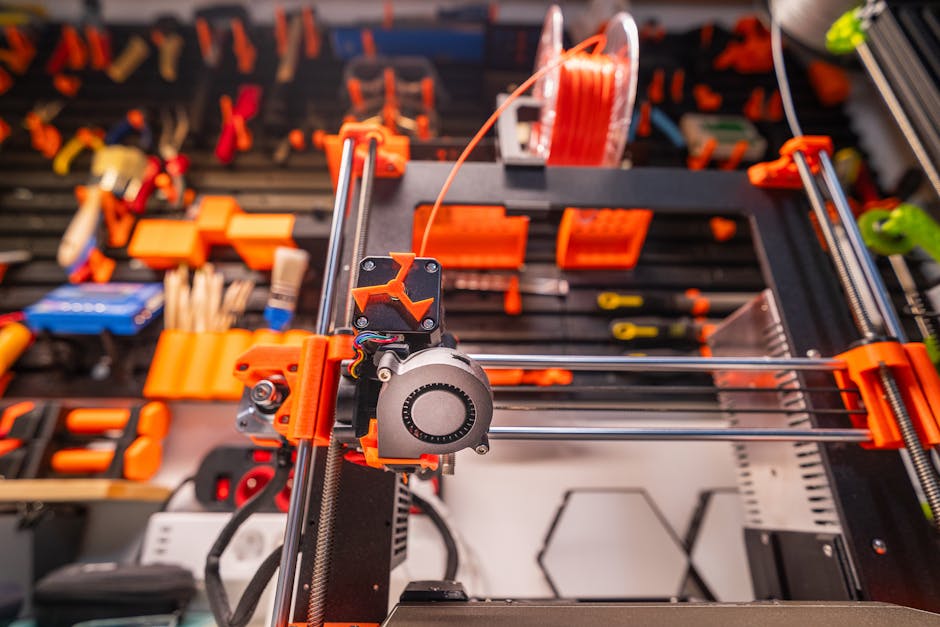
The latest trends in additive manufacturing indicate a significant shift from prototyping to production-ready technology, as highlighted by the Stratasys report, 3D Printing Shifts from Prototyping to Strategic Production in 2026. This transition is driven by advancements in automation, materials science, and evolving supply chain requirements. As the industry moves towards more integrated and automated workflows, the focus has shifted from merely producing prototypes to manufacturing parts that meet the exacting standards of production environments. The report underscores that this paradigm shift will redefine B2B manufacturing, making it more efficient and cost-effective for a wide range of industries. Technically, Stratasys' report emphasizes the need for advanced materials that can withstand higher temperatures and pressures, crucial for production environments. For instance, selective laser sintering (SLS) now offers fine surface finishes suitable for end-use parts, while multi-material printing allows for complex assemblies with varying properties within a single part. These technical advancements reduce the need for post-processing steps, making 3D printing more cost-effective and efficient for mass production runs. For example, medical device manufacturers can rapidly prototype and produce customized implants using high-purity polymers that meet stringent biocompatibility standards. Similarly, aerospace companies are leveraging additive manufacturing to produce lightweight, high-performance parts with complex geometries, which could not be achieved through traditional machining techniques. The industry is witnessing the rise of high-purity polymers and metals capable of meeting stringent tolerances required in production parts. For instance, Stratasys' report highlights the use of high-purity nylon 12 and titanium alloys in SLS and direct metal laser sintering (DMLS) processes. These materials not only offer superior mechanical properties but also enable faster production cycles, reducing the overall time-to-market for new products. The integration of these advanced materials into the manufacturing process is crucial for achieving the required level of precision and durability in end-use parts. The innovations in the field signify a broader shift towards automation. The implementation of AI and machine learning algorithms is transforming every aspect of additive manufacturing, from design optimization to real-time quality control. For example, neural networks can predict optimal print settings based on historical data, reducing trial-and-error cycles and improving overall efficiency. Furthermore, self-correcting factory floors are becoming more common, allowing for continuous improvement in process efficiency and product quality. By integrating AI across the workflow, manufacturers can achieve higher throughput and lower production costs while maintaining consistent part quality. For instance, automotive companies are using machine learning algorithms to optimize the design of lightweight components that reduce vehicle weight without compromising structural integrity. This results in improved fuel efficiency and reduced emissions, making vehicles more environmentally friendly. Additionally, real-time quality control systems based on AI can detect defects early in the manufacturing process, reducing waste and improving overall product reliability. The industry impact of these advancements is profound. Low-volume manufacturers now have access to technologies that were once prohibitively expensive or impractical for their scale. For instance, customized medical devices and prosthetics can be rapidly prototyped and produced in small batches using 3D printing techniques. Similarly, aerospace companies are leveraging additive manufacturing to produce lightweight, high-performance parts with complex geometries. Supply chains are also being transformed as 3D printers enable on-demand production closer to the point of use, reducing lead times and inventory costs. Companies like Elk Valley 3D are at the forefront of this transformation by providing premium materials and white-glove service that meet the exacting demands of B2B clients. Beyond immediate cost savings and operational efficiencies, these innovations have broader implications. The shift to AI-driven manufacturing could democratize access to advanced technologies, making them more affordable for small businesses and startups. Additionally, sustainable practices are being incorporated into the design and production processes, reducing waste and carbon footprints. For example, bioprinting is not only producing functional vascular networks but also exploring the use of living materials that can grow with a product, offering a greener alternative to traditional manufacturing methods. Elk Valley 3D's commitment to premium materials and white-glove service aligns perfectly with these advancements. Our high-purity polymers and metals are specifically designed for demanding production environments, ensuring part integrity and performance. The white-glove service offers expert consultation and support to help clients navigate the complexities of 3D printing for production. By leveraging these innovations, we are positioning ourselves as a trusted partner in the evolving landscape of additive manufacturing. In conclusion, the shift from prototyping to strategic production through 2026 is not just a technological leap but a fundamental shift in how B2B manufacturing operates. As Elk Valley 3D continues to evolve with the industry, we are committed to providing solutions that meet and exceed our clients' needs for both today and tomorrow.
📅 Latest Industry Update
Recent industry trends indicate that low-volume production is driving innovative applications in the realm of 3D printing, particularly for companies like IN3DTEC as highlighted by a recent article from 3Dnatives. This shift is being facilitated by advancements in 3D printing technology, which are enabling more efficient and cost-effective production processes. For instance, the integration of digital manufacturing techniques with traditional subtractive methods allows for rapid prototyping and customization, reducing development risks and accelerating market validation. These technologies leverage the mold-free nature of 3D printing, offering high flexibility and low costs that are crucial in today’s economic climate.
The technical details behind this innovation involve a combination of Direct Light Processing (DLP) and Selective Laser Sintering (SLS) techniques. DLP printers, such as those offered by Raise3D, utilize digital light projectors to cure liquid photopolymer resins layer by layer, achieving high precision and faster print times. Meanwhile, SLS technology, often highlighted in the Raise3D application page, uses lasers to sinter powdered materials into solid objects, providing industrial-grade reliability and functional material options. These technologies are particularly advantageous for low-volume production as they can handle a wide range of materials, from flexible resins to engineering-grade plastics and even metals, making them suitable for various applications in both prototyping and small-scale manufacturing.
For makers and small producers, the implications of these advancements are significant. The ability to quickly iterate designs and produce customized parts on-demand can transform how products are developed and brought to market. This not only reduces the time-to-market but also allows for more agile responses to changing consumer demands. Additionally, the cost-effectiveness of 3D printing technologies means that small-scale manufacturers can now compete with larger corporations by offering highly specialized and personalized products without incurring prohibitive costs associated with traditional manufacturing methods. As a result, this shift is likely to democratize production processes, enabling more entrepreneurs and innovators to bring their ideas to life.
📅 Latest Industry Update
Recent industry trends highlight the growing importance of low-volume production in driving innovative applications for companies like IN3DTEC, as detailed in a recent article from 3Dnatives Why Low-Volume Production is Driving Innovative Applications for IN3DTEC. This shift underscores the potential of 3D printing to streamline development processes and reduce market validation risks, particularly in sectors where traditional manufacturing methods are less flexible or cost-effective. For instance, 3D printing allows for rapid prototyping and small-scale production runs that can be easily adjusted as demand evolves, making it an ideal solution for companies operating in dynamic markets.
The technical advantages of 3D printing, especially those offered by advanced systems like Raise3D's industrial-grade printers, are pivotal to bridging the gap between prototype and mass application. These machines leverage high-precision DLP and SLS technologies to produce parts with superior accuracy and durability, suitable for both prototyping and small-scale production runs. For example, the True DLP Precision printer from Raise3D offers faster print times and a traceable workflow, enabling manufacturers to quickly iterate designs while maintaining quality control. Additionally, the ability to use industrial and functional materials like carbon fiber and metals allows for the creation of parts with enhanced mechanical properties, making 3D printing a viable alternative to traditional manufacturing methods in many applications.
The implications for makers and small producers are significant as these technologies become more accessible. With the capability to produce high-quality, customized parts on demand, small businesses can enter niche markets or offer personalized products without the need for extensive upfront investment in molds or tooling. This flexibility not only reduces costs but also accelerates time-to-market, allowing companies to respond quickly to market changes and customer demands. As 3D printing technologies continue to evolve, we can expect to see even more innovative applications emerge, further transforming how small-scale manufacturing operates in the future.