
3D Printing’s Evolving Landscape: Recent Advancements Reshape Manufacturing
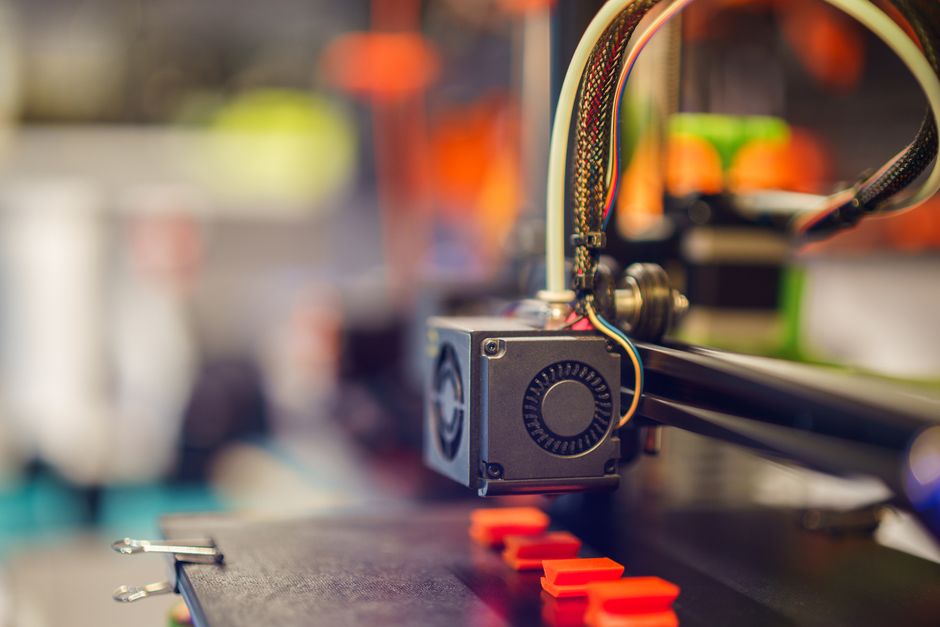

In today's rapidly evolving manufacturing sector, 3D printing continues to disrupt traditional production methods by offering unprecedented flexibility and precision. As reported by Plastics Today, recent advancements highlight the transformative potential of this technology for B2B clients seeking innovative solutions in material science, process optimization, and sustainable practices. The technology has already found its way into various industries, from automotive to aerospace, where it enables rapid prototyping and low-volume production without the high costs associated with traditional manufacturing techniques.
The shift towards more advanced materials and processes is driving significant changes. For instance, the development of new polymers capable of withstanding extreme temperatures or mechanical stresses could revolutionize aerospace and automotive sectors where high-performance parts are essential. These advancements not only enhance the durability and reliability of components but also pave the way for lighter weight designs that can improve fuel efficiency and overall performance. Additionally, improvements in printer hardware have led to better resolution and dimensional accuracy, crucial for intricate components that require tight tolerances. For example, a medical device company could rapidly iterate on complex surgical tools without the need for extensive tooling or traditional injection molding processes, significantly reducing time-to-market.
The implications of these advancements extend beyond mere technological enhancement; they fundamentally reshape low-volume manufacturing, rapid prototyping, and supply chain dynamics. Companies like GE Addiive and HP's Multi Jet Fusion technology have demonstrated how 3D printing can significantly reduce lead times and material waste in prototyping phases. For instance, a company developing custom aircraft components could design and test prototypes within days rather than weeks or months using traditional methods. This rapid turnaround time allows for quicker iteration cycles and faster market response to customer needs.
Beyond immediate operational benefits, these innovations also impact broader industry trends such as cost reduction through optimized materials usage and environmental sustainability via reduced carbon footprints. The integration of AI in 3D printing systems further enhances efficiency and customization, allowing manufacturers to tailor products based on real-time data analytics. For example, using machine learning algorithms, a manufacturing company can optimize the placement of material during the printing process to minimize waste while ensuring structural integrity. This not only reduces costs but also contributes to more sustainable practices.
The convergence with adjacent fields like IoT and big data opens up new possibilities for predictive maintenance and quality control. By integrating sensors into 3D printed parts, manufacturers can monitor performance in real time and predict potential failures before they occur. For instance, a company manufacturing parts for heavy machinery could use this technology to develop intelligent components that provide feedback on their health status, enabling proactive maintenance schedules and reducing downtime.
At Elk Valley 3D, we leverage these cutting-edge technologies to provide premium materials and unparalleled service to our clients. Our high-purity polymers and advanced resins ensure the highest standards of quality, while our White-Glove Service guarantees seamless integration into your production pipeline. For example, we offer customized solutions for companies requiring specialized materials that meet rigorous industry standards. We also support clients through comprehensive training programs and technical assistance to fully utilize the benefits of 3D printing in their operations.
Looking ahead, the continued evolution of 3D printing promises even more transformative changes. As research continues to push boundaries in material science and computational methods, we anticipate breakthroughs that will redefine what is possible with additive manufacturing. For instance, the development of new biodegradable materials could open up new applications in sectors like packaging where environmental impact is a critical concern. Additionally, advancements in software tools for design and simulation could further streamline the 3D printing process, making it even more accessible to a wider range of users.
By positioning ourselves as a thought leader in this field, Elk Valley 3D remains committed to supporting our clients' journey towards smarter, faster, and greener manufacturing practices. We are actively involved in industry partnerships and collaborations to explore new applications and develop best practices for the adoption of 3D printing technologies. Through strategic investments in research and development, we continue to innovate and drive progress in this rapidly evolving landscape.
The future of manufacturing is undoubtedly intertwined with the advancements brought about by 3D printing. As technology continues to evolve, it will play an increasingly significant role in shaping industry standards and driving innovation. At Elk Valley 3D, we are excited about the opportunities that lie ahead and committed to helping our clients embrace these changes for a more sustainable future.
📅 Latest Industry Update
Recent advancements in 3D printing continue to reshape the manufacturing landscape, with notable developments such as HeyGears’ patent submission for an automated resin 3D printing system. This innovative approach includes features like automatic part removal, resin drainage, recycling, and job sorting, which could significantly enhance efficiency and reduce waste in production environments. The integration of these automation technologies is crucial as it addresses the high labor costs associated with traditional 3D printing processes, making them more viable for larger-scale manufacturing operations.
The technical details behind this automated system are particularly compelling. HeyGears’ patent describes a closed-loop system where parts can be automatically removed from the printer bed after completion, reducing downtime and increasing productivity. Additionally, the recycling of unused resin not only cuts costs but also addresses environmental concerns by minimizing waste. The job sorting feature ensures that print jobs are managed efficiently, allowing for optimized use of resources and time. These advancements could make 3D printing more accessible to industries previously hesitant due to its perceived inefficiencies.
For makers and small producers, the implications of this technology are profound. While larger manufacturers might find these systems cost-effective immediately, smaller operations can benefit from adopting similar automation principles on a smaller scale. For instance, implementing semi-automated sorting or recycling processes could help streamline workflows without requiring significant investment in fully automated systems. Moreover, as 3D printing becomes more integrated into production lines, the ability to quickly and efficiently manage print jobs will be crucial for maintaining competitiveness. This shift towards automation paves the way for a future where 3D printing is not just an alternative manufacturing method but a core component of modern production strategies.
The integration of machine learning algorithms in 3D printing workflows could further enhance efficiency and precision for makers and small producers. For instance, HeyGears’ patent hints at the potential for AI to optimize print settings based on real-time material properties and environmental conditions, potentially reducing trial-and-error phases and improving first-run success rates. This not only saves time but also reduces material waste, making 3D printing more cost-effective for smaller operations. Additionally, as these technologies become more accessible, they can be adapted using open-source software and community-developed solutions, allowing makers to customize their systems according to specific needs without high upfront costs.