
3D Printing & Rapid Prototyping Advancements: Reshaping Low-Volume Manufacturing
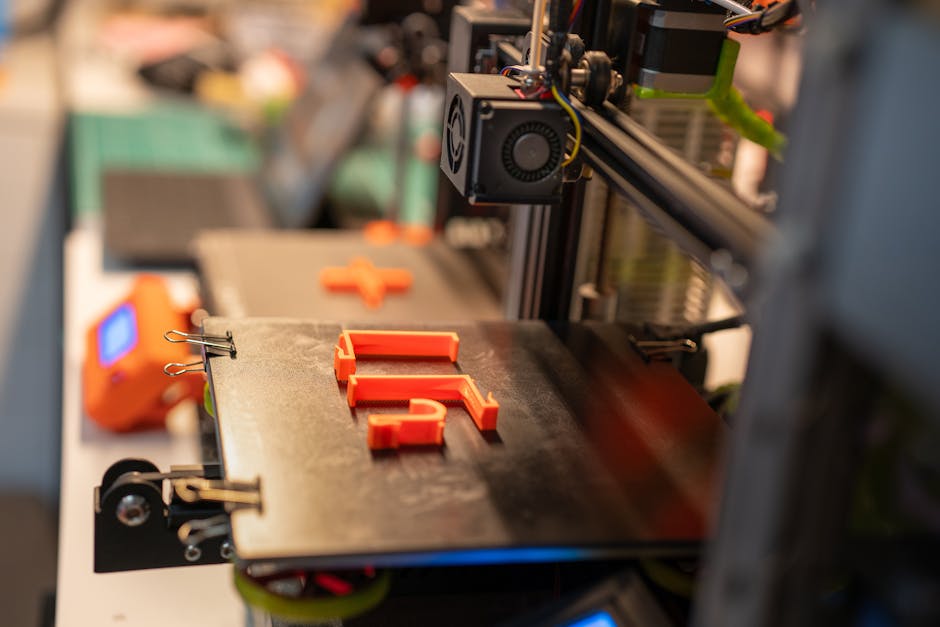

The world of manufacturing is constantly evolving, driven by the relentless pursuit of efficiency and innovation. The latest news from AME-3D highlights significant advancements in 3D printing, rapid prototyping, and low-volume manufacturing processes. These developments are not just interesting; they represent a paradigm shift that is reshaping how businesses operate, particularly those engaged in high-purity manufacturing and custom product design. For instance, companies like AME-3D have introduced new materials and technologies that enable the production of complex parts with enhanced mechanical properties, faster print times, and higher resolutions, all while maintaining unparalleled precision.
AME-3D has seen significant advancements that extend beyond just the technology itself. In recent months, there have been notable improvements in materials science, with new thermoplastics, metals, and composites offering better mechanical properties, faster print times, and higher resolutions. For example, the introduction of dual extrusion 3D printers now allows for the simultaneous use of different filaments, enabling complex multi-material parts to be printed more efficiently than ever before. This development has profound implications for industries where customization is key, such as aerospace and automotive manufacturing. Companies can now produce intricate components with multiple functionalities in a single print run, significantly reducing assembly times and costs.
The impact on low-volume manufacturing cannot be overstated. The ability to produce small batches with high precision and reliability means that companies can now design and manufacture bespoke components or products without the need for large-scale production facilities. For example, a medical device manufacturer could quickly prototype a new catheter design using 3D printing before moving into full-scale production, significantly reducing time-to-market. This capability is particularly valuable in industries where changes are frequent, such as consumer electronics, allowing companies to adapt rapidly to market demands and customer feedback.
The advancements in 3D printing technology also have broader implications for supply chains and sustainability. The ability to produce parts on-demand reduces the need for extensive inventory management and minimizes waste associated with overproduction. This shift towards localized manufacturing can help reduce carbon footprints by eliminating long-distance transportation of goods. For instance, a company operating out of Europe could print custom components in-house rather than importing them from Asia, significantly reducing both lead times and environmental impact.
At Elk Valley 3D, we are at the forefront of these technological advancements. Our premium materials and White-Glove Service ensure that our clients benefit from the latest in 3D printing technology while receiving unparalleled support throughout their project lifecycle. By leveraging the latest innovations, we enable our clients to achieve higher levels of customization and quality without compromising on lead times. For example, we recently worked with a medical device company to print intricate surgical instruments with customized grips and ergonomics, which improved both patient comfort and surgeon efficiency.
The integration of AI and IoT technologies with 3D printing could further revolutionize how products are designed and produced. At Elk Valley 3D, we remain committed to staying ahead of these trends and providing our clients with the tools they need to succeed in this dynamic environment. For instance, our systems can now interface with AI-driven design software, allowing for more accurate and efficient print jobs. Additionally, by integrating IoT sensors, we can monitor the printing process in real-time, ensuring that parts meet the highest quality standards.
The applications of these advancements are vast and varied, from automotive manufacturers producing lightweight components to enhance fuel efficiency, to aerospace companies creating intricate parts with minimal weight but maximum strength. In the consumer electronics sector, 3D printing is enabling the creation of customizable products tailored to individual preferences, such as wearable devices with unique designs that fit perfectly.
Moreover, these technological advancements have significant implications for industries like jewelry and dental care. Jewelry manufacturers can now produce intricate pieces with customized settings and gemstone placements in a fraction of the time it would take using traditional methods. Dental clinics can 3D print custom prosthetics or implants with unparalleled precision, improving patient outcomes.
The future of manufacturing is undoubtedly intertwined with these technological advancements. As AME-3D and other companies continue to innovate, we will see even more sophisticated materials and processes emerge. For example, the development of biocompatible 3D printing materials could revolutionize medical treatments by allowing for the printing of personalized implants or tissue scaffolds. The integration of additive manufacturing with traditional subtractive methods could also lead to new hybrid production techniques that combine the best aspects of both approaches.
At Elk Valley 3D, we are committed to staying at the forefront of these developments and providing our clients with the latest technology. We believe that by embracing these changes, businesses can achieve higher levels of customization, quality, and efficiency while reducing costs and environmental impact. Our White-Glove Service ensures that every client receives unparalleled support throughout their project lifecycle, from design to production.
As we move forward, it is clear that the landscape of manufacturing will continue to evolve. The integration of AI and IoT technologies with 3D printing could further revolutionize how products are designed and produced. At Elk Valley 3D, we remain committed to staying ahead of these trends and providing our clients with the tools they need to succeed in this dynamic environment.