
3D Printing Innovations in 2024: Impacts on Low-Volume Manufacturing & Rapid Prototyping
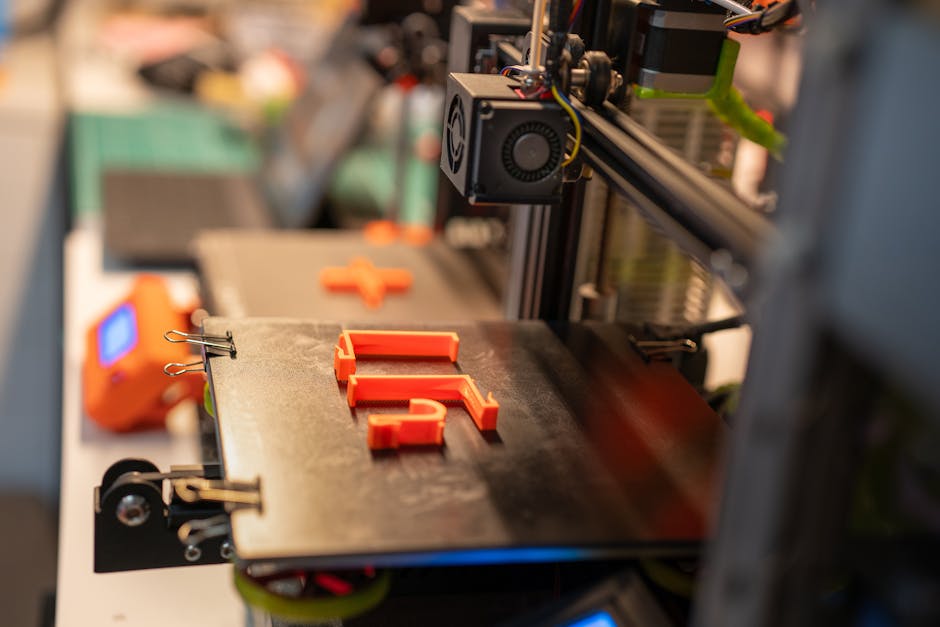

As reported by Design News, the rapid evolution of 3D printing technology continues to reshape manufacturing landscapes, particularly in low-volume production and rapid prototyping. This transformation is not just about aesthetics; it's a revolution that promises greater efficiency, customization, and sustainability. In today’s competitive B2B environment, manufacturers are increasingly leveraging these advancements to gain a strategic edge. For instance, General Electric has successfully integrated 3D printing into its supply networks, reducing inventory holding costs and enabling quicker responses to market demands. This demonstrates how 3D printing can disrupt traditional manufacturing processes, providing cost savings and improved product quality.
The recent developments highlighted by Design News underscore the significant strides being made in material science and process innovation. For example, new polymers with superior mechanical properties are now available, making them suitable for a wide range of applications from consumer electronics to consumer goods. These advancements have profound implications for industries ranging from aerospace to healthcare. In the medical field, bio-inert materials that meet stringent medical standards can be used to create life-saving devices without compromising patient safety.
In terms of technical deep dive, 3D printing is experiencing breakthroughs in both materials and processes. The introduction of advanced composite filaments by companies like Stratasys has led to products with improved strength-to-weight ratios, making them suitable for use in automotive and construction applications. These filaments are designed to provide enhanced mechanical properties while maintaining lightweight characteristics, which is crucial for industries where weight reduction can significantly impact performance. Additionally, the development of new laser technologies and inkjet printers allows for finer layer resolutions, enhancing surface finishes and reducing post-processing requirements.
For manufacturers, these technical advancements translate into more versatile and efficient production lines. A notable case is KLS Martin's use of polymer 3D printing to supplement the additive manufacture of titanium implants. This demonstrates how 3D printing can integrate seamlessly with traditional manufacturing methods to achieve cost savings and improve product quality. By leveraging 3D printing, KLS Martin was able to print complex geometries in a single piece without assembly, reducing waste and increasing efficiency. The integration of 3D printing into their production processes has enabled them to produce titanium implants more quickly and at lower costs compared to traditional methods.
The broader industry impact is substantial. By enabling faster prototyping cycles and more flexible production runs, 3D printing is disrupting supply chains and reducing lead times. Companies like General Electric have already integrated 3D printing into their supply networks to minimize inventory holding costs and respond quickly to market demands. This shift towards on-demand manufacturing reduces the need for large-scale inventory, thereby streamlining operations and lowering overall costs. For example, GE Addiive has demonstrated that by using 3D printing, they can produce parts in a fraction of the time compared to traditional methods, resulting in significant cost savings.
The broader industry impact is substantial. By enabling faster prototyping cycles and more flexible production runs, 3D printing is disrupting supply chains and reducing lead times. Companies like General Electric have already integrated 3D printing into their supply networks to minimize inventory holding costs and respond quickly to market demands. This shift towards on-demand manufacturing reduces the need for large-scale inventory, thereby streamlining operations and lowering overall costs. For example, GE Addiive has demonstrated that by using 3D printing, they can produce parts in a fraction of the time compared to traditional methods, resulting in significant cost savings.
Examining deeper implications, these innovations also promote sustainability by reducing material waste through additive processes that use only as much raw material as needed. The ability to print complex geometries directly from digital files minimizes wasted materials and reduces the environmental impact of manufacturing operations. Moreover, 3D printing democratizes manufacturing, allowing small companies to produce custom items without the high setup costs associated with traditional manufacturing methods. This could lead to a more distributed production model where local fabrication hubs can serve niche markets more effectively.
At Elk Valley 3D, we are committed to leveraging these cutting-edge technologies for our clients. Our premium materials and White-Glove Service ensure that you benefit from the latest advancements without any technical barriers. Whether it’s high-purity metals for aerospace components or biocompatible polymers for medical devices, we provide the necessary expertise to integrate 3D printing into your production processes. For instance, we have worked with clients in the automotive industry who require lightweight yet robust parts for their vehicles. Our advanced materials and processes allowed these clients to achieve significant weight reductions while maintaining the required mechanical properties.
Moreover, our team of experts can help you navigate the complexities of 3D printing by providing tailored solutions that meet your specific needs. We offer a comprehensive range of services, from material selection and design optimization to post-processing and quality assurance. By leveraging our expertise, you can ensure that your production processes are both efficient and cost-effective. For example, we have helped small businesses with limited resources integrate 3D printing into their operations by providing them with the necessary tools and knowledge to produce custom items without incurring high setup costs.
Looking forward, 3D printing is poised to become an even more integral part of B2B manufacturing. As technology continues to mature and costs decrease, its adoption will accelerate across a wider range of industries. Elk Valley 3D remains at the forefront of these innovations, positioning ourselves as a trusted partner for all your 3D printing needs. We are continuously investing in research and development to stay ahead of the curve, ensuring that our clients have access to the latest advancements in the field.