
3D Printing in Injection Molding: Revolutionizing Low-Volume Production and Prototyping
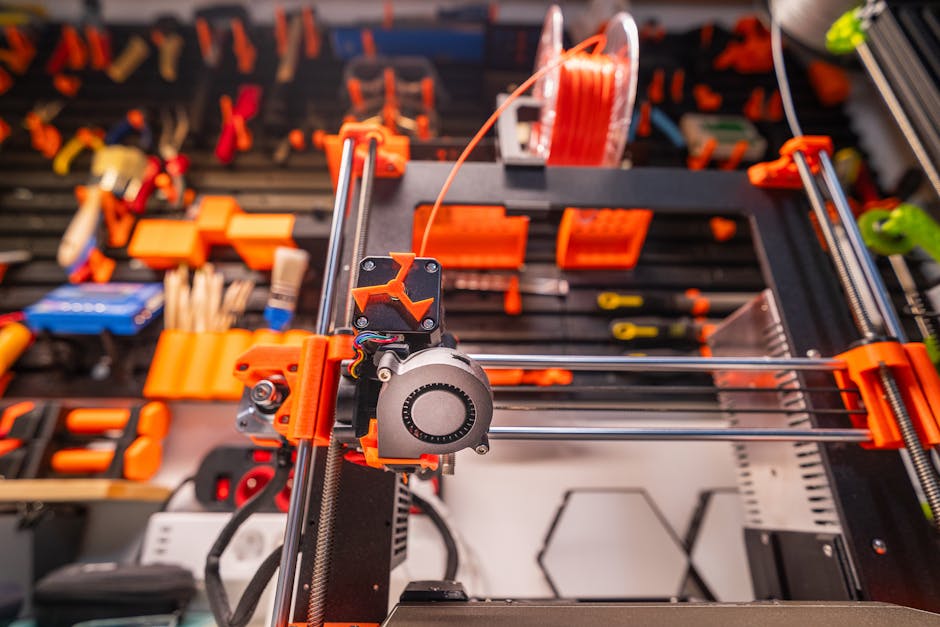

The world of manufacturing is witnessing profound changes driven by advanced technologies. One such innovation that is reshaping the industry's landscape is the integration of 3D printing alongside traditional injection molding techniques. This synergy, as delineated in recent articles from ChanHonTech (Source) and IN3DTEC on 3Dnatives (Source), highlights how these technologies complement each other to deliver unprecedented flexibility, cost-efficiency, and speed in the manufacturing process. The integration of 3D printing with injection molding has become a key strategy for companies seeking to adapt quickly to market demands while maintaining high-quality standards. For instance, ChanHonTech's article emphasizes that 3D printing enables rapid prototyping and flexible low-volume production, allowing manufacturers to create prototypes quickly and cost-effectively. This capability is crucial in today’s fast-paced market environment where iterative design cycles are essential for success.
The advent of 3D printing has democratized prototyping by eliminating the need for expensive tooling. According to ChanHonTech's article, this technology excels at rapid prototyping and flexible low-volume production. For example, a small medical device manufacturer faced with developing a new product line could use 3D printing to quickly create prototypes without investing in complex molds or lengthy lead times. This approach not only saves time but also allows for iterative design improvements that can be made more efficiently when no expensive tooling is required. In contrast, traditional injection molding is a tried-and-true method for producing high-quality plastic parts at scale but comes with significant upfront costs and long lead times. A company may take months to develop molds and additional weeks or even months before production begins, which can be prohibitively slow in competitive markets.
The technical advances in 3D printing have been substantial. The use of advanced materials like photopolymers, polyamides, and even metals has expanded the range of applications significantly. For instance, 3D-printed components made from photopolymers are often used for functional prototypes that require high precision, while polyamides are favored for parts requiring greater durability and strength. In terms of processes, advancements in additive manufacturing techniques such as selective laser sintering (SLS) and stereolithography (SLA) have enabled finer control over dimensional accuracy and surface quality. SLS, for example, allows for the creation of complex geometries that are difficult to achieve with injection molding, while SLA can produce highly detailed parts with excellent surface finishes. These advancements make 3D printing a versatile tool capable of producing components suitable for various industries, from automotive to aerospace.
The integration of 3D printing with injection molding is particularly transformative for low-volume production and rapid prototyping. By leveraging the strengths of each process, manufacturers can achieve faster development cycles, dramatically lower tooling costs, and the agility to produce high-quality parts in small batches. For example, ChanHonTech's article cites examples where 3D-printed molds are used to create injection-molded components, reducing time-to-market by several months compared to traditional methods. This synergy is not just about saving money; it’s also about staying competitive in a market that demands flexibility and responsiveness. A company like Elk Valley 3D might work with a client who needs to rapidly produce a small batch of parts for an urgent project. By using 3D printing to create the molds, they can reduce lead times from months to weeks, ensuring that the product is ready for market much faster.
The broader implications of this integration extend beyond mere cost savings. It opens up new possibilities for customization and on-demand manufacturing, which are increasingly important as consumer preferences evolve. For example, companies can use 3D printing to rapidly produce small batches of parts tailored to specific customer needs, reducing inventory costs and improving supply chain resilience. This capability is particularly valuable in industries such as automotive and electronics, where customers often require customized components for unique features or personalization options. Additionally, the environmental impact is reduced due to lower tooling waste and more efficient use of materials. A well-known study by MIT found that 3D printing can reduce material usage by up to 80% compared to traditional manufacturing methods, making it a more sustainable solution.
The synergy between 3D printing and injection molding has led to the development of hybrid solutions that combine the best aspects of both technologies. One such approach is the use of 3D-printed tooling for injection molding, where the mold itself is created using 3D printing techniques before being used in the actual manufacturing process. This method allows for faster turnaround times and reduced costs associated with traditional mold-making processes. Furthermore, it enables manufacturers to produce components that are difficult or impossible to achieve with standard injection molds, such as parts with intricate internal structures or complex geometries.
The benefits of this integration extend across multiple industries. In the automotive sector, 3D printing can be used to create lightweight components and prototypes, reducing development time and improving vehicle performance. For instance, a car manufacturer might use 3D printing to develop new parts for their latest model, such as lightweight brackets or intricate engine components, which can then be injection-molded in high volumes once validated through testing. In the aerospace industry, 3D printing is used to produce complex parts that are both strong and light, reducing weight and improving fuel efficiency. These parts can then be integrated into aircraft using traditional injection molding techniques for mass production.
The healthcare industry also stands to benefit significantly from this integration. Medical device manufacturers can use 3D printing to create customized implants or prosthetics tailored to individual patients’ needs. For example, a patient might require a custom hip replacement that is precisely matched to their body structure. By using 3D printing to produce the implant and then injection-molding it for final production, the process ensures both accuracy and quality. This approach not only improves patient outcomes but also reduces healthcare costs by minimizing waste and ensuring efficient use of materials.
The automotive industry is another sector that can leverage this technology effectively. Manufacturers can use 3D printing to create prototypes and components for new vehicle models, allowing them to test designs quickly and make iterative improvements before committing resources to full-scale production using injection molding. For instance, a car manufacturer might use 3D printing to develop lightweight parts such as engine brackets or suspension components, which can be tested in real-world conditions before being mass-produced through injection molding.
The fashion industry is also exploring the potential of this integration. Designers and manufacturers are experimenting with 3D-printed prototypes and customized clothing items. By using 3D printing to create patterns and molds for shoes or garments, they can produce highly personalized products that fit individual customers’ needs precisely. This approach not only enhances customer satisfaction but also reduces waste by allowing for precise cutting of materials based on individual measurements.
The construction industry is another area where the integration of 3D printing and injection molding could bring significant benefits. Manufacturers are exploring the use of 3D-printed molds to produce complex components such as concrete structures or composite panels. These components can then be injection-molded for final production, providing architects and builders with unprecedented flexibility in designing and constructing buildings. This approach not only reduces construction time but also improves sustainability by utilizing advanced materials that offer superior strength-to-weight ratios.
The retail sector is also seeing the impact of this integration. E-commerce companies can use 3D printing to produce customized packaging or promotional items tailored to specific product launches. For example, a company might use 3D printing to create unique packaging for their latest product line, which can then be injection-molded in high volumes once validated through testing. This approach allows for greater creativity and personalization of products without the need for extensive tooling investments.
The food industry is another potential adopter of this technology. Manufacturers are exploring the use of 3D printing to create custom packaging or even customized food items, such as personalized confections or tailored nutritional supplements. For example, a company might use 3D printing to produce unique candy shapes or biscuits that can be injection-molded for final production, providing consumers with greater variety and customization options.
The future of manufacturing is being rewritten with the help of advanced technologies like 3D printing and injection molding. As these tools continue to evolve, they will undoubtedly drive further innovation and reshape industries across the board. Elk Valley 3D stands ready to assist our clients in embracing this transformative era, ensuring that their operations remain at the cutting edge. Our premium materials and White-Glove Service ensure that every project benefits from cutting-edge technology while maintaining the highest standards of quality.
In conclusion, the future of manufacturing is being rewritten with the help of advanced technologies like 3D printing and injection molding. As these tools continue to evolve, they will undoubtedly drive further innovation and reshape industries across the board. Elk Valley 3D stands ready to assist our clients in embracing this transformative era, ensuring that their operations remain at the cutting edge.